Heliconius charithonia
Zebra Heliconian
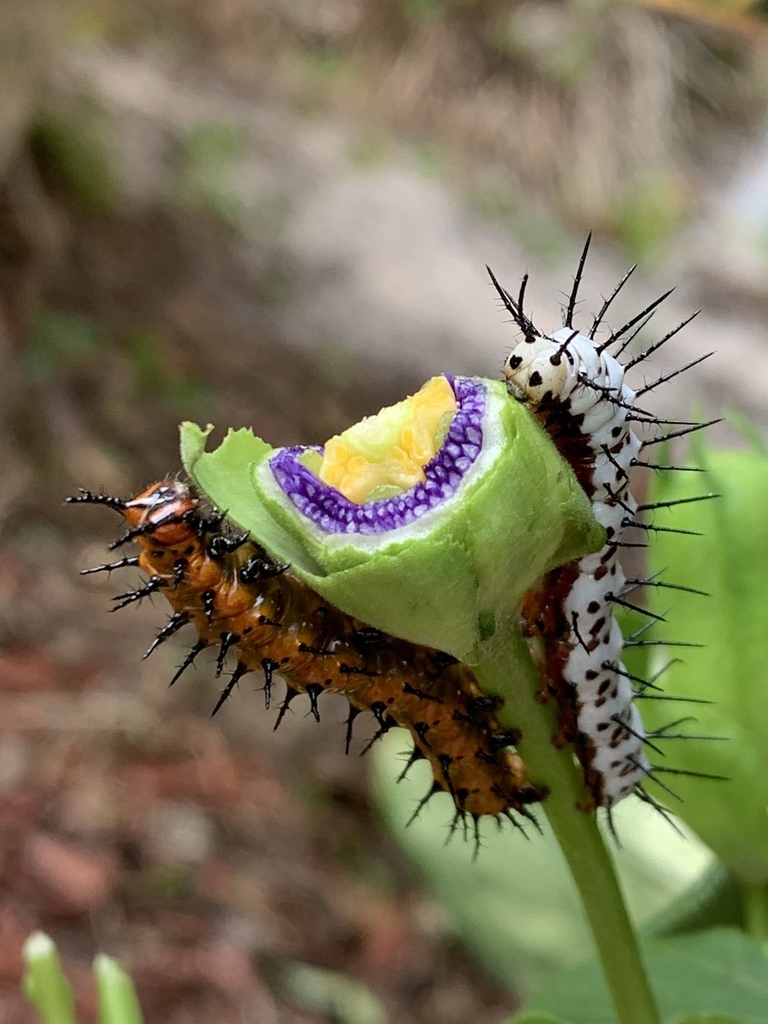
(c) Sandra H Statner, some rights reserved (CC BY) · licence
Family: Nymphalidae · Class: Insecta · Order: Lepidoptera
Heliconius charithonia (Zebra Heliconian) is a California animal in the Nymphalidae family.
The Zebra Heliconian is a medium-sized butterfly with distinctive black wings marked by bright yellow stripes and bands. Adults measure 86 to 89 mm (3.4 to 3.5 inches) in wingspan. The forewings display three yellow bands running diagonally across the black base, while the hindwings feature yellow spots and patches. The body is black with yellow markings, and the antennae are black with white tips. Both sexes appear similar, though females are typically slightly larger than males. The species ranges from South America north through Central America, the West Indies, and Mexico to South Texas and peninsular Florida. It occurs as an occasional immigrant north to New Mexico, Nebraska, and South Carolina. In its core range, Zebra Heliconians are resident populations, while northern records typically represent temporary colonization events or vagrant individuals carried by weather systems. Zebra Heliconians inhabit tropical and subtropical environments including forest edges, gardens, parks, and disturbed areas where their host plants occur. The species thrives in warm, humid conditions and is typically found from sea level to moderate elevations. Adults frequent flowering plants for nectar, particularly favoring Lantana, Pentas, and other plants with small, clustered flowers. This species exhibits several notable behavioral adaptations. Adults are long-lived for butterflies, surviving up to six months, which is facilitated by their ability to digest pollen in addition to nectar consumption. They roost communally at night, gathering in groups of 10 to 60 individuals on branches or vegetation. Zebra Heliconians practice pupal mating, where males locate female pupae and wait for emergence to mate immediately. Females lay small yellow eggs singly on young shoots and tendrils of passion-vines including Passiflora suberosa, P. lutea, and P. affinis. The caterpillars are white with black spines and spots, developing through five instars before pupating. The species employs chemical defense mechanisms, sequestering cyanogenic compounds from their passion-vine hosts, making both larvae and adults unpalatable to predators. This toxicity is advertised through their bright coloration, a form of aposematic warning. Adults engage in a behavior called trap-lining, following regular flight routes to visit specific flowering plants. Zebra Heliconians face no significant conservation concerns across their core range and hold no federal or state listing status. Climate change may potentially expand their range northward, as warming temperatures could allow establishment in areas previously too cold for survival. However, habitat loss in tropical regions and the availability of native passion-vine host plants can affect local populations. In the United States, the species remains primarily restricted to the southernmost regions of Texas and Florida, with occasional temporary establishment in warmer microclimates further north.
Classification
Class: Insecta · Order: Lepidoptera · Family: Nymphalidae
Frequently asked questions
How is Heliconius charithonia classified?
Heliconius charithonia belongs to class Insecta, order Lepidoptera, family Nymphalidae.
What family does Heliconius charithonia belong to?
Heliconius charithonia is in the Nymphalidae family.
What is Heliconius charithonia?
The Zebra Heliconian is a medium-sized butterfly with distinctive black wings marked by bright yellow stripes and bands.
Is Heliconius charithonia found in California?
Yes. Heliconius charithonia is recorded in California in The California Species Project's catalogue.
Related species
Other California species in the same genus, family, or bioregion.
Data from The California Species Project — 14,000+ California species with verified data from CNPS, CDFW, USFWS, and more.