Heliolonche carolus
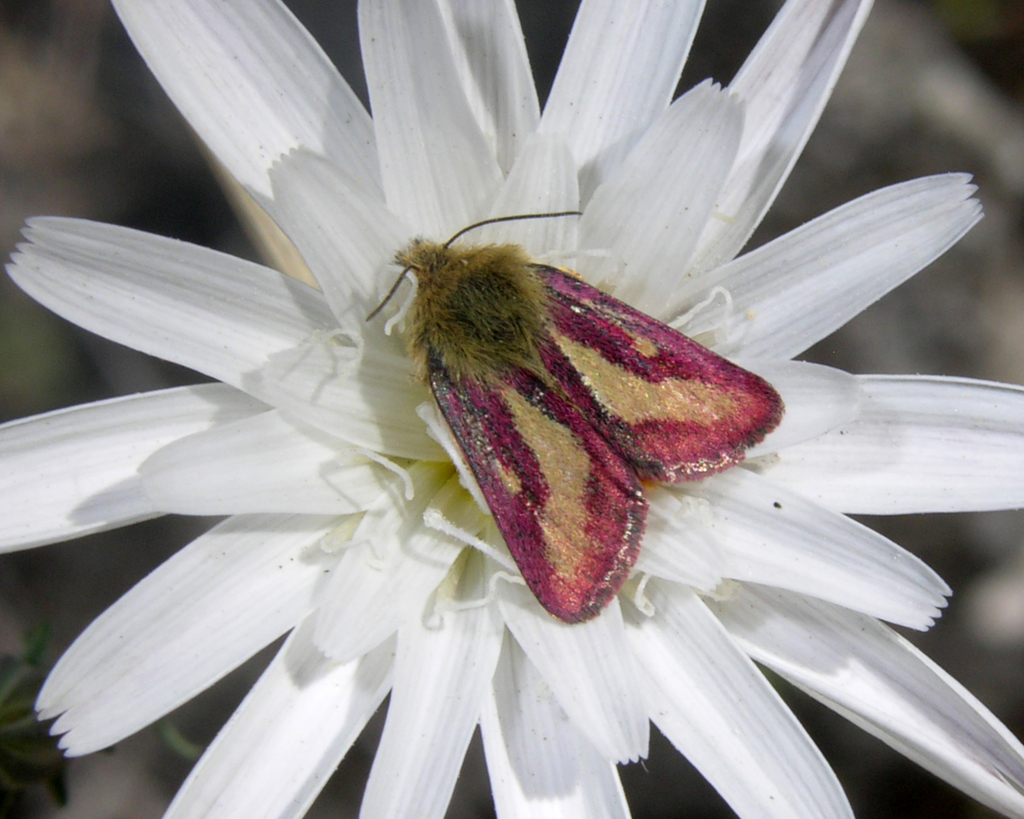
(c) Roger Rittmaster, some rights reserved (CC BY) · licence
Family: Noctuidae · Class: Insecta · Order: Lepidoptera
Heliolonche carolus is a California animal in the Noctuidae family.
Heliolonche carolus is a moth species in the family Noctuidae, part of the large order Lepidoptera. This species belongs to the genus Heliolonche, which comprises moths adapted to arid environments across western North America. The taxonomic classification places this species within the subfamily Heliothinae, a group known for their association with desert and semi-arid habitats. Limited morphological data is available for Heliolonche carolus. Like other members of the genus Heliolonche, adults likely display cryptic coloration patterns that provide camouflage against desert substrates. The forewings typically exhibit mottled brown, gray, and tan patterns with subtle darker markings. Wing span measurements and detailed morphological characteristics require further documentation through specimen examination and taxonomic study. The geographic range of Heliolonche carolus appears to be restricted to specific regions of the southwestern United States, likely including portions of California based on its inclusion in regional species databases. The genus Heliolonche shows strong associations with Sonoran and Mojave Desert ecosystems, suggesting this species occurs in similar arid environments. Precise distribution data and county-level occurrence records need verification through field surveys and museum specimen review. Habitat requirements for Heliolonche carolus likely mirror those of related species in the genus, which typically inhabit desert flats, washes, and slopes with sparse vegetation. These moths are adapted to environments characterized by low annual precipitation, high temperature variation, and sandy or rocky soils. Elevation ranges and specific microhabitat preferences require field study to determine accurately. Ecological information for Heliolonche carolus remains largely undocumented. Members of the genus Heliolonche are generally nocturnal, with adults active during warm evenings and nights. Flight periods likely correspond to favorable weather conditions and host plant phenology. Larval host plants are unknown for this species, though related Heliolonche species utilize various desert shrubs and herbaceous plants. Reproductive biology, including mating behaviors, egg-laying preferences, and larval development, requires investigation. The conservation status of Heliolonche carolus is not formally assessed by federal or state agencies. No federal listing status exists, and the species does not appear on California's list of species of special concern. The lack of comprehensive population data, distribution information, and ecological studies makes it difficult to evaluate conservation needs. Many moth species in desert environments face threats from habitat modification, urban development, invasive plant species, and climate change effects on precipitation patterns and temperature regimes. Future research priorities for Heliolonche carolus should include systematic field surveys to document distribution and abundance, life history studies to identify larval host plants and developmental requirements, and taxonomic work to confirm species boundaries and relationships within the genus. Such studies are essential for understanding the ecological role of this species and assessing any potential conservation concerns in the context of ongoing environmental changes in southwestern desert ecosystems.
Classification
Class: Insecta · Order: Lepidoptera · Family: Noctuidae
Frequently asked questions
How is Heliolonche carolus classified?
Heliolonche carolus belongs to class Insecta, order Lepidoptera, family Noctuidae.
What family does Heliolonche carolus belong to?
Heliolonche carolus is in the Noctuidae family.
What is Heliolonche carolus?
Heliolonche carolus is a moth species in the family Noctuidae, part of the large order Lepidoptera.
Is Heliolonche carolus found in California?
Yes. Heliolonche carolus is recorded in California in The California Species Project's catalogue.
Related species
Other California species in the same genus, family, or bioregion.
Data from The California Species Project — 14,000+ California species with verified data from CNPS, CDFW, USFWS, and more.