Heliothis phloxiphaga
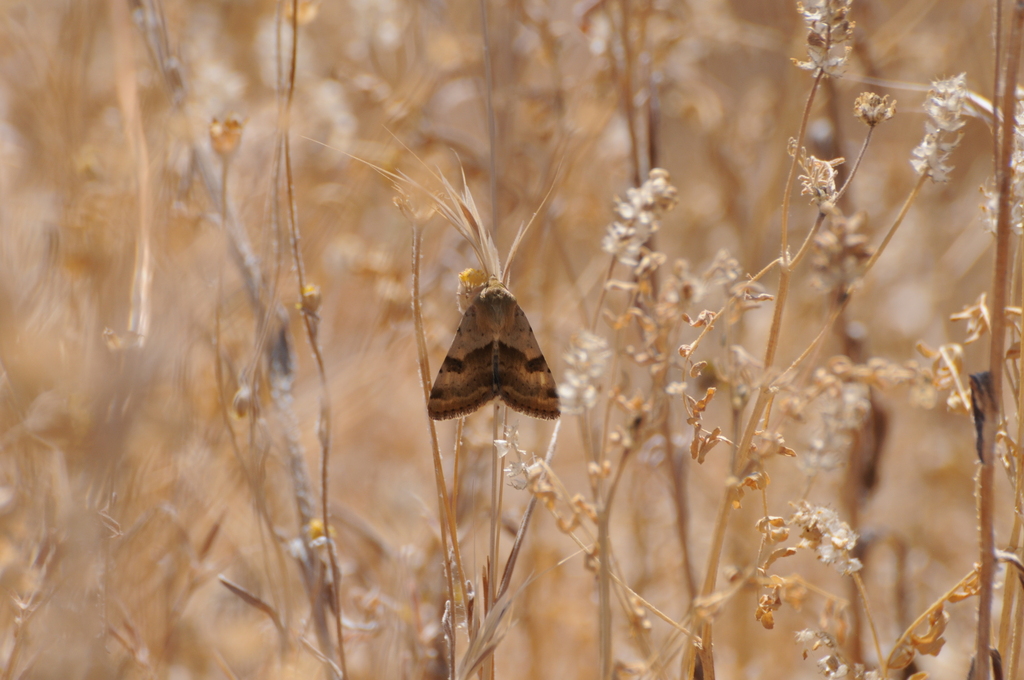
(c) Hawk T., some rights reserved (CC BY) · licence
Family: Noctuidae · Class: Insecta · Order: Lepidoptera
Heliothis phloxiphaga is a California animal in the Noctuidae family.
The Darker-spotted Straw Moth (Heliothis phloxiphaga) is a medium-sized noctuidae moth with distinctive markings that distinguish it from related species. Adults display light yellow-brown to tan forewings with characteristic darker brown markings, including a broad median band that crosses the forewing and angles sharply inward at the lower end of the large blackish reniform spot (Butterflies and Moths of North America). A dark triangular patch appears near the apex of the forewings, creating the "darker-spotted" pattern referenced in the common name. This species occurs across the United States and southern Canada, representing one of the more widely distributed members of the genus Heliothis. In California, verified sightings have been documented in multiple counties including Plumas, Amador, and Contra Costa counties (Butterflies and Moths of North America). The species' range extends from coast to coast, with additional records from Nevada, Oregon, Colorado, Washington, New Mexico, and New York, indicating adaptation to diverse climatic conditions across North America. Habitat preferences for H. phloxiphaga appear broad, as evidenced by its extensive geographic distribution and presence in multiple ecological zones. The species has been recorded from various elevations and habitat types, from coastal regions to mountainous areas, suggesting considerable ecological flexibility. Specific microhabitat requirements have not been well documented in the scientific literature. Like other Heliothis species, H. phloxiphaga larvae are specialized feeders on the reproductive parts of their host plants. The caterpillars feed specifically on flowering parts and seeds, a feeding behavior characteristic of the genus (Butterflies and Moths of North America). This feeding strategy allows the larvae to access high-protein seed and flower resources while potentially impacting plant reproduction. Adult flight periods extend from late spring through early fall, with verified observations ranging from May through September based on citizen science records. The species exhibits typical noctuid moth behavior, with adults likely active during nighttime hours and attracted to artificial lights. Specific details regarding mating behavior, overwintering strategy, and generation number per year have not been extensively documented in available literature. The larvae's specialized feeding on seeds and flowers suggests the species may be limited by host plant availability and flowering phenology. No federal or state conservation status has been assigned to H. phloxiphaga, and the species does not appear on any protected species lists. The broad geographic range and presence across multiple states suggest stable populations, though specific population trend data are not available. The species' apparent adaptability to various habitats and climatic conditions across North America indicates resilience to environmental changes. However, like many native moths, populations may face pressure from habitat modification, pesticide use in agricultural areas, and light pollution affecting adult behavior and reproduction. Scientific documentation for this species remains limited beyond basic taxonomic and distribution information.
Classification
Class: Insecta · Order: Lepidoptera · Family: Noctuidae
Frequently asked questions
How is Heliothis phloxiphaga classified?
Heliothis phloxiphaga belongs to class Insecta, order Lepidoptera, family Noctuidae.
What family does Heliothis phloxiphaga belong to?
Heliothis phloxiphaga is in the Noctuidae family.
What is Heliothis phloxiphaga?
The Darker-spotted Straw Moth (Heliothis phloxiphaga) is a medium-sized noctuidae moth with distinctive markings that distinguish it from related species.
Is Heliothis phloxiphaga found in California?
Yes. Heliothis phloxiphaga is recorded in California in The California Species Project's catalogue.
Related species
Other California species in the same genus, family, or bioregion.
Data from The California Species Project — 14,000+ California species with verified data from CNPS, CDFW, USFWS, and more.