Hellinsia lacteodactylus
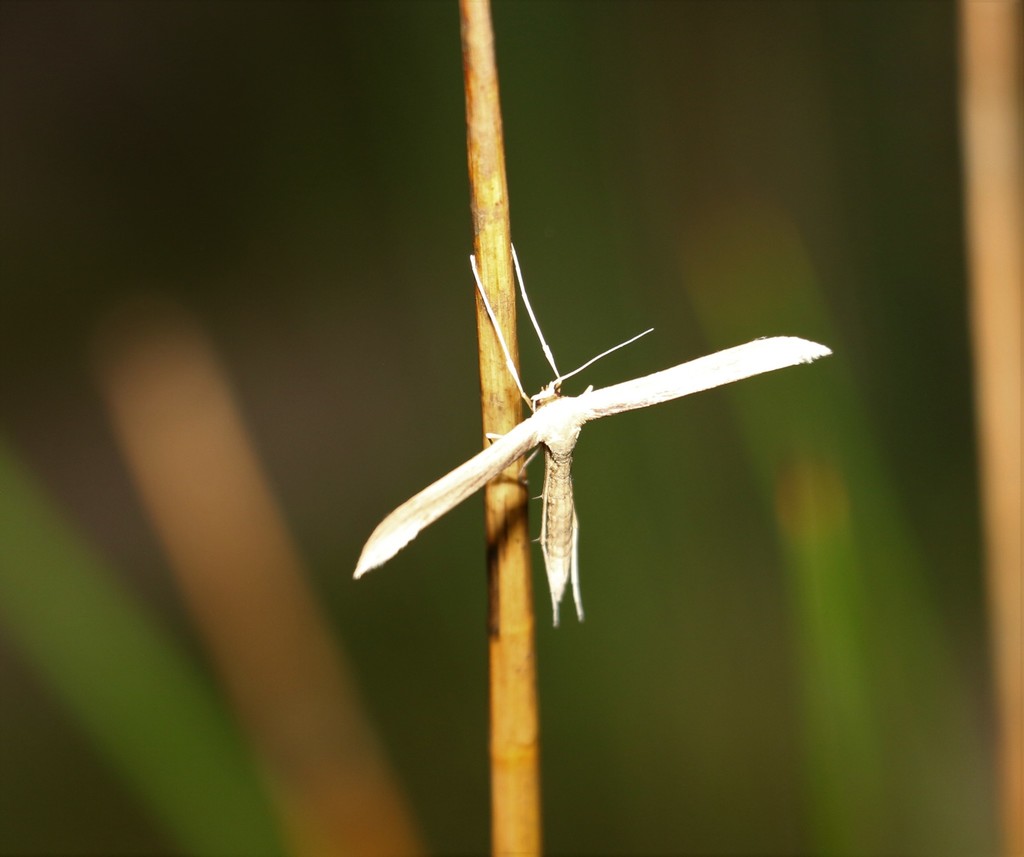
(c) Greg Tasney, some rights reserved (CC BY-SA) · licence
Family: Pterophoridae · Class: Insecta · Order: Lepidoptera
Hellinsia lacteodactylus is a California animal in the Pterophoridae family.
Hellinsia lacteodactylus is a small moth in the family Pterophoridae, commonly known as plume moths. This species belongs to a group characterized by their distinctive wing structure, where the forewings are typically divided into two plumes and the hindwings into three plumes, creating a feathery appearance when at rest. The species exhibits the typical pterophorid body plan, with a slender build and narrow, deeply divided wings. Adults likely measure 15-25 mm in wingspan, consistent with other members of the genus Hellinsia. The wings display a pale coloration, as suggested by the specific epithet 'lacteodactylus,' which translates to 'milk finger' or 'milky digit,' likely referring to the light-colored wing plumes. The body is typically elongated and slender, with long, thin legs that are often held extended when the moth is at rest. The current distribution and range of Hellinsia lacteodactylus remain poorly documented in the literature. Like many pterophorid moths, this species likely has a restricted distribution and may be endemic to specific regions of western North America, particularly California. Many plume moth species exhibit narrow geographic ranges due to their specialized host plant relationships and specific habitat requirements. Habitat preferences for this species are not well-documented in available sources, though members of the genus Hellinsia typically inhabit areas where their host plants occur. Pterophorid moths generally prefer open or semi-open habitats including grasslands, chaparral, coastal scrub, and disturbed areas where herbaceous plants flourish. The species likely occurs at low to moderate elevations, following the distribution of suitable host vegetation. The larval ecology of Hellinsia lacteodactylus remains unknown, though related species in the genus typically feed as larvae on plants in the families Asteraceae, Convolvulaceae, or other herbaceous plant families. Pterophorid larvae are often specialized feeders, creating characteristic feeding damage patterns on their host plants. Adults are typically active during evening and nighttime hours and are attracted to artificial lights. The flight period likely occurs during warmer months when host plants are actively growing. The conservation status of Hellinsia lacteodactylus is not well-established, with no formal state or federal listing designations currently assigned to this species. The lack of comprehensive survey data and taxonomic uncertainty surrounding many pterophorid species makes assessment of population trends difficult. Like many small moth species, potential threats may include habitat loss from urban development, agricultural conversion, and invasive plant species that displace native host plants. Climate change may also affect the species through altered precipitation patterns and temperature regimes that impact both the moth and its host plant relationships. Further taxonomic research and targeted surveys are needed to better understand the distribution, ecology, and conservation needs of this species.
Classification
Class: Insecta · Order: Lepidoptera · Family: Pterophoridae
Frequently asked questions
How is Hellinsia lacteodactylus classified?
Hellinsia lacteodactylus belongs to class Insecta, order Lepidoptera, family Pterophoridae.
What family does Hellinsia lacteodactylus belong to?
Hellinsia lacteodactylus is in the Pterophoridae family.
What is Hellinsia lacteodactylus?
Hellinsia lacteodactylus is a small moth in the family Pterophoridae, commonly known as plume moths.
Is Hellinsia lacteodactylus found in California?
Yes. Hellinsia lacteodactylus is recorded in California in The California Species Project's catalogue.
Related species
Other California species in the same genus, family, or bioregion.
Data from The California Species Project — 14,000+ California species with verified data from CNPS, CDFW, USFWS, and more.