Hellula phidilealis
Cabbage Budworm Moth
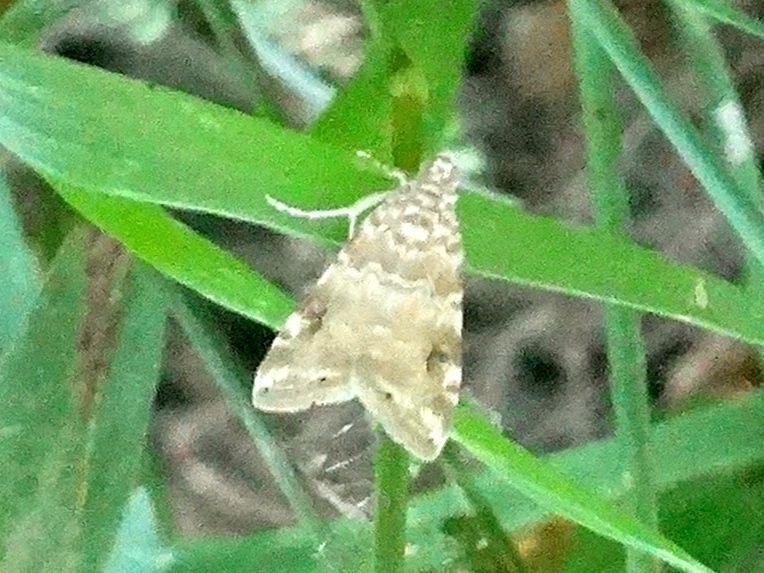
(c) Francisco Farriols Sarabia, some rights reserved (CC BY) · licence
Family: Crambidae · Class: Insecta · Order: Lepidoptera
Hellula phidilealis (Cabbage Budworm Moth) is a California animal in the Crambidae family.
The cabbage budworm moth (Hellula phidilealis) is a small pyralid moth in the family Crambidae with significant agricultural importance. Adults measure approximately 8-12 mm (0.3-0.5 inches) in body length with a wingspan of 16-20 mm (0.6-0.8 inches). The forewings are pale gray to brownish-gray with distinctive dark markings, including a prominent zigzag pattern across the wing surface. The hindwings are lighter in coloration, typically whitish to pale gray with darker marginal bands. Males can be distinguished from females by their more pointed forewings and the presence of specialized scent scales. This species has a cosmopolitan distribution, occurring across temperate and tropical regions worldwide. In North America, Hellula phidilealis ranges from southern Canada through the United States and into Mexico. Within California, the species is found throughout agricultural regions where cruciferous crops are cultivated, from the Central Valley to coastal areas. The moth has expanded its range significantly during the 20th century, likely facilitated by commercial transport of host plants and agricultural products. Cabbage budworm moths inhabit agricultural landscapes, gardens, and disturbed areas where brassicaceous plants occur. The species shows a strong preference for cultivated cruciferous crops but also utilizes wild mustard family plants. Adults are most commonly found in areas with intensive vegetable production, particularly where cabbage, broccoli, cauliflower, and related crops are grown. The species tolerates a wide range of climatic conditions but reaches highest densities in areas with mild winters and extended growing seasons. The larvae are the economically significant life stage, boring into the growing points, heads, and stems of cruciferous plants. Females deposit eggs singly or in small clusters on host plant leaves, typically laying 100-200 eggs over their lifetime. Development from egg to adult requires 4-6 weeks under optimal conditions, with multiple overlapping generations occurring annually in warmer regions. In California, the species may complete 6-8 generations per year. Adults are primarily active during twilight hours and are attracted to artificial lights. The larvae create silk-lined tunnels within plant tissues, making detection and control challenging. Hellula phidilealis is not listed under any conservation framework, as it is considered a widespread agricultural pest rather than a species of conservation concern. Population trends are closely tied to agricultural practices and the availability of host plants. The species demonstrates high adaptability to various climates and agricultural systems, contributing to its status as a global pest of cruciferous crops. Management efforts focus on population control rather than conservation, utilizing integrated pest management strategies including biological control agents, pheromone traps, and targeted pesticide applications. Climate change may further expand the species' range and increase generation cycles in temperate regions.
Classification
Class: Insecta · Order: Lepidoptera · Family: Crambidae
Frequently asked questions
How is Hellula phidilealis classified?
Hellula phidilealis belongs to class Insecta, order Lepidoptera, family Crambidae.
What family does Hellula phidilealis belong to?
Hellula phidilealis is in the Crambidae family.
What is Hellula phidilealis?
The cabbage budworm moth (Hellula phidilealis) is a small pyralid moth in the family Crambidae with significant agricultural importance.
Is Hellula phidilealis found in California?
Yes. Hellula phidilealis is recorded in California in The California Species Project's catalogue.
Related species
Other California species in the same genus, family, or bioregion.
Data from The California Species Project — 14,000+ California species with verified data from CNPS, CDFW, USFWS, and more.