Hellula rogatalis
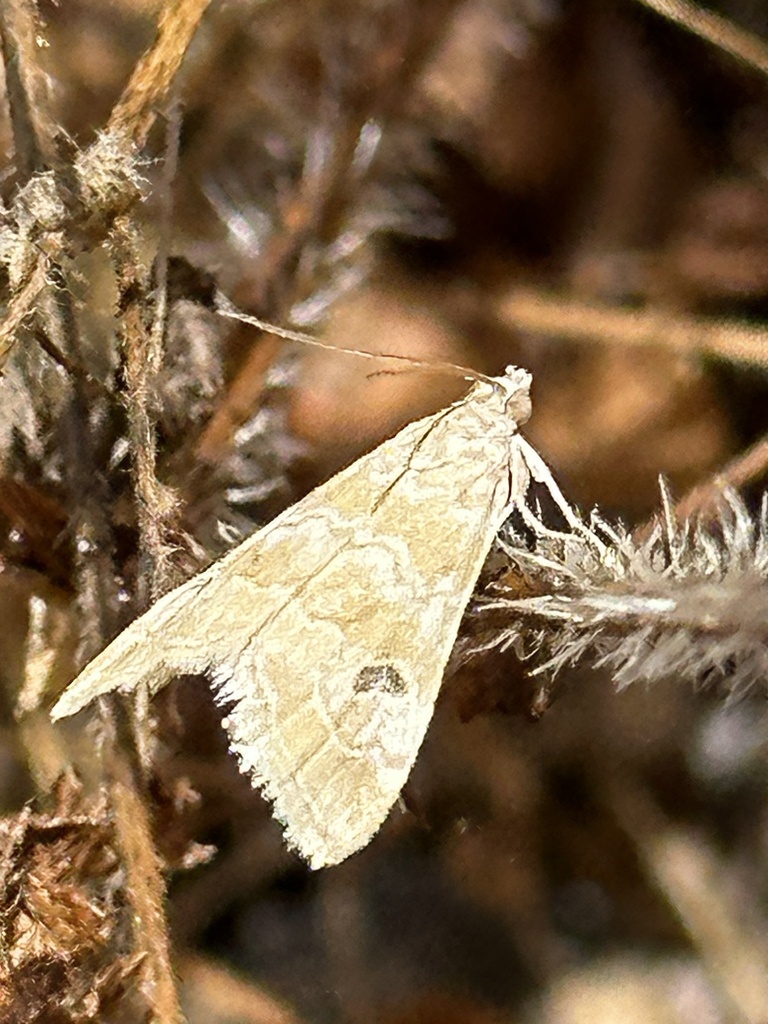
(c) Irina Mitine, some rights reserved (CC BY) · licence
Family: Crambidae · Class: Insecta · Order: Lepidoptera
Hellula rogatalis is a California animal in the Crambidae family.
Hellula rogatalis is a small moth in the family Crambidae, commonly known as the cabbage webworm or cabbage center grub moth. Adults have a wingspan of approximately 20-25 mm (0.8-1.0 inches). The forewings are pale brown to grayish-brown with darker brown markings forming irregular lines across the wing surface. The hindwings are lighter, typically whitish to pale yellow with a subtle iridescent sheen. Males can be distinguished from females by their more pronounced antennae and slightly smaller size. This species has a cosmopolitan distribution and is found throughout much of California, particularly in agricultural regions and areas with suitable host plants. The moth occurs from sea level to moderate elevations, typically below 1,500 meters (4,900 feet). It is most commonly encountered in the Central Valley, coastal regions, and southern California, where intensive agriculture provides abundant breeding habitat. Hellula rogatalis inhabits agricultural landscapes, gardens, and disturbed areas where cruciferous plants grow. The species shows a strong preference for open, sunny locations with well-drained soils. Adults are frequently found in vegetable fields, particularly those growing cabbage, broccoli, cauliflower, and related crops. The moth also occurs in weedy areas along field margins and in abandoned agricultural land where wild mustards and other Brassicaceae persist. Adults are primarily nocturnal and are attracted to artificial lights. Flying season extends from spring through fall, with multiple overlapping generations per year in California's Mediterranean climate. Females lay eggs singly or in small clusters on the undersides of host plant leaves. Larvae are small, pale green caterpillars that feed within the growing points and developing flower heads of cruciferous plants, creating webbed feeding chambers. The larval stage typically lasts 2-3 weeks, after which pupation occurs in silk-lined cells in plant debris or shallow soil. Development from egg to adult requires approximately 4-6 weeks under favorable conditions. The species feeds exclusively on plants in the Brassicaceae family, including cultivated crops such as cabbage, broccoli, cauliflower, kale, and radish, as well as wild species including various mustards, watercress, and shepherd's purse. Larval feeding damage can reduce crop quality and yield, making this species an agricultural pest of economic importance. Hellula rogatalis is not listed under any federal or state conservation programs and is not considered threatened or endangered. As an agricultural pest species, it maintains stable populations throughout its range, supported by abundant host plants and favorable agricultural practices. The species benefits from year-round cultivation of cruciferous crops and the widespread distribution of weedy Brassicaceae species. Population control efforts focus on integrated pest management strategies rather than conservation measures.
Classification
Class: Insecta · Order: Lepidoptera · Family: Crambidae
Frequently asked questions
How is Hellula rogatalis classified?
Hellula rogatalis belongs to class Insecta, order Lepidoptera, family Crambidae.
What family does Hellula rogatalis belong to?
Hellula rogatalis is in the Crambidae family.
What is Hellula rogatalis?
Hellula rogatalis is a small moth in the family Crambidae, commonly known as the cabbage webworm or cabbage center grub moth.
Is Hellula rogatalis found in California?
Yes. Hellula rogatalis is recorded in California in The California Species Project's catalogue.
Related species
Other California species in the same genus, family, or bioregion.
Data from The California Species Project — 14,000+ California species with verified data from CNPS, CDFW, USFWS, and more.