Helminthoglypta arrosa monticola
Mountain Shoulderband
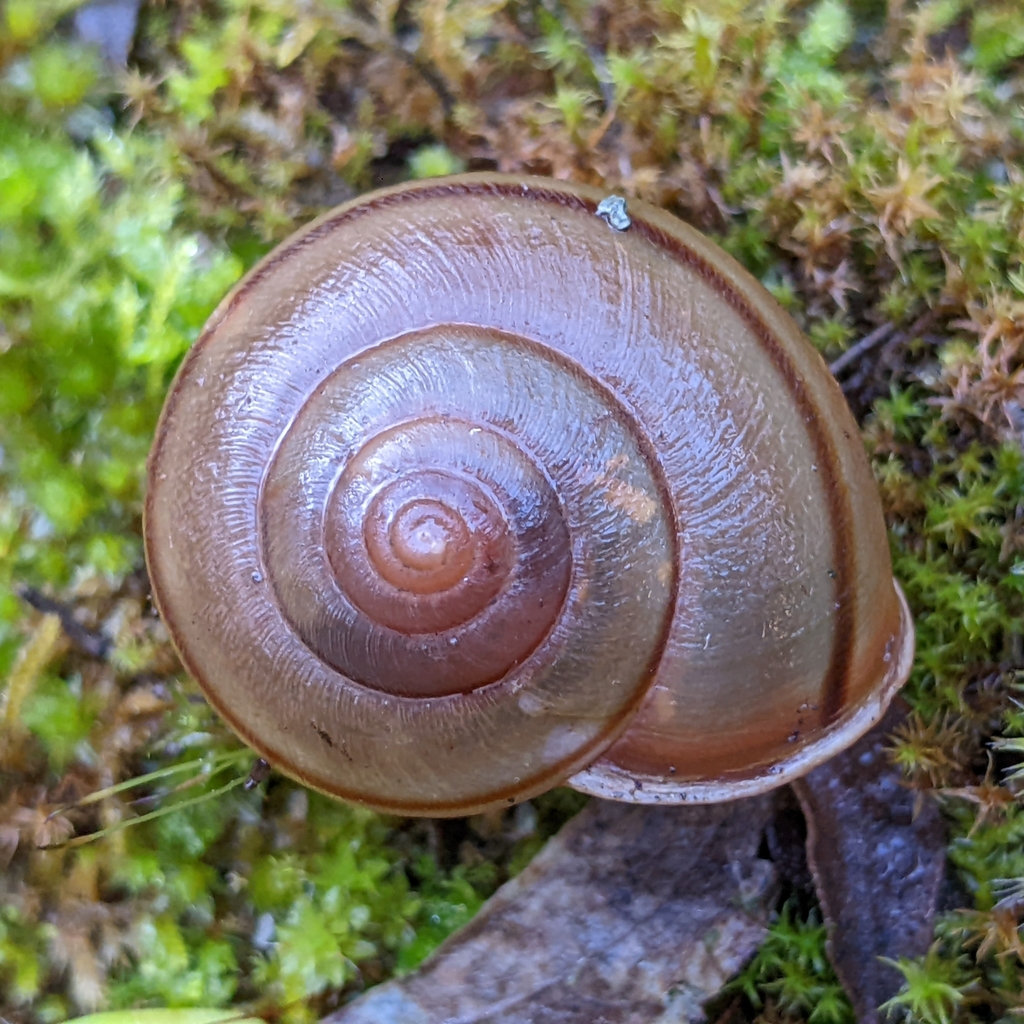
(c) Ken-ichi Ueda, some rights reserved (CC BY) · licence
Family: Helminthoglyptidae · Class: Gastropoda · Order: Stylommatophora
Conservation status: G2G3T1 S1
Helminthoglypta arrosa monticola (Mountain Shoulderband) is a California animal in the Helminthoglyptidae family.
The Mountain Shoulderband (Helminthoglypta arrosa monticola) is a terrestrial gastropod subspecies endemic to California's coastal mountain regions. This land snail belongs to the family Helminthoglyptidae, a group of medium to large-sized snails characterized by globular shells with distinctive shoulder angles. The Mountain Shoulderband displays the typical shoulderband shell morphology, with a rounded, moderately depressed shell featuring pronounced spiral ridges and a characteristic shoulder or keel around the body whorl. The subspecies occurs within a highly restricted range in California's coastal mountain systems. Based on its Global/State Rank of G2G3T1 S1, this taxon represents an extremely rare subspecies of an already uncommon to rare species complex. The T1 ranking indicates this subspecies is critically imperiled, with typically five or fewer occurrences or very few remaining individuals. The S1 state ranking confirms its critical status within California. Mountain Shoulderband snails inhabit montane environments within California's coastal ranges. Like other members of the Helminthoglypta genus, this subspecies likely requires specific microhabitat conditions including adequate moisture, appropriate soil chemistry, and suitable vegetation cover. These snails typically favor areas with leaf litter, rotting logs, and rocky crevices that provide shelter and maintain necessary humidity levels. The montane designation suggests this subspecies occurs at higher elevations compared to other H. arrosa subspecies. As herbivorous gastropods, Mountain Shoulderband snails feed on decaying organic matter, fungi, and various plant materials. Their feeding activity contributes to nutrient cycling in forest ecosystems. Like most terrestrial snails, they are most active during periods of high humidity, particularly after rainfall or during foggy conditions. Reproduction involves hermaphroditic mating, with individuals laying eggs in suitable soil or leaf litter substrates. Development is direct, with young snails emerging as miniature versions of adults. The Mountain Shoulderband's conservation status reflects the precarious situation facing many endemic California gastropods. The extremely restricted range and T1/S1 rankings indicate this subspecies faces immediate extinction risk. Primary threats likely include habitat loss and fragmentation from development, altered fire regimes, climate change impacts on montane moisture patterns, and potential competition from invasive species. The specialized habitat requirements and limited dispersal ability of terrestrial snails make them particularly vulnerable to environmental changes. Detailed ecological studies and population assessments are needed to develop effective conservation strategies for this critically imperiled subspecies. Protection of remaining habitat and monitoring of population trends are essential for preventing extinction of this endemic California gastropod.
Classification
Class: Gastropoda · Order: Stylommatophora · Family: Helminthoglyptidae
Conservation status
G2G3T1 S1
Frequently asked questions
How is Helminthoglypta arrosa monticola classified?
Helminthoglypta arrosa monticola belongs to class Gastropoda, order Stylommatophora, family Helminthoglyptidae.
What family does Helminthoglypta arrosa monticola belong to?
Helminthoglypta arrosa monticola is in the Helminthoglyptidae family.
Is Helminthoglypta arrosa monticola protected or of conservation concern?
Helminthoglypta arrosa monticola carries the following status: G2G3T1 S1.
What is Helminthoglypta arrosa monticola?
The Mountain Shoulderband (Helminthoglypta arrosa monticola) is a terrestrial gastropod subspecies endemic to California's coastal mountain regions.
Is Helminthoglypta arrosa monticola found in California?
Yes. Helminthoglypta arrosa monticola is recorded in California in The California Species Project's catalogue.
Related species
Other California species in the same genus, family, or bioregion.
Data from The California Species Project — 14,000+ California species with verified data from CNPS, CDFW, USFWS, and more.