Helminthoglypta arrosa pomoensis
Pomo Bronze Shoulderband
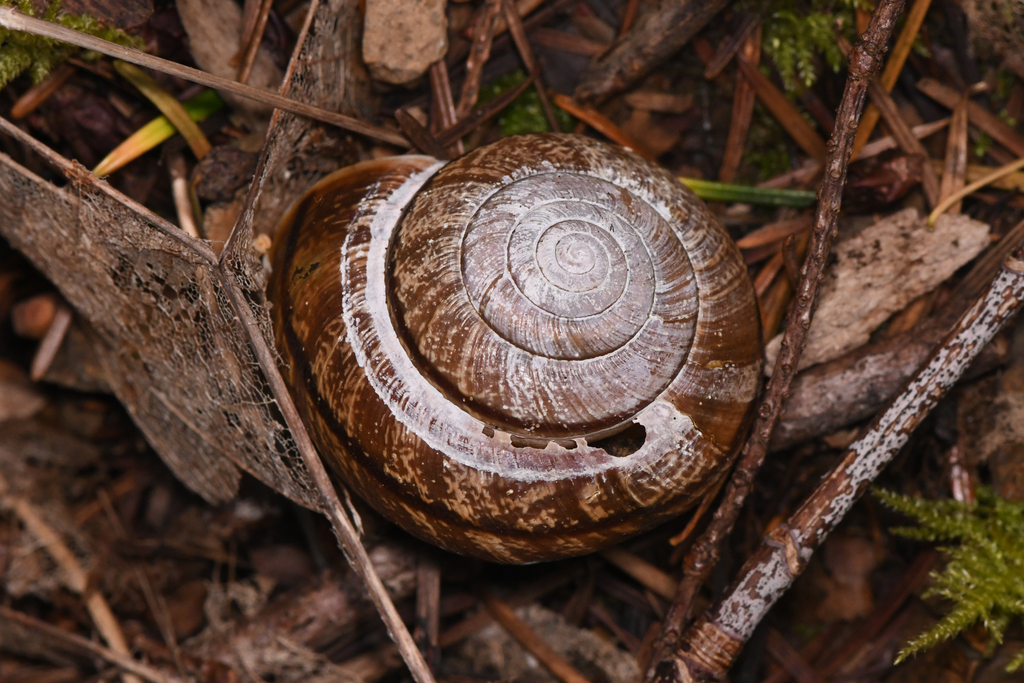
(c) Trevor Van Loon, some rights reserved (CC BY) · licence
Family: Helminthoglyptidae · Class: Gastropoda · Order: Stylommatophora
Conservation status: G2G3T1 S1
Helminthoglypta arrosa pomoensis (Pomo Bronze Shoulderband) is a California animal in the Helminthoglyptidae family.
The Pomo bronze shoulderband is a terrestrial gastropod subspecies endemic to a very limited area of northern California. This land snail belongs to the genus Helminthoglypta, a group of shoulderband snails characterized by their spiral shells and terrestrial lifestyle. Physical characteristics specific to this subspecies have not been well documented in available scientific literature, though related Helminthoglypta species typically possess brown to bronze-colored shells with distinctive banding patterns that give the group its common name. The Pomo bronze shoulderband has an extremely restricted range, occurring only in Mendocino County, California (NatureServe 2025). This narrow distribution makes it one of the most geographically limited subspecies within the Helminthoglypta arrosa complex. The subspecies is part of a larger species group that includes several other rare subspecies such as the Cape Mendocino snail (H. a. mattolensis) and the Dented Peninsula snail (H. a. miwoka), each adapted to specific coastal and inland habitats of northern California. Specific habitat requirements for the Pomo bronze shoulderband remain poorly documented. However, research on related coastal Helminthoglypta species suggests these snails inhabit forest and woodland environments where they require adequate moisture and organic matter for survival. Adult snails in this genus typically emerge from estivation following the first saturating rains of October, when ambient air becomes cool and humid, and may begin mating within 24 hours after these precipitation events (California Department of Fish and Wildlife 2022). Like other terrestrial gastropods, the Pomo bronze shoulderband likely exhibits seasonal activity patterns tied to moisture availability. These snails are most active during cool, humid conditions, particularly at night and during overcast or rainy days. During dry periods, they enter estivation, a dormancy state that allows them to survive California's Mediterranean climate with its pronounced dry seasons. Reproduction timing appears closely linked to autumn rainfall patterns, with mating activities concentrated in October and November when environmental conditions become favorable. The conservation status of the Pomo bronze shoulderband reflects significant concern about its long-term viability. NatureServe ranks the subspecies as T1, indicating it is critically imperiled with a very high risk of extinction due to extreme rarity. The subspecies also carries a State rank of S1 in California, designating it as critically imperiled within the state. While not currently listed under the federal Endangered Species Act, the U.S. Fish and Wildlife Service has acknowledged this subspecies in their species database, and related Helminthoglypta taxa are being considered for federal protection (USFWS 2011). The extremely limited range in Mendocino County makes this subspecies particularly vulnerable to habitat loss, environmental degradation, and climate change impacts. Forest management practices, development pressure, and altered precipitation patterns associated with climate change pose ongoing threats to suitable habitat for this and other northern California terrestrial gastropods.
Classification
Class: Gastropoda · Order: Stylommatophora · Family: Helminthoglyptidae
Conservation status
G2G3T1 S1
Frequently asked questions
How is Helminthoglypta arrosa pomoensis classified?
Helminthoglypta arrosa pomoensis belongs to class Gastropoda, order Stylommatophora, family Helminthoglyptidae.
What family does Helminthoglypta arrosa pomoensis belong to?
Helminthoglypta arrosa pomoensis is in the Helminthoglyptidae family.
Is Helminthoglypta arrosa pomoensis protected or of conservation concern?
Helminthoglypta arrosa pomoensis carries the following status: G2G3T1 S1.
What is Helminthoglypta arrosa pomoensis?
The Pomo bronze shoulderband is a terrestrial gastropod subspecies endemic to a very limited area of northern California.
Is Helminthoglypta arrosa pomoensis found in California?
Yes. Helminthoglypta arrosa pomoensis is recorded in California in The California Species Project's catalogue.
Related species
Other California species in the same genus, family, or bioregion.
Data from The California Species Project — 14,000+ California species with verified data from CNPS, CDFW, USFWS, and more.