Helminthoglypta callistoderma
Kern Shoulderband
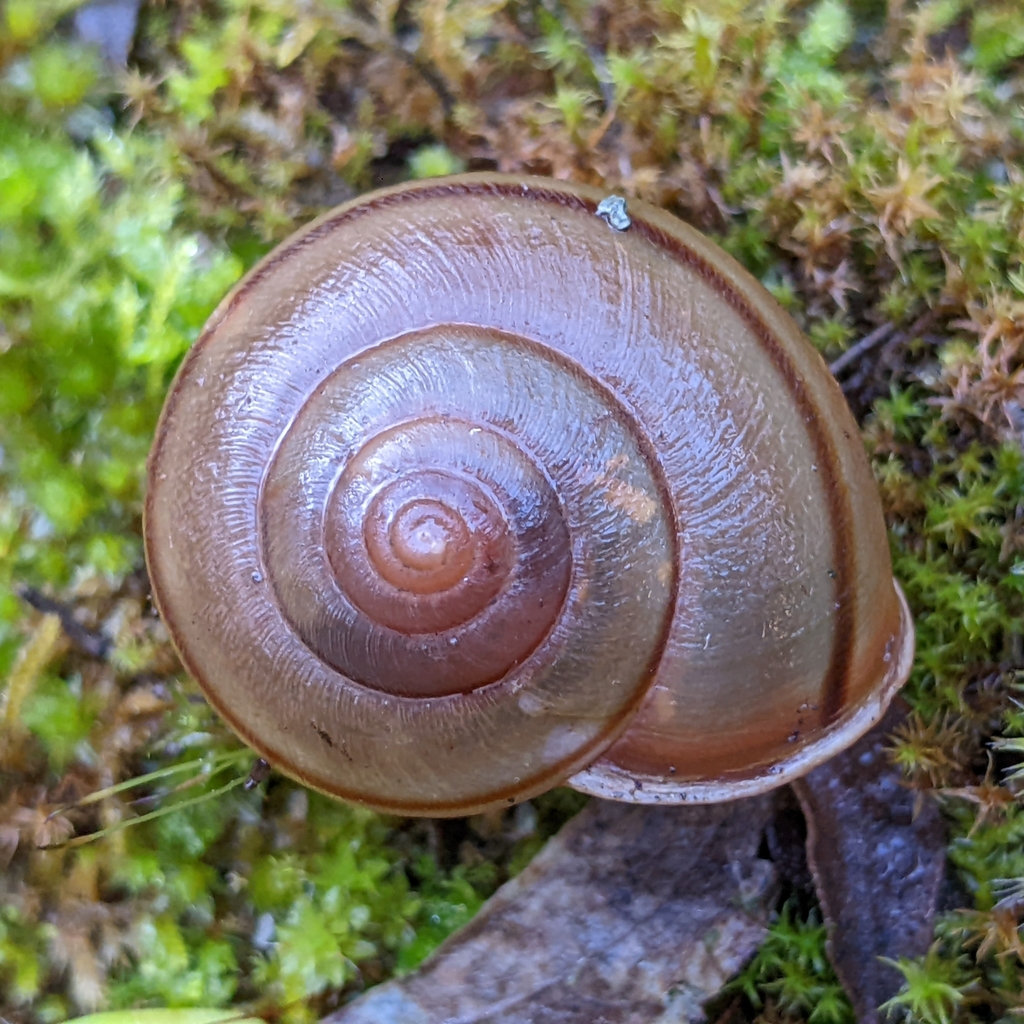
(c) Ken-ichi Ueda, some rights reserved (CC BY) · licence
Family: Helminthoglyptidae · Class: Gastropoda · Order: Stylommatophora
Conservation status: G1 S1
Helminthoglypta callistoderma (Kern Shoulderband) is a California animal in the Helminthoglyptidae family.
The Kern Shoulderband (Helminthoglypta callistoderma) is a terrestrial gastropod mollusk in the family Helminthoglyptidae endemic to California. This land snail belongs to the genus Helminthoglypta, which comprises numerous shoulderband snails distributed across the southwestern United States. The species was first described by Pilsbry in 1917 and is distinguished by morphological characteristics typical of the Helminthoglypta complex, including a distinctive shell structure with banding patterns that give the group its common name. Historically, H. callistoderma was known from Kern County, California, representing one of the more geographically restricted members of its genus. The species' range appears to have been limited to specific localities within the southern Central Valley region and adjacent foothill areas of Kern County. Unlike some related species that have broader distributions across multiple counties, the Kern Shoulderband's occurrence was documented from a relatively small geographic area. The habitat requirements of H. callistoderma likely included the oak woodland, grassland, and chaparral communities characteristic of the Kern County region. Like other Helminthoglypta species, this land snail presumably occupied areas with appropriate moisture regimes, suitable soil conditions, and adequate leaf litter or vegetation for shelter and feeding. The species would have required microhabitats that provided protection from desiccation during dry periods, as is typical for terrestrial gastropods in Mediterranean climate regions. As a terrestrial gastropod, H. callistoderma would have exhibited typical land snail ecology, including herbivorous feeding on decaying plant material, fungi, and possibly living vegetation. Reproduction likely involved the deposition of eggs in moist soil or under protective cover, with development following patterns common to related shoulderband snails. Activity patterns would have been influenced by moisture availability, with increased movement and feeding during favorable conditions. The conservation status of the Kern Shoulderband is of significant concern. NatureServe currently assigns this species a Global Status of GH (Global Historic), indicating that it is known only from historical records and may be extinct (NatureServe Explorer). The Global Status was last reviewed on December 15, 2018. This classification suggests that despite historical documentation of the species, no recent confirmed populations have been located. The species is not currently listed under the federal Endangered Species Act, though its apparent absence from recent surveys raises questions about its continued existence. The potential extinction or extreme rarity of H. callistoderma likely results from habitat loss and degradation in Kern County associated with agricultural conversion, urban development, and altered land management practices. The species' restricted range would have made it particularly vulnerable to localized habitat changes. This species is included on the California Department of Fish and Wildlife's Special Animals List. Without confirmed recent observations, the current status of the Kern Shoulderband remains uncertain, highlighting the need for targeted surveys to determine whether viable populations persist in suitable habitat remnants within its historical range.
Classification
Class: Gastropoda · Order: Stylommatophora · Family: Helminthoglyptidae
Conservation status
G1 S1
Frequently asked questions
How is Helminthoglypta callistoderma classified?
Helminthoglypta callistoderma belongs to class Gastropoda, order Stylommatophora, family Helminthoglyptidae.
What family does Helminthoglypta callistoderma belong to?
Helminthoglypta callistoderma is in the Helminthoglyptidae family.
Is Helminthoglypta callistoderma protected or of conservation concern?
Helminthoglypta callistoderma carries the following status: G1 S1.
What is Helminthoglypta callistoderma?
The Kern Shoulderband (Helminthoglypta callistoderma) is a terrestrial gastropod mollusk in the family Helminthoglyptidae endemic to California.
Is Helminthoglypta callistoderma found in California?
Yes. Helminthoglypta callistoderma is recorded in California in The California Species Project's catalogue.
Related species
Other California species in the same genus, family, or bioregion.
Data from The California Species Project — 14,000+ California species with verified data from CNPS, CDFW, USFWS, and more.