Helminthoglypta concolor
Whitefir Shoulderband
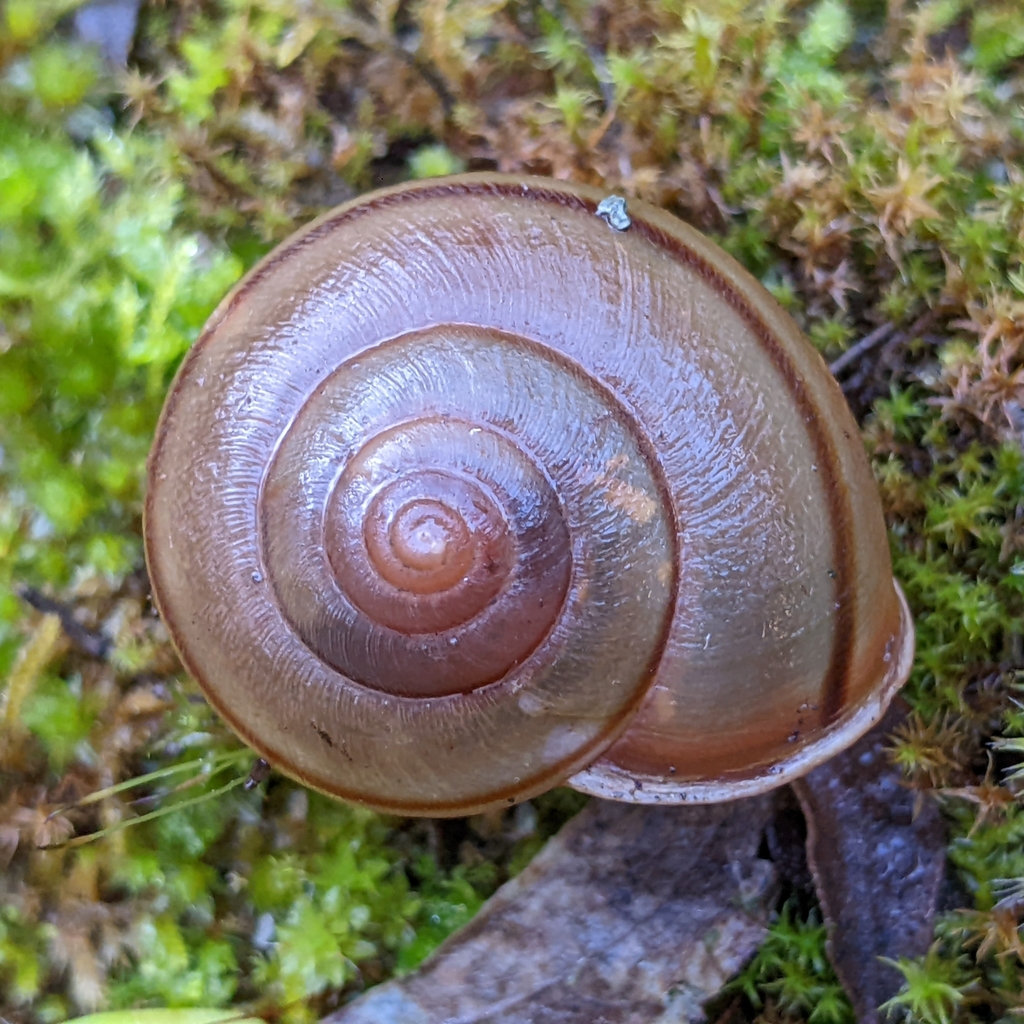
(c) Ken-ichi Ueda, some rights reserved (CC BY) · licence
Family: Helminthoglyptidae · Class: Gastropoda · Order: Stylommatophora
Conservation status: G1G2 S1S2
Helminthoglypta concolor (Whitefir Shoulderband) is a California animal in the Helminthoglyptidae family.
Helminthoglypta concolor, known as the Whitefir Shoulderband, is a terrestrial gastropod mollusk in the family Helminthoglyptidae. This species represents one of the lesser-documented members of the shoulderband snail complex found in California. The genus Helminthoglypta comprises a diverse group of terrestrial snails characterized by their distinctive shell patterns, though specific morphological details for H. concolor remain poorly documented in the scientific literature. The range and distribution of the Whitefir Shoulderband have not been comprehensively mapped. Based on the common name, the species likely occurs in association with white fir (Abies concolor) forest ecosystems, though specific geographic boundaries and population centers remain undocumented. The species' distribution pattern within California requires further field survey work to establish precise locality records and range limits. Habitat associations for H. concolor appear linked to white fir forest environments, as suggested by the common name. White fir forests in California typically occur at elevations between 1,200 and 2,700 meters in the Sierra Nevada and other mountain ranges, characterized by mixed conifer communities. These forests provide the cool, moist microhabitats generally preferred by terrestrial gastropods, including leaf litter, fallen logs, and areas with consistent soil moisture. However, specific microhabitat requirements, substrate preferences, and elevation ranges for this species have not been systematically studied. Ecological information for the Whitefir Shoulderband remains largely undocumented. Like other terrestrial gastropods in the family Helminthoglyptidae, the species likely feeds on decomposing organic matter, fungi, and possibly living plant material. Reproductive biology, including mating systems, egg-laying behavior, and seasonal activity patterns, has not been described. The species' role in forest ecosystem processes and interactions with other invertebrate communities requires investigation. Conservation status assessment for H. concolor is hindered by the lack of comprehensive population data and ecological studies. The species carries a global rank of G1G2, indicating it is critically imperiled to imperiled throughout its range, and a state rank of S1S2, suggesting similar status within California. These rankings reflect the species' apparent rarity and limited distribution, though they are based on incomplete survey data. The species does not currently receive federal or state listing protection under endangered species legislation. Primary conservation concerns likely include habitat modification in white fir forest ecosystems, though specific threats have not been identified through systematic assessment. The limited scientific documentation for this species represents a significant knowledge gap in California's terrestrial gastropod fauna. Comprehensive field surveys, taxonomic verification, and ecological studies are needed to establish basic biological and conservation parameters for H. concolor. Until such studies are completed, the species' true conservation status and management needs remain uncertain.
Classification
Class: Gastropoda · Order: Stylommatophora · Family: Helminthoglyptidae
Conservation status
G1G2 S1S2
Frequently asked questions
How is Helminthoglypta concolor classified?
Helminthoglypta concolor belongs to class Gastropoda, order Stylommatophora, family Helminthoglyptidae.
What family does Helminthoglypta concolor belong to?
Helminthoglypta concolor is in the Helminthoglyptidae family.
Is Helminthoglypta concolor protected or of conservation concern?
Helminthoglypta concolor carries the following status: G1G2 S1S2.
What is Helminthoglypta concolor?
Helminthoglypta concolor, known as the Whitefir Shoulderband, is a terrestrial gastropod mollusk in the family Helminthoglyptidae.
Is Helminthoglypta concolor found in California?
Yes. Helminthoglypta concolor is recorded in California in The California Species Project's catalogue.
Related species
Other California species in the same genus, family, or bioregion.
Data from The California Species Project — 14,000+ California species with verified data from CNPS, CDFW, USFWS, and more.