Helminthoglypta fontiphila
Soledad Shoulderband
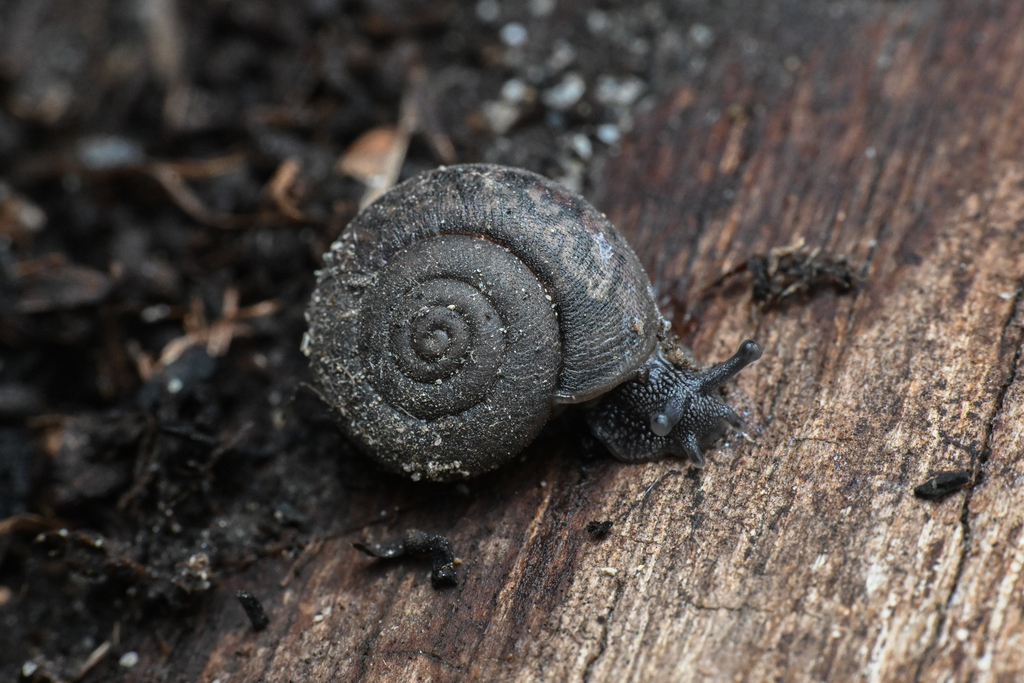
(c) Trevor Van Loon, some rights reserved (CC BY) · licence
Family: Helminthoglyptidae · Class: Gastropoda · Order: Stylommatophora
Conservation status: G1 S1
Helminthoglypta fontiphila (Soledad Shoulderband) is a California animal in the Helminthoglyptidae family.
The Soledad Shoulderband (Helminthoglypta fontiphila) is a terrestrial gastropod mollusk in the family Helminthoglyptidae, endemic to a highly restricted area of southern California. This land snail is characterized by its distinctive shell morphology typical of the genus Helminthoglypta, with a spiraled structure that exhibits the characteristic shoulder or keel that gives shoulderband snails their common name. The species has an extremely limited range, occurring only in Los Angeles County, California, north of the city of Los Angeles (NatureServe 2025). Historical records indicate the species was originally described from areas that are now part of the greater Los Angeles metropolitan region, making it one of California's most geographically restricted endemic mollusks. The precise boundaries of its current distribution remain poorly documented, though it appears to be confined to specific habitat patches within this urban-adjacent landscape. Habitat requirements for H. fontiphila are not well documented in the scientific literature, though like other members of the genus Helminthoglypta, it likely requires specific microhabitat conditions including appropriate moisture levels, vegetation cover, and soil composition. The species presumably occupies native plant communities or their remnants within its Los Angeles County range, potentially including coastal sage scrub, chaparral, or oak woodland habitats that historically characterized the region. The urban development pressures in this area suggest that suitable habitat has been significantly fragmented or eliminated. Specific ecological behaviors, reproductive patterns, and dietary preferences of the Soledad Shoulderband have not been thoroughly studied or documented in available scientific literature. Like other terrestrial gastropods, it likely feeds on decaying organic matter, fungi, and possibly living plant material. Reproduction probably follows typical patterns for helminthoglyptid snails, involving hermaphroditic individuals that engage in reciprocal mating and lay eggs in soil or leaf litter during favorable moisture conditions. The conservation status of H. fontiphila reflects its precarious position as one of California's most imperiled invertebrates. With a Global/State Rank of G1 S1, the species is considered critically imperiled both globally and within California, indicating an extremely high risk of extinction. The primary threats to this species likely include habitat loss and fragmentation due to urban development, altered hydrology, invasive plant species, and potential impacts from pollution associated with the heavily developed Los Angeles metropolitan area. The species' restriction to Los Angeles County places it in one of California's most densely populated and rapidly developing regions. Detailed ecological studies and population assessments are urgently needed to develop effective conservation strategies for this critically imperiled endemic species. The limited available information underscores the need for comprehensive field surveys to determine current population status, habitat requirements, and immediate conservation needs. Without active management and habitat protection, H. fontiphila faces a high probability of extinction in the near future.
Classification
Class: Gastropoda · Order: Stylommatophora · Family: Helminthoglyptidae
Conservation status
G1 S1
Frequently asked questions
How is Helminthoglypta fontiphila classified?
Helminthoglypta fontiphila belongs to class Gastropoda, order Stylommatophora, family Helminthoglyptidae.
What family does Helminthoglypta fontiphila belong to?
Helminthoglypta fontiphila is in the Helminthoglyptidae family.
Is Helminthoglypta fontiphila protected or of conservation concern?
Helminthoglypta fontiphila carries the following status: G1 S1.
What is Helminthoglypta fontiphila?
The Soledad Shoulderband (Helminthoglypta fontiphila) is a terrestrial gastropod mollusk in the family Helminthoglyptidae, endemic to a highly restricted area of southern California.
Is Helminthoglypta fontiphila found in California?
Yes. Helminthoglypta fontiphila is recorded in California in The California Species Project's catalogue.
Related species
Other California species in the same genus, family, or bioregion.
Data from The California Species Project — 14,000+ California species with verified data from CNPS, CDFW, USFWS, and more.