Helminthoglypta greggi
Mohave Shoulderband
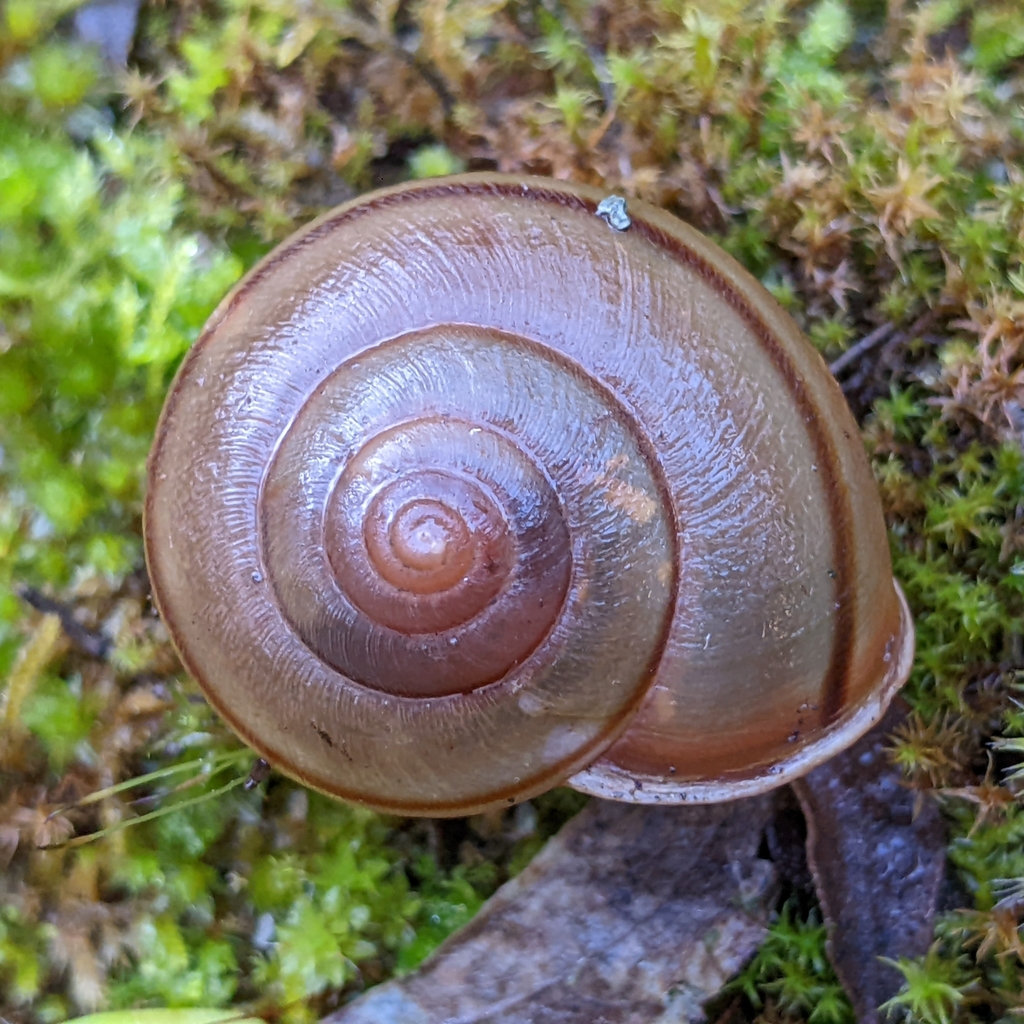
(c) Ken-ichi Ueda, some rights reserved (CC BY) · licence
Family: Helminthoglyptidae · Class: Gastropoda · Order: Stylommatophora
Conservation status: G2 S2
Helminthoglypta greggi (Mohave Shoulderband) is a California animal in the Helminthoglyptidae family.
The Mohave shoulderband (Helminthoglypta greggi) is a terrestrial gastropod snail in the family Helminthoglyptidae. This species is one of at least 60 named Helminthoglypta species found in California and southern Oregon. Adults possess the characteristic shoulderband marking that gives the species its common name, though specific morphological details require further documentation. The Mohave shoulderband is distributed as several subspecies across southern California extending into northwestern Baja California, Mexico (iNaturalist). The species occurs within the Mojave Desert region, with populations documented in San Bernardino County. Prior to systematic surveys conducted in 2017, the species' distribution and population status were poorly understood (BYU Scholars Archive). This desert-dwelling snail inhabits arid environments characteristic of the Mojave Desert ecosystem. The species demonstrates subsurface burrowing behavior as an adaptation to the harsh desert climate (BYU Scholars Archive). Specific vegetation associations and microhabitat requirements have not been well documented, representing a significant knowledge gap for this species. Like other terrestrial gastropods, Helminthoglypta greggi exhibits limited mobility, typically moving only to locate food sources or reproductive partners. The species relies primarily on olfaction as its main sensory mechanism for navigation and resource detection (NatureServe Explorer). Specific dietary preferences, reproductive timing, and seasonal activity patterns require additional research. The species' burrowing behavior likely serves as a critical survival strategy during extreme temperature periods and drought conditions common in desert environments. The Mohave shoulderband holds a conservation ranking of G2 S2, indicating it is imperiled both globally and within California due to rarity and vulnerability to extirpation. The species is listed as critically imperiled, reflecting serious conservation concerns (iNaturalist). Economic analyses have been conducted regarding potential conservation measures, as the species has been considered for protection under the Endangered Species Act (Inquiries Journal). The U.S. Fish and Wildlife Service maintains a species profile for Helminthoglypta greggi, though no recovery plans or conservation strategies are currently available (USFWS ECOS). Primary threats to the species likely include habitat degradation, urban development pressures, and climate change impacts on desert ecosystems, though specific threat assessments have not been comprehensively documented. Scientific documentation for this species remains limited despite its conservation status. Research conducted in 2017 represented some of the first systematic survey efforts for this desert gastropod. The information presented here is based on available government databases and limited scientific literature. If you have additional verified information about this species' biology, distribution, or ecology, please contact relevant agencies to help improve this species account.
Classification
Class: Gastropoda · Order: Stylommatophora · Family: Helminthoglyptidae
Conservation status
G2 S2
Frequently asked questions
How is Helminthoglypta greggi classified?
Helminthoglypta greggi belongs to class Gastropoda, order Stylommatophora, family Helminthoglyptidae.
What family does Helminthoglypta greggi belong to?
Helminthoglypta greggi is in the Helminthoglyptidae family.
Is Helminthoglypta greggi protected or of conservation concern?
Helminthoglypta greggi carries the following status: G2 S2.
What is Helminthoglypta greggi?
The Mohave shoulderband (Helminthoglypta greggi) is a terrestrial gastropod snail in the family Helminthoglyptidae.
Is Helminthoglypta greggi found in California?
Yes. Helminthoglypta greggi is recorded in California in The California Species Project's catalogue.
Related species
Other California species in the same genus, family, or bioregion.
Data from The California Species Project — 14,000+ California species with verified data from CNPS, CDFW, USFWS, and more.