Helminthoglypta milleri
Peak Shoulderband
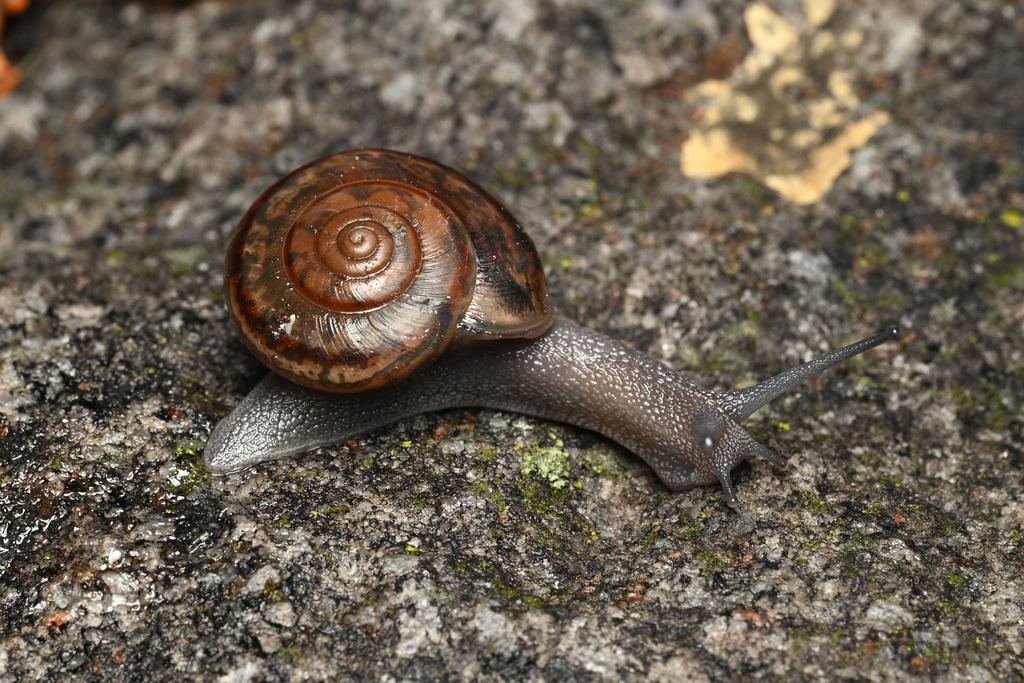
(c) Trevor Van Loon, some rights reserved (CC BY) · licence
Family: Helminthoglyptidae · Class: Gastropoda · Order: Stylommatophora
Conservation status: G1 S1
Helminthoglypta milleri (Peak Shoulderband) is a California animal in the Helminthoglyptidae family.
The Peak Shoulderband (Helminthoglypta milleri) is a terrestrial gastropod mollusk in the family Helminthoglyptidae, representing one of California's rarest native land snails. This species belongs to a genus of shoulderband snails characterized by their distinctive shell morphology, though specific morphological details for H. milleri remain poorly documented in the scientific literature. The species' range and distribution are extremely limited, contributing to its critical conservation status. Based on available taxonomic records, H. milleri appears to be endemic to a restricted area within California, though precise locality data and habitat boundaries have not been comprehensively mapped. The species' common name 'Peak Shoulderband' suggests an association with elevated terrain or mountainous habitat. Like other members of the Helminthoglypta genus, the Peak Shoulderband likely inhabits terrestrial environments where it can find appropriate shelter and moisture conditions. Related shoulderband species typically occur in areas with suitable microhabitat features including rock crevices, leaf litter, or vegetation that provides protection from desiccation. The specific elevation range, substrate preferences, and vegetation associations for H. milleri have not been well documented in available literature. Ecological information for this species remains limited. Most Helminthoglypta species are herbivorous, feeding on decomposing plant material, fungi, and organic matter in the soil. Reproductive behavior likely follows patterns typical of the genus, with individuals being hermaphroditic and capable of both self-fertilization and cross-fertilization. Seasonal activity patterns, breeding timing, and population dynamics have not been specifically studied for H. milleri. The Peak Shoulderband carries a Global/State Rank of G1 S1, indicating it is critically imperiled both globally and within California, with typically 5 or fewer occurrences or very few remaining individuals. This ranking places the species among California's most conservation-dependent invertebrates. The species does not currently appear on federal or state endangered species lists, despite its critically imperiled status. Primary threats to the species likely include habitat loss, fragmentation, and degradation from human activities, as well as potential impacts from climate change affecting moisture availability in its terrestrial habitat. The lack of comprehensive biological and ecological data for H. milleri represents a significant knowledge gap that hampers effective conservation planning. Current conservation priorities should include conducting field surveys to determine the species' current distribution and population status, identifying specific habitat requirements, and assessing immediate threats to remaining populations. Without immediate attention to survey and protection efforts, this critically imperiled species faces an uncertain future. Detailed ecological studies of this species are lacking. This species is included on the California Department of Fish and Wildlife's Special Animals List. The above information synthesizes available taxonomic and conservation status data from authoritative sources. We welcome contributions of verified scientific data, photographs, or field observations to enhance this species account.
Classification
Class: Gastropoda · Order: Stylommatophora · Family: Helminthoglyptidae
Conservation status
G1 S1
Frequently asked questions
How is Helminthoglypta milleri classified?
Helminthoglypta milleri belongs to class Gastropoda, order Stylommatophora, family Helminthoglyptidae.
What family does Helminthoglypta milleri belong to?
Helminthoglypta milleri is in the Helminthoglyptidae family.
Is Helminthoglypta milleri protected or of conservation concern?
Helminthoglypta milleri carries the following status: G1 S1.
What is Helminthoglypta milleri?
The Peak Shoulderband (Helminthoglypta milleri) is a terrestrial gastropod mollusk in the family Helminthoglyptidae, representing one of California's rarest native land snails.
Is Helminthoglypta milleri found in California?
Yes. Helminthoglypta milleri is recorded in California in The California Species Project's catalogue.
Related species
Other California species in the same genus, family, or bioregion.
Data from The California Species Project — 14,000+ California species with verified data from CNPS, CDFW, USFWS, and more.