Helminthoglypta nickliniana
Nicklin's Shoulderband Snail
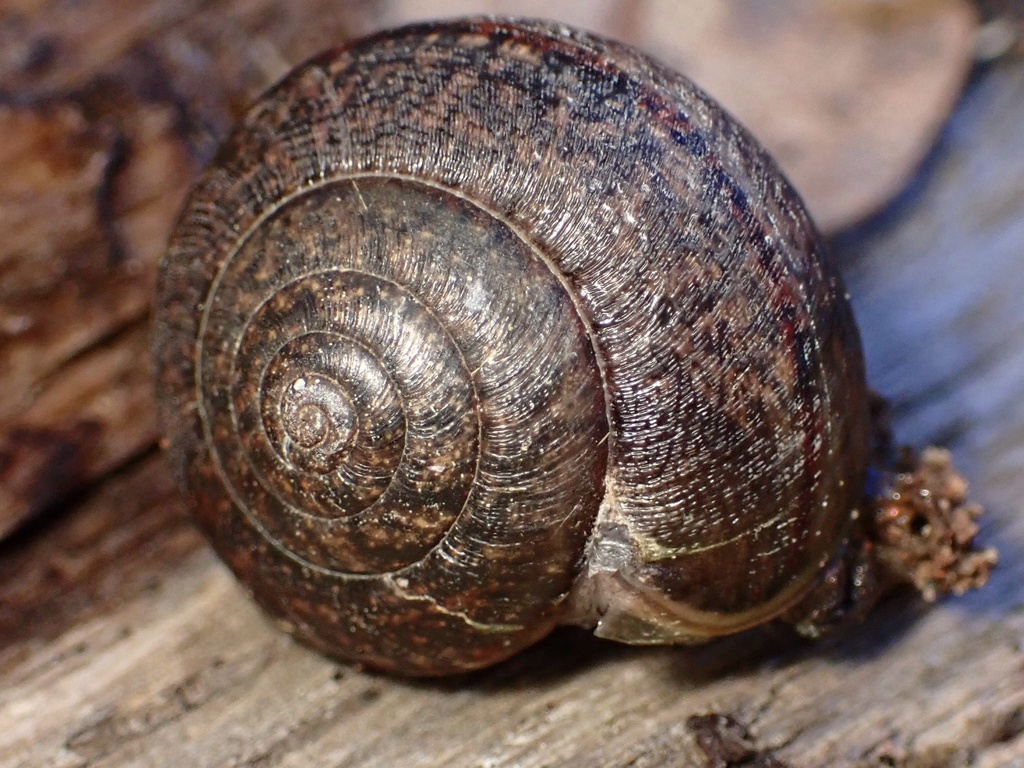
(c) Cricket Raspet, some rights reserved (CC BY) · licence
Family: Helminthoglyptidae · Class: Gastropoda · Order: Stylommatophora
Helminthoglypta nickliniana (Nicklin's Shoulderband Snail) is a California animal in the Helminthoglyptidae family.
Nicklin's Shoulderband Snail (Helminthoglypta nickliniana) is a terrestrial gastropod endemic to California's Coast Range. This species belongs to the family Helminthoglyptidae and represents one of several subspecies within the nickliniana complex, including the federally recognized subspecies H. n. bridgesi (Bridges' Coast Range shoulderband) and H. n. awania (Peninsula Coast Range shoulderband). The shell of Helminthoglypta nickliniana is characterized by the distinctive shoulderband marking that gives the species its common name. Like other members of the genus, adults possess a helicoid shell with multiple whorls and a relatively wide aperture. The species exhibits the typical gastropod body plan with a muscular foot for locomotion, tentacles bearing eyes, and a radula for feeding. Specific morphometric data for the nominate subspecies remains limited in published literature. Historically, Helminthoglypta nickliniana occurred throughout California's Coast Range, with different subspecies occupying distinct geographic regions. The subspecies H. n. bridgesi is found in the northern Coast Range, while H. n. awania occurs on the Peninsula. According to the U.S. Fish and Wildlife Service, both recognized subspecies are currently designated as Species of Concern, indicating populations face threats but do not yet warrant federal listing protection. This species inhabits oak woodlands, chaparral, and mixed evergreen forests characteristic of California's Coast Range ecosystem. Like other Helminthoglypta species, it likely requires areas with adequate moisture retention, leaf litter for shelter, and calcium-rich soils for shell development. The species appears to favor areas with moderate canopy cover that provide protection from desiccation while maintaining sufficient understory vegetation. As with most terrestrial gastropods, Helminthoglypta nickliniana is primarily nocturnal and active during periods of high humidity. The species likely feeds on decomposing organic matter, fungi, and possibly living plant material, using its radula to scrape food particles. Reproduction involves cross-fertilization between hermaphroditic individuals, with eggs deposited in soil or leaf litter. Seasonal activity patterns and specific reproductive timing have not been well documented for this species. The conservation status of Helminthoglypta nickliniana reflects concerns about habitat loss and fragmentation throughout the California Coast Range. Urban development, agriculture, and altered fire regimes pose ongoing threats to remaining populations. The USFWS designation of subspecies as Species of Concern acknowledges the need for monitoring and potential conservation action. NatureServe assigns a Global 3 (G3) status to the subspecies H. n. bridgesi, indicating it is vulnerable to extinction due to restricted range and declining populations (NatureServe 2005). Comprehensive surveys and taxonomic research are needed to better understand the distribution, population trends, and conservation requirements of this endemic California gastropod species.
Classification
Class: Gastropoda · Order: Stylommatophora · Family: Helminthoglyptidae
Frequently asked questions
How is Helminthoglypta nickliniana classified?
Helminthoglypta nickliniana belongs to class Gastropoda, order Stylommatophora, family Helminthoglyptidae.
What family does Helminthoglypta nickliniana belong to?
Helminthoglypta nickliniana is in the Helminthoglyptidae family.
What is Helminthoglypta nickliniana?
Nicklin's Shoulderband Snail (Helminthoglypta nickliniana) is a terrestrial gastropod endemic to California's Coast Range.
Is Helminthoglypta nickliniana found in California?
Yes. Helminthoglypta nickliniana is recorded in California in The California Species Project's catalogue.
Related species
Other California species in the same genus, family, or bioregion.
Data from The California Species Project — 14,000+ California species with verified data from CNPS, CDFW, USFWS, and more.