Helminthoglypta nickliniana awania
Peninsula Coast Range Shoulderband
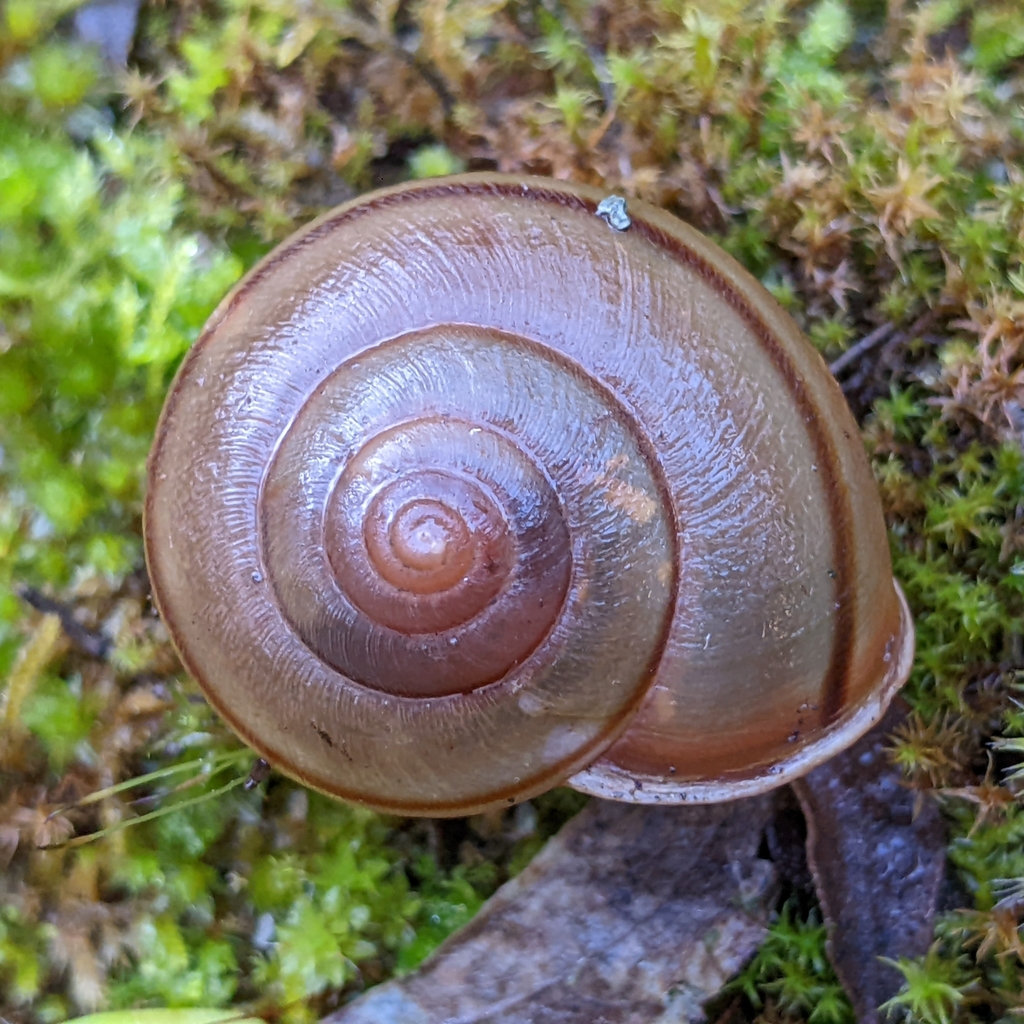
(c) Ken-ichi Ueda, some rights reserved (CC BY) · licence
Family: Helminthoglyptidae · Class: Gastropoda · Order: Stylommatophora
Conservation status: G3T1 S1
Helminthoglypta nickliniana awania (Peninsula Coast Range Shoulderband) is a California animal in the Helminthoglyptidae family.
The Peninsula Coast Range shoulderband is a terrestrial gastropod mollusk endemic to California's central coast region. This land snail belongs to the family Helminthoglyptidae and represents a subspecies of Helminthoglypta nickliniana. Adult shells typically measure 15-20 mm in diameter and display a distinctive brown to tan coloration with darker spiral bands. The shell exhibits the characteristic shouldered whorl structure that gives the species its common name, with a moderately elevated spire and rounded aperture. This subspecies occurs exclusively within a restricted range along California's central coast, primarily in San Mateo County and adjacent areas of the San Francisco Peninsula. Historical records indicate populations existed from the vicinity of San Francisco south through portions of the Coast Range. The species represents one of several geographically isolated subspecies of H. nickliniana distributed across California's coastal mountains. Peninsula Coast Range shoulderbands inhabit coastal scrub, chaparral, and oak woodland communities at elevations typically below 500 meters. They show preference for areas with native vegetation on well-drained slopes, often associated with rocky outcrops or areas with accumulated leaf litter. The species requires adequate moisture retention and shelter provided by shrubs, fallen logs, or rock crevices during dry periods. As with other terrestrial gastropods, Peninsula Coast Range shoulderbands are primarily nocturnal and most active during periods of high humidity. They feed on decaying organic matter, fungi, and occasionally fresh plant material. Reproduction involves the exchange of sperm between hermaphroditic individuals, followed by egg-laying in protected soil locations. The species exhibits seasonal activity patterns, becoming dormant during hot, dry summer months and most active during cooler, wetter periods from fall through spring. The Peninsula Coast Range shoulderband holds a NatureServe global rank of G3T1, indicating it is critically imperiled as a subspecies (NatureServe 2005). The 'T1' ranking reflects extremely high vulnerability to extinction due to very restricted range, few populations, and declining habitat quality. According to the U.S. Fish and Wildlife Service, this subspecies is classified as a Species of Concern, recognizing its conservation need despite lacking formal federal protection as of December 2025. Primary threats include habitat loss from urban development, recreational activities, and invasive plant species that alter native plant communities. The species' extremely limited range on the San Francisco Peninsula, an area subject to intense development pressure, makes it particularly vulnerable to local extinction. Climate change may pose additional risks through altered precipitation patterns and increased fire frequency. No formal recovery plan exists for this subspecies, though habitat protection within existing open space preserves may provide some conservation benefit. Population monitoring and habitat management efforts are needed to prevent further decline of this endemic California gastropod.
Classification
Class: Gastropoda · Order: Stylommatophora · Family: Helminthoglyptidae
Conservation status
G3T1 S1
Frequently asked questions
How is Helminthoglypta nickliniana awania classified?
Helminthoglypta nickliniana awania belongs to class Gastropoda, order Stylommatophora, family Helminthoglyptidae.
What family does Helminthoglypta nickliniana awania belong to?
Helminthoglypta nickliniana awania is in the Helminthoglyptidae family.
Is Helminthoglypta nickliniana awania protected or of conservation concern?
Helminthoglypta nickliniana awania carries the following status: G3T1 S1.
What is Helminthoglypta nickliniana awania?
The Peninsula Coast Range shoulderband is a terrestrial gastropod mollusk endemic to California's central coast region.
Is Helminthoglypta nickliniana awania found in California?
Yes. Helminthoglypta nickliniana awania is recorded in California in The California Species Project's catalogue.
Related species
Other California species in the same genus, family, or bioregion.
Data from The California Species Project — 14,000+ California species with verified data from CNPS, CDFW, USFWS, and more.