Helminthoglypta nickliniana bridgesi
Bridges' Coast Range Shoulderband
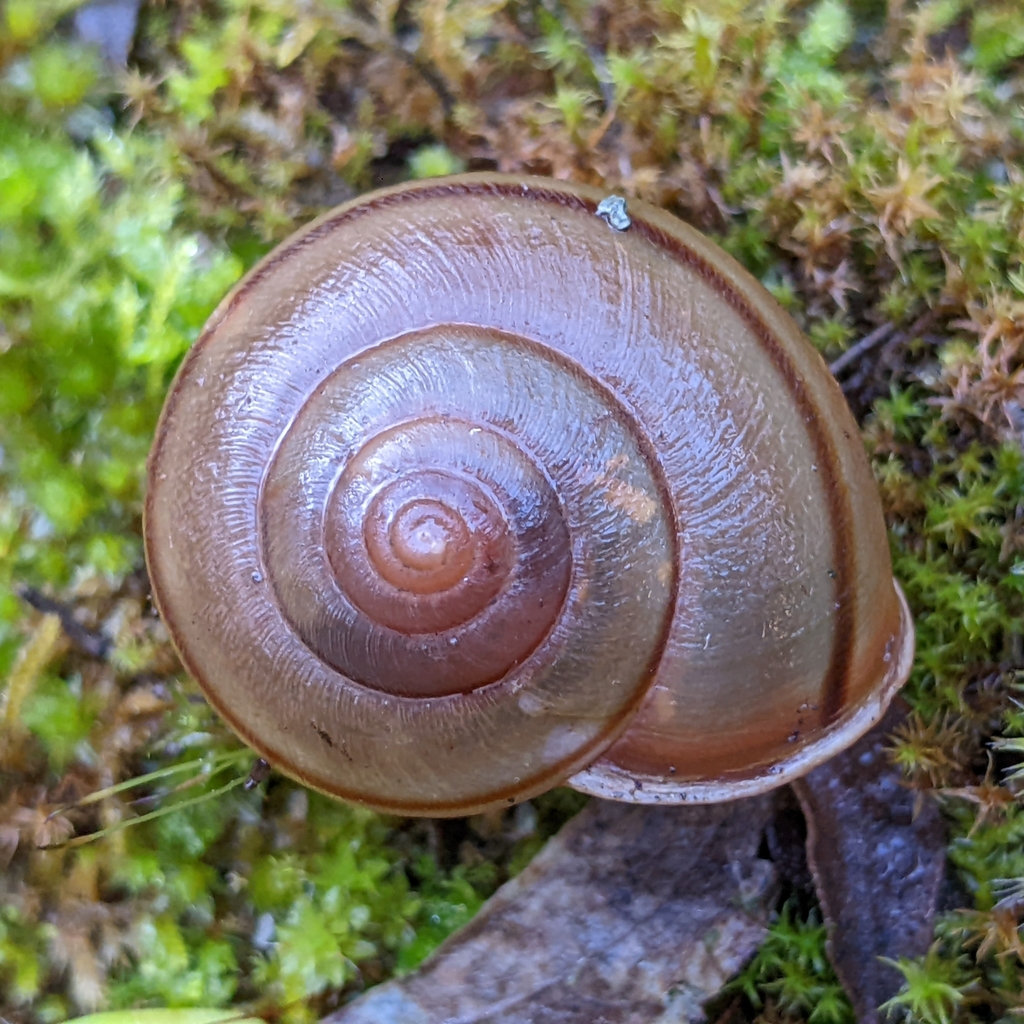
(c) Ken-ichi Ueda, some rights reserved (CC BY) · licence
Family: Helminthoglyptidae · Class: Gastropoda · Order: Stylommatophora
Conservation status: G3T1 S1S2
Helminthoglypta nickliniana bridgesi (Bridges' Coast Range Shoulderband) is a California animal in the Helminthoglyptidae family.
Bridges' Coast Range shoulderband (Helminthoglypta nickliniana bridgesi) is a terrestrial gastropod subspecies belonging to the family Helminthoglyptidae. This medium-sized land snail possesses the characteristic features of the shoulderband group, including a distinctive shell with pronounced spiral ridges and a prominent shoulder or peripheral keel that gives the group its common name. The shell typically displays brown or tan coloration with darker banding patterns, though specific morphometric data for this subspecies remains limited in published literature. This subspecies is endemic to California's Coast Range mountains, representing one of several geographically distinct populations within the Helminthoglypta nickliniana complex. According to USFWS records, the subspecies occurs in the central Coast Range of California, though precise distributional boundaries require further documentation. The subspecies' current conservation status reflects significant range restrictions, with NatureServe ranking it as G3T1 (critically imperiled subspecies of a vulnerable species) and the state rank of S1S2 (critically imperiled to imperiled in California). Bridges' Coast Range shoulderband inhabits chaparral and oak woodland ecosystems typical of California's Coast Range environment. Like other members of the genus Helminthoglypta, this subspecies likely occupies areas with appropriate moisture retention, including rock crevices, leaf litter, and areas beneath shrubs or trees that provide protection from desiccation. The specific elevation range and microhabitat preferences for this subspecies have not been well documented in available scientific literature. As with other shoulderband snails, this species is presumed to be herbivorous, feeding on decaying plant matter, fungi, and possibly fresh vegetation. Reproduction likely follows the typical pattern for the genus, with individuals being hermaphroditic and engaging in reciprocal mating. Seasonal activity patterns probably correspond with periods of adequate moisture, with snails becoming active during cooler, wetter months and aestivating during hot, dry periods typical of California's Mediterranean climate. The subspecies is currently designated as a Species of Concern by the U.S. Fish and Wildlife Service, indicating that it may warrant listing under the Endangered Species Act but lacks sufficient data for a listing determination. The extremely restricted range reflected in its G3T1/S1S2 conservation rankings suggests that Bridges' Coast Range shoulderband faces significant conservation challenges. Primary threats likely include habitat loss and fragmentation from development, altered fire regimes, invasive plant species, and climate change impacts affecting moisture availability in its specialized habitat. The subspecies' narrow endemism makes it particularly vulnerable to localized disturbances or environmental changes. Detailed ecological studies and systematic surveys are needed to better understand this subspecies' distribution, population status, and specific habitat requirements. Such information would be essential for developing appropriate conservation strategies and determining whether federal listing protection is warranted. The limited available data underscores the need for increased research attention to California's endemic terrestrial gastropod fauna.
Classification
Class: Gastropoda · Order: Stylommatophora · Family: Helminthoglyptidae
Conservation status
G3T1 S1S2
Frequently asked questions
How is Helminthoglypta nickliniana bridgesi classified?
Helminthoglypta nickliniana bridgesi belongs to class Gastropoda, order Stylommatophora, family Helminthoglyptidae.
What family does Helminthoglypta nickliniana bridgesi belong to?
Helminthoglypta nickliniana bridgesi is in the Helminthoglyptidae family.
Is Helminthoglypta nickliniana bridgesi protected or of conservation concern?
Helminthoglypta nickliniana bridgesi carries the following status: G3T1 S1S2.
What is Helminthoglypta nickliniana bridgesi?
Bridges' Coast Range shoulderband (Helminthoglypta nickliniana bridgesi) is a terrestrial gastropod subspecies belonging to the family Helminthoglyptidae.
Is Helminthoglypta nickliniana bridgesi found in California?
Yes. Helminthoglypta nickliniana bridgesi is recorded in California in The California Species Project's catalogue.
Related species
Other California species in the same genus, family, or bioregion.
Data from The California Species Project — 14,000+ California species with verified data from CNPS, CDFW, USFWS, and more.