Helminthoglypta talmadgei
Trinity Shoulderband
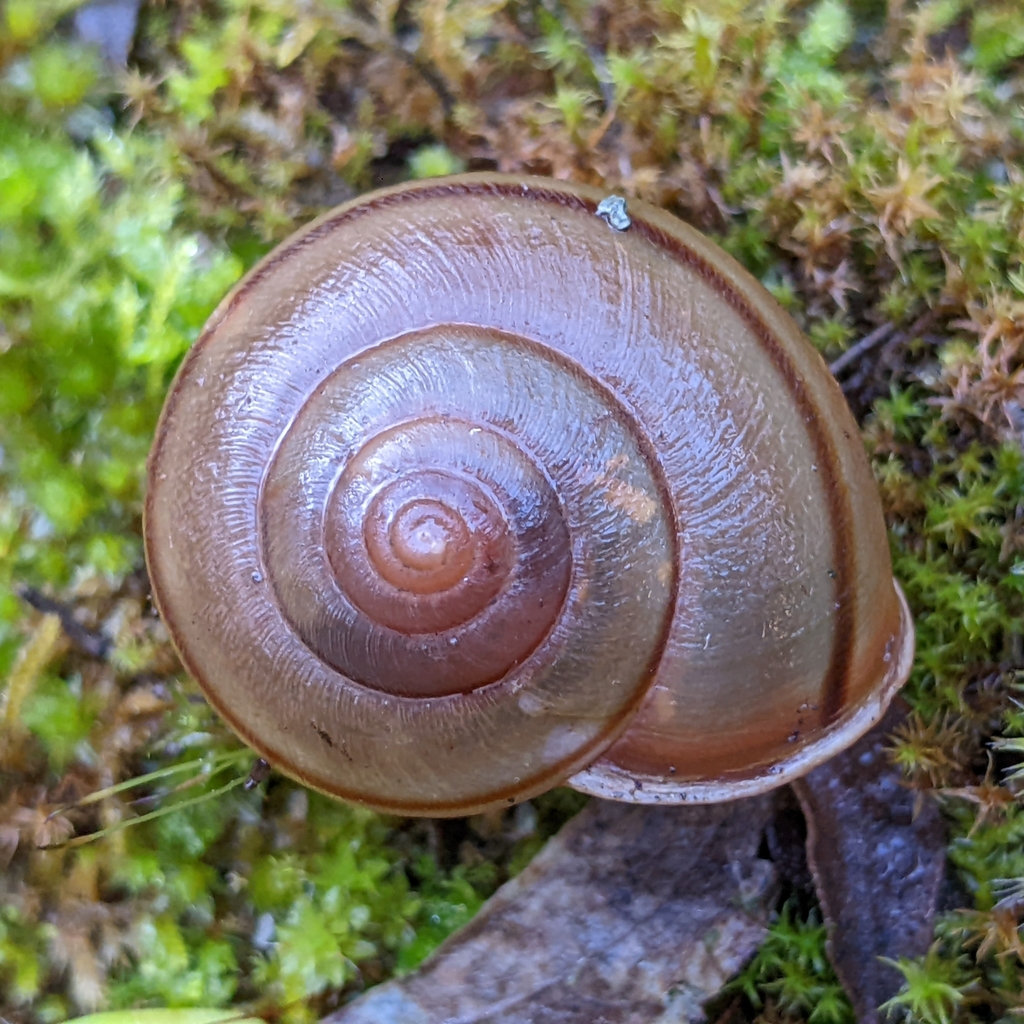
(c) Ken-ichi Ueda, some rights reserved (CC BY) · licence
Family: Helminthoglyptidae · Class: Gastropoda · Order: Stylommatophora
Conservation status: G2 S2
Helminthoglypta talmadgei (Trinity Shoulderband) is a California animal in the Helminthoglyptidae family.
The Trinity shoulderband (Helminthoglypta talmadgei) is a terrestrial gastropod endemic to northern California's Trinity River basin region. This land snail belongs to the family Helminthoglyptidae, a group of native western North American snails characterized by their distinctive shell morphology and terrestrial habits. The Trinity shoulderband exhibits the typical shoulderband snail shell structure, though specific morphometric data for this species remains limited in the scientific literature. Like other Helminthoglypta species, it likely possesses a globose to depressed-globose shell with characteristic banding patterns that give the genus its common name. Adult shell dimensions and detailed morphological descriptions have not been comprehensively documented in available sources. This species occurs exclusively in the Trinity River drainage system of northern California, representing one of the more geographically restricted members of the genus Helminthoglypta. According to NatureServe, terrestrial gastropods typically exhibit limited dispersal capabilities, moving primarily to locate food sources or reproductive partners (NatureServe Explorer). The species' range appears to be associated with specific geological formations, as indicated by records from mine tailings and limestone rockslides in the region. The Trinity shoulderband inhabits terrestrial environments within the Trinity basin, with documented occurrences on mine tailings and limestone rockslides. These substrate preferences suggest adaptation to calcareous environments, which provide essential calcium carbonate for shell development and maintenance. The species likely requires specific microhabitat conditions including appropriate moisture levels, temperature regimes, and organic matter availability typical of forest-dwelling gastropods in northern California. Like other terrestrial gastropods, H. talmadgei likely exhibits typical snail behaviors including nocturnal activity patterns and seasonal reproduction. According to NatureServe, olfaction serves as the primary sensory mechanism for finding food and mates in terrestrial gastropods (NatureServe Explorer). The species presumably feeds on decaying organic matter, fungi, and microorganisms common in forest floor environments. Reproductive biology and seasonal activity patterns have not been specifically documented for this species. The Trinity shoulderband holds a Global rank of G2 and State rank of S2, indicating it is imperiled both globally and within California due to restricted range and population threats. Historical collecting records suggested the species was rare with a patchy distribution pattern (Institute for Natural Resources). Of 24 documented collecting efforts prior to recent surveys, the success rate and current population status remain unclear from available documentation. The species faces potential threats typical of endemic gastropods, including habitat modification, climate change impacts on moisture regimes, and the inherently vulnerable nature of small, isolated populations. Conservation efforts for this species would benefit from comprehensive population surveys and habitat characterization to inform management strategies for this Trinity basin endemic.
Classification
Class: Gastropoda · Order: Stylommatophora · Family: Helminthoglyptidae
Conservation status
G2 S2
Frequently asked questions
How is Helminthoglypta talmadgei classified?
Helminthoglypta talmadgei belongs to class Gastropoda, order Stylommatophora, family Helminthoglyptidae.
What family does Helminthoglypta talmadgei belong to?
Helminthoglypta talmadgei is in the Helminthoglyptidae family.
Is Helminthoglypta talmadgei protected or of conservation concern?
Helminthoglypta talmadgei carries the following status: G2 S2.
What is Helminthoglypta talmadgei?
The Trinity shoulderband (Helminthoglypta talmadgei) is a terrestrial gastropod endemic to northern California's Trinity River basin region.
Is Helminthoglypta talmadgei found in California?
Yes. Helminthoglypta talmadgei is recorded in California in The California Species Project's catalogue.
Related species
Other California species in the same genus, family, or bioregion.
Data from The California Species Project — 14,000+ California species with verified data from CNPS, CDFW, USFWS, and more.