Helminthoglypta traskii pacoimensis
Pacoima Shoulderband
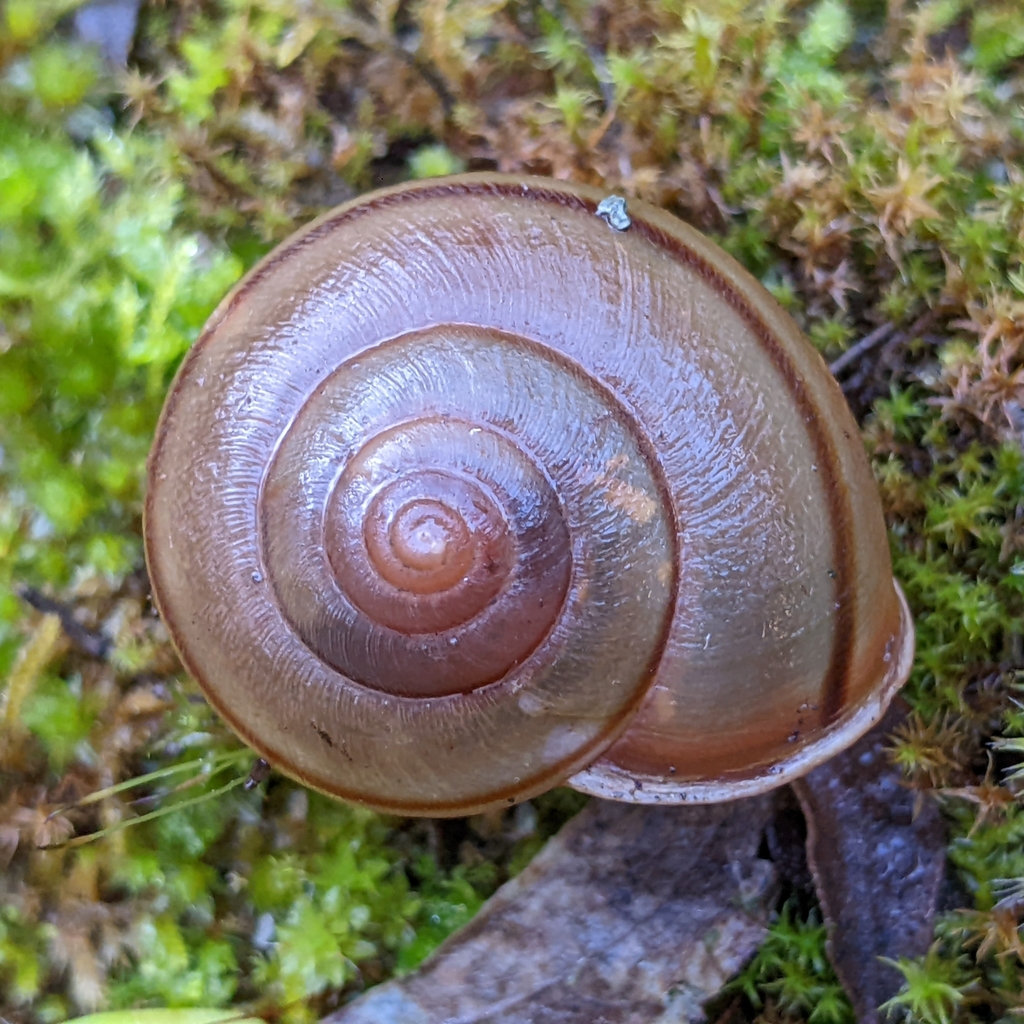
(c) Ken-ichi Ueda, some rights reserved (CC BY) · licence
Family: Helminthoglyptidae · Class: Gastropoda · Order: Stylommatophora
Conservation status: G1G2T1 S1
Helminthoglypta traskii pacoimensis (Pacoima Shoulderband) is a California animal in the Helminthoglyptidae family.
The Pacoima Shoulderband is a terrestrial gastropod mollusk endemic to Southern California. As a subspecies of Helminthoglypta traskii, it represents one of the region's most geographically restricted snail taxa. Adult shells typically measure 15-25 mm in diameter, displaying the characteristic shouldered appearance that gives the group its common name. The shell exhibits a low-spired, somewhat flattened profile with distinct angular shoulders on the upper whorls. Coloration ranges from pale yellow to light brown, often with subtle banding patterns that may fade with age. The Pacoima Shoulderband occurs only in the San Gabriel Mountains of Los Angeles County, California, representing an extremely limited geographic range. This subspecies is distinguished from other Helminthoglypta traskii subspecies by its restricted distribution in the Pacoima Canyon drainage system and adjacent areas of the southern San Gabriel Mountains. The range encompasses steep mountain terrain characterized by chaparral and mixed woodland communities at elevations typically between 600-1,200 meters (2,000-4,000 feet). According to NatureServe, this subspecies inhabits mountain canyons where it shelters under bark and downed logs (Roth and Sadeghian 2003; Magney 2016). The species requires microhabitats that maintain adequate moisture levels during California's dry summer months, making fallen timber, rock crevices, and areas under dense vegetation cover essential habitat components. The subspecies appears dependent on oak woodland and chaparral plant communities that provide both shelter and the decaying organic matter necessary for its survival. Like other members of its genus, the Pacoima Shoulderband is likely hermaphroditic, with individuals capable of both self-fertilization and cross-fertilization with other individuals. Reproduction typically occurs during the cooler, wetter months from late fall through early spring when moisture conditions are optimal. The species is presumed to feed on decomposing plant material, fungi, and microorganisms found in leaf litter and decaying wood. Activity patterns are largely nocturnal and crepuscular, with snails emerging during periods of high humidity to forage and mate. The Pacoima Shoulderband holds a Global/State Rank of G1G2T1 S1, indicating it is critically imperiled both globally and within California. This ranking reflects the subspecies' extremely restricted range and small population size, making it highly vulnerable to extinction. Primary threats include habitat destruction from urban development, wildfire, and climate change impacts that alter moisture regimes in its mountain canyon habitat. The subspecies' dependence on specific microhabitat conditions and limited dispersal ability further increase its vulnerability to environmental changes. Conservation efforts focus on protecting remaining habitat within the San Gabriel Mountains and monitoring population trends to assess the subspecies' long-term viability.
Classification
Class: Gastropoda · Order: Stylommatophora · Family: Helminthoglyptidae
Conservation status
G1G2T1 S1
Frequently asked questions
How is Helminthoglypta traskii pacoimensis classified?
Helminthoglypta traskii pacoimensis belongs to class Gastropoda, order Stylommatophora, family Helminthoglyptidae.
What family does Helminthoglypta traskii pacoimensis belong to?
Helminthoglypta traskii pacoimensis is in the Helminthoglyptidae family.
Is Helminthoglypta traskii pacoimensis protected or of conservation concern?
Helminthoglypta traskii pacoimensis carries the following status: G1G2T1 S1.
What is Helminthoglypta traskii pacoimensis?
The Pacoima Shoulderband is a terrestrial gastropod mollusk endemic to Southern California.
Is Helminthoglypta traskii pacoimensis found in California?
Yes. Helminthoglypta traskii pacoimensis is recorded in California in The California Species Project's catalogue.
Related species
Other California species in the same genus, family, or bioregion.
Data from The California Species Project — 14,000+ California species with verified data from CNPS, CDFW, USFWS, and more.