Helminthoglypta traskii traskii
Trask Shoulderband
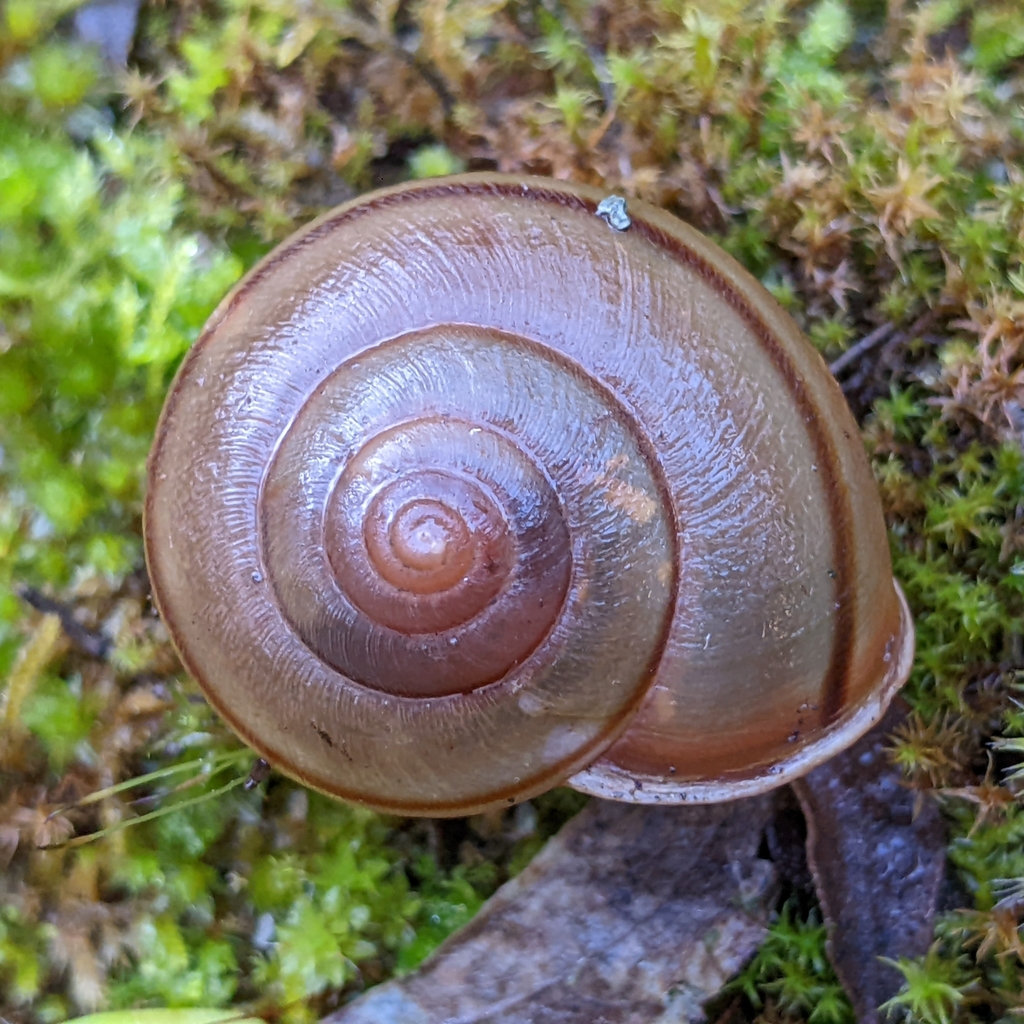
(c) Ken-ichi Ueda, some rights reserved (CC BY) · licence
Family: Helminthoglyptidae · Class: Gastropoda · Order: Stylommatophora
Conservation status: G1G2T1 S2S3
Helminthoglypta traskii traskii (Trask Shoulderband) is a California animal in the Helminthoglyptidae family.
The Trask shoulderband (Helminthoglypta traskii traskii) is a terrestrial gastropod mollusk in the family Helminthoglyptidae. This subspecies is part of a larger species complex distributed across southern California and northwestern Baja California, with several recognized subspecies including H. t. pacoimensis and H. t. coelata (NatureServe 2025). Like other shoulderband snails, this species likely exhibits the characteristic spiral shell morphology typical of the genus, though detailed morphological descriptions for this particular subspecies remain limited in the scientific literature. The range of H. t. traskii is restricted to specific localities within southern California. The broader species H. traskii occurs from southern California into northwestern Baja California, but the nominate subspecies traskii has a more limited distribution within this range (NatureServe 2025). Related subspecies provide context for the geographic complexity of this group: H. t. pacoimensis is documented from only two occurrences with a very limited range, while H. t. coelata occurs in the Peninsular Ranges. Habitat requirements for this subspecies have not been extensively documented in available scientific literature. Based on the ecology of related shoulderband snails in the region, the species likely inhabits chaparral, oak woodland, or coastal sage scrub communities. Many Helminthoglypta species show preferences for areas with adequate moisture retention and suitable calcium sources for shell development. The species presumably requires leaf litter or organic debris for shelter and foraging opportunities. Like other terrestrial gastropods, H. t. traskii is likely herbivorous, feeding on decomposing plant material, fungi, and possibly live vegetation. Reproductive biology has not been specifically documented for this subspecies, but most Helminthoglypta species are hermaphroditic and lay eggs in soil or under protective cover. Activity patterns are presumably linked to moisture availability, with increased activity during cooler, more humid periods. The conservation status of H. t. traskii reflects significant concern for its persistence. NatureServe assigns the species a global rank of G1G2, indicating it is critically imperiled to imperiled globally, while the subspecies traskii receives a T1 rank, denoting critical imperilment at the subspecies level (NatureServe 2025). The California state rank of S2S3 indicates the subspecies is imperiled to vulnerable within the state. These rankings reflect the extremely limited range and small population sizes typical of many California endemic gastropods. Primary threats likely include habitat loss and fragmentation due to urban development, altered fire regimes, and potential impacts from invasive species, though specific threat assessments for this subspecies are not well documented in current literature. The species is not currently listed under federal or California endangered species legislation, despite its precarious conservation status.
Classification
Class: Gastropoda · Order: Stylommatophora · Family: Helminthoglyptidae
Conservation status
G1G2T1 S2S3
Frequently asked questions
How is Helminthoglypta traskii traskii classified?
Helminthoglypta traskii traskii belongs to class Gastropoda, order Stylommatophora, family Helminthoglyptidae.
What family does Helminthoglypta traskii traskii belong to?
Helminthoglypta traskii traskii is in the Helminthoglyptidae family.
Is Helminthoglypta traskii traskii protected or of conservation concern?
Helminthoglypta traskii traskii carries the following status: G1G2T1 S2S3.
What is Helminthoglypta traskii traskii?
The Trask shoulderband (Helminthoglypta traskii traskii) is a terrestrial gastropod mollusk in the family Helminthoglyptidae.
Is Helminthoglypta traskii traskii found in California?
Yes. Helminthoglypta traskii traskii is recorded in California in The California Species Project's catalogue.
Related species
Other California species in the same genus, family, or bioregion.
Data from The California Species Project — 14,000+ California species with verified data from CNPS, CDFW, USFWS, and more.