Hemerobius stigma
Brown pine lacewing
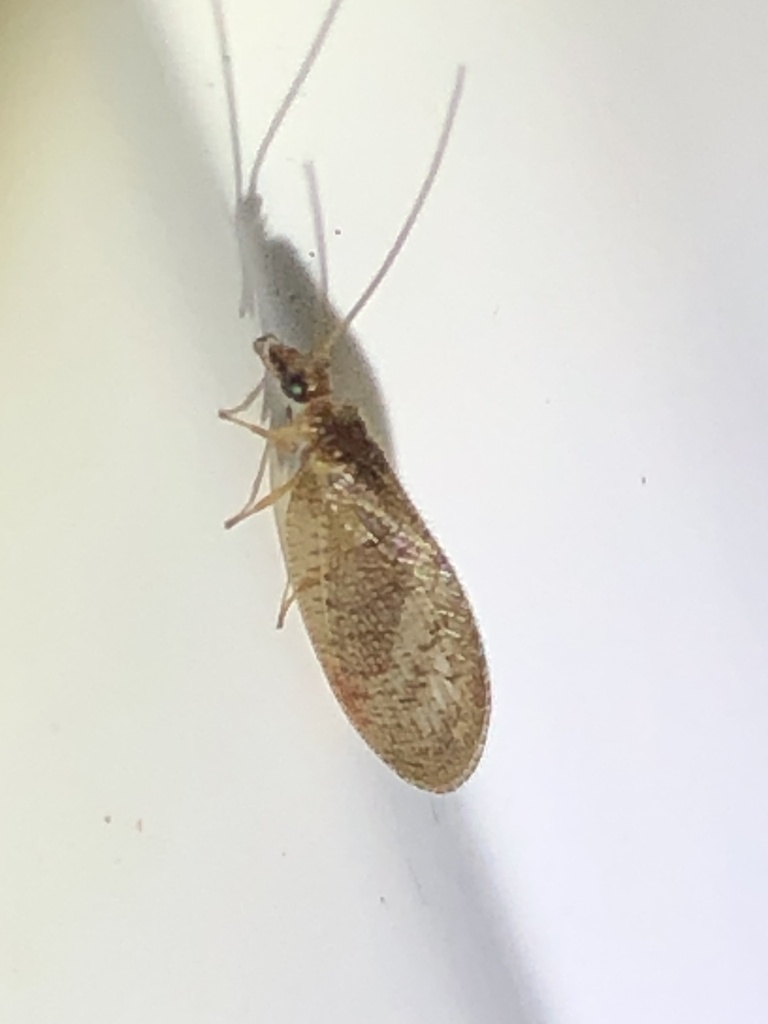
(c) W Rao, some rights reserved (CC BY) · licence
Family: Hemerobiidae · Class: Insecta · Order: Neuroptera
Hemerobius stigma (Brown pine lacewing) is a California animal in the Hemerobiidae family.
The brown pine lacewing (Hemerobius stigma) is a small predatory insect in the family Hemerobiidae, distinguished from green lacewings by its brownish coloration and smaller size. Adults typically measure 6-12 mm in length with delicate, net-veined wings that are held roof-like over the body when at rest. The wings appear brownish or amber-tinted with intricate venation patterns characteristic of the neuropteran order. This species has a broad distribution across North America, occurring from coast to coast. In California, BugGuide records indicate presence throughout multiple regions, with documented observations spanning from February through October, suggesting extended activity periods in the state's favorable climate. The species also ranges across the eastern United States, from Maine south to Georgia and Alabama, westward through the Great Plains to British Columbia. Hemerobius stigma inhabits forested environments, particularly areas with coniferous trees as suggested by its common name. The species is associated with pine forests and mixed woodland habitats where it can find suitable prey and host plants for reproduction. Adults are typically found on vegetation where aphids and other small soft-bodied insects are abundant. Both larval and adult brown pine lacewings are predaceous, feeding primarily on aphids, scale insects, mites, and other small arthropods. The larvae, sometimes called "aphid wolves," are voracious predators that use their sickle-shaped mandibles to pierce prey and suck out body fluids. Adults supplement their carnivorous diet with pollen and nectar from flowers. Females lay eggs singly on plant surfaces, typically near aphid colonies to ensure food availability for hatching larvae. The species likely completes multiple generations per year in warmer regions, with adults overwintering in protected locations such as leaf litter or bark crevices. Like other brown lacewings, H. stigma serves as an important biological control agent in both natural and agricultural ecosystems. According to Xerces Society habitat planning guides, brown lacewings are valuable beneficial insects that help control crop pests, particularly in integrated pest management systems. The species benefits from diverse flowering plants that provide nectar sources for adults and undisturbed habitat areas for reproduction and overwintering. Currently, Hemerobius stigma has no formal conservation status and appears to maintain stable populations across its range. According to NatureServe, the species has a global conservation rank of G4 (apparently secure), indicating low conservation concern. However, like many beneficial insects, brown pine lacewings may face challenges from habitat loss, pesticide use, and forest management practices that reduce structural diversity. Conservation efforts that promote integrated pest management and preserve diverse forest habitats benefit this species and other beneficial insects that provide ecosystem services.
Classification
Class: Insecta · Order: Neuroptera · Family: Hemerobiidae
Frequently asked questions
How is Hemerobius stigma classified?
Hemerobius stigma belongs to class Insecta, order Neuroptera, family Hemerobiidae.
What family does Hemerobius stigma belong to?
Hemerobius stigma is in the Hemerobiidae family.
What is Hemerobius stigma?
The brown pine lacewing (Hemerobius stigma) is a small predatory insect in the family Hemerobiidae, distinguished from green lacewings by its brownish coloration and smaller size.
Is Hemerobius stigma found in California?
Yes. Hemerobius stigma is recorded in California in The California Species Project's catalogue.
Related species
Other California species in the same genus, family, or bioregion.
Data from The California Species Project — 14,000+ California species with verified data from CNPS, CDFW, USFWS, and more.