Hemeroplanis rectalis
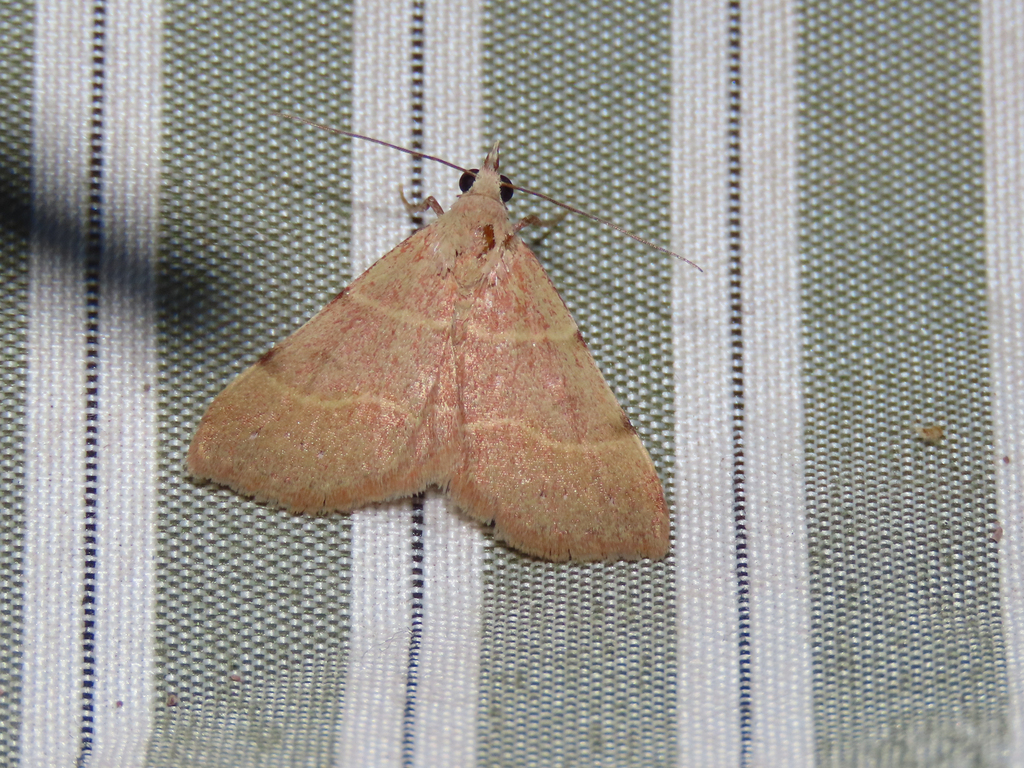
(c) Alina Martin, some rights reserved (CC BY) · licence
Family: Erebidae · Class: Insecta · Order: Lepidoptera
Hemeroplanis rectalis is a California animal in the Erebidae family.
Hemeroplanis rectalis is a moth species in the family Erebidae, subfamily Erebinae. This nocturnal lepidopteran belongs to a genus of moths distributed across western North America. Adults typically measure 25-35 mm in wingspan, with forewings displaying muted brown to grayish-brown coloration marked by subtle darker lines and patches. The hindwings are generally paler, ranging from light brown to whitish. Like other members of the Erebidae family, this species exhibits the characteristic robust body structure and relatively broad wings typical of owlet moths. The species' range includes portions of western North America, with documented occurrences in California. Specific distributional data for H. rectalis remains limited in published literature, reflecting the relatively understudied nature of many erebid moths. The species appears to occupy areas within the broader range of the genus Hemeroplanis, which extends through various western states. Hemeroplanis rectalis inhabits areas supporting its larval host plants, though specific habitat requirements and elevational preferences for this species require further documentation. Members of the genus Hemeroplanis typically occur in areas with mixed vegetation communities that provide suitable conditions for both adult nectar sources and larval development. The species likely occupies habitats ranging from foothill regions to montane environments, consistent with the ecological preferences of related erebid moths. Adults are active during nighttime hours and are attracted to artificial light sources, following typical erebid moth behavior patterns. Flight periods and seasonal activity patterns for H. rectalis have not been thoroughly documented in available literature. Like other erebid moths, adults likely feed on nectar from various flowering plants, while larvae develop on specific host plant species. Reproductive biology, including mating behaviors, egg-laying preferences, and larval development timing, remains poorly documented for this particular species. No specific conservation status has been assigned to Hemeroplanis rectalis at federal or state levels. The species does not appear on current endangered species lists or special concern designations. Limited ecological data and taxonomic research on this moth reflects the broader challenge of documenting and assessing the conservation needs of lesser-known invertebrate species. Many erebid moths face potential threats from habitat modification, pesticide use, and light pollution, though specific threat assessments for H. rectalis have not been conducted. The lack of comprehensive population data and ecological information represents a significant knowledge gap that limits effective conservation planning for this species. Further research is needed to establish baseline population data, habitat requirements, and potential conservation concerns for Hemeroplanis rectalis in California and throughout its range.
Classification
Class: Insecta · Order: Lepidoptera · Family: Erebidae
Frequently asked questions
How is Hemeroplanis rectalis classified?
Hemeroplanis rectalis belongs to class Insecta, order Lepidoptera, family Erebidae.
What family does Hemeroplanis rectalis belong to?
Hemeroplanis rectalis is in the Erebidae family.
What is Hemeroplanis rectalis?
Hemeroplanis rectalis is a moth species in the family Erebidae, subfamily Erebinae.
Is Hemeroplanis rectalis found in California?
Yes. Hemeroplanis rectalis is recorded in California in The California Species Project's catalogue.
Related species
Other California species in the same genus, family, or bioregion.
Data from The California Species Project — 14,000+ California species with verified data from CNPS, CDFW, USFWS, and more.