Hemigrapsus oregonensis
Yellow Shore Crab
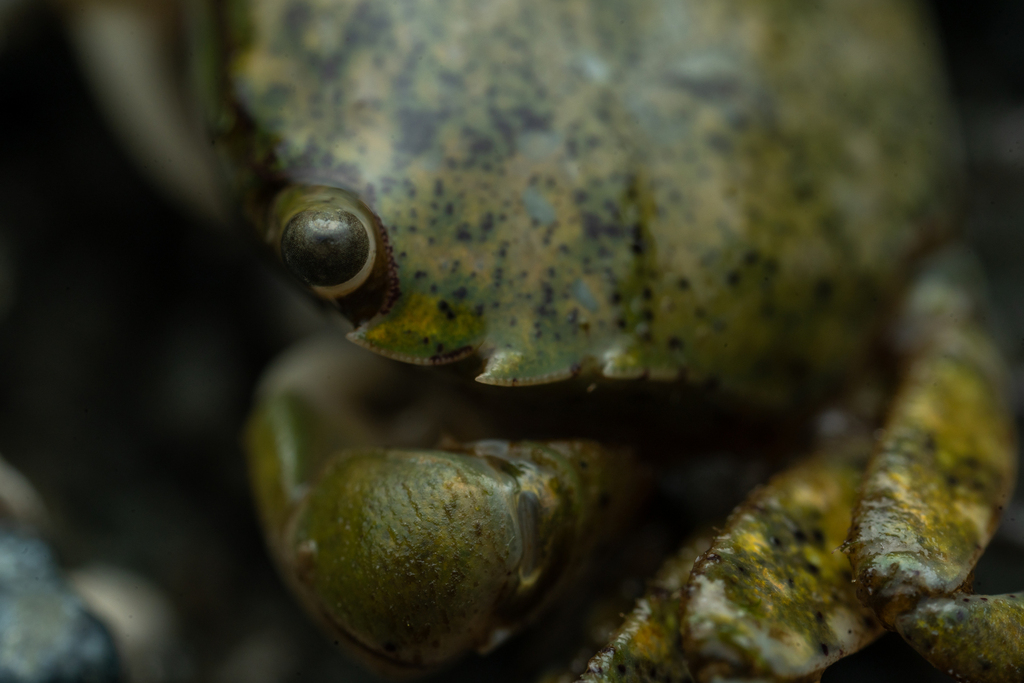
(c) Pete Lypkie, some rights reserved (CC BY) · licence
Family: Varunidae · Class: Malacostraca · Order: Decapoda
Hemigrapsus oregonensis (Yellow Shore Crab) is a California animal in the Varunidae family.
The yellow shore crab is a small marine crustacean native to the Pacific coast of North America. Adults typically measure 15-25 mm (0.6-1.0 inches) across the carapace, with a relatively square body shape characteristic of the family Varunidae. The carapace ranges from yellowish-green to olive-brown coloration, often with darker mottling or banding patterns. The walking legs are proportionally robust, and the chelipeds (claws) are moderately developed, with males typically displaying larger claws than females. Hemigrapsus oregonensis occurs along the Pacific coast from Alaska to Baja California, Mexico. In California, the species is documented from Humboldt Bay southward, with populations present in numerous estuarine and intertidal environments. The species inhabits protected coastal waters including salt marshes, mudflats, and brackish lagoons. According to California Department of Fish and Wildlife mapping data, yellow shore crabs are present year-round in suitable habitats throughout their California range. This species demonstrates strong habitat preferences for intertidal and shallow subtidal zones with muddy or sandy substrates. Yellow shore crabs are commonly found in salt marshes, estuarine channels, and protected embayments where salinity levels fluctuate with tidal cycles. They construct burrows in soft sediments and seek shelter under rocks, debris, or vegetation during low tide periods. The species tolerates a wide range of salinities, from nearly fresh water to full seawater conditions, making it well-adapted to dynamic estuarine environments. Optimal habitat includes areas with organic-rich sediments that support abundant prey populations. Yellow shore crabs are opportunistic omnivores, feeding on detritus, algae, small invertebrates, and carrion. They exhibit typical decapod reproductive behavior, with mating occurring when females molt and their exoskeletons are soft. Females carry fertilized eggs attached to their pleopods until hatching, which produces planktonic larvae that develop through several molts before settling as juveniles. The species is active primarily during high tide periods and at night, when individuals emerge from burrows to forage. The yellow shore crab is not currently listed under federal or state endangered species legislation. However, like many estuarine species, populations may face pressure from habitat modification, coastal development, and water quality changes. In some locations, the species experiences competition from introduced crabs such as the European green crab (Carcinus maenas) and the estuarine mudcrab (Rhithropanopeus harrisii). According to research from Oregon estuaries, H. oregonensis demonstrates aggressive behavior that may help it compete with invasive species, though the long-term impacts of these interactions remain under study (Fofonoff et al. 2018). The species serves as an important component of estuarine food webs, supporting populations of fish, birds, and other predators. Continued monitoring of populations in key estuarine habitats will be important for detecting any future conservation concerns.
Classification
Class: Malacostraca · Order: Decapoda · Family: Varunidae
Frequently asked questions
How is Hemigrapsus oregonensis classified?
Hemigrapsus oregonensis belongs to class Malacostraca, order Decapoda, family Varunidae.
What family does Hemigrapsus oregonensis belong to?
Hemigrapsus oregonensis is in the Varunidae family.
What is Hemigrapsus oregonensis?
The yellow shore crab is a small marine crustacean native to the Pacific coast of North America.
Is Hemigrapsus oregonensis found in California?
Yes. Hemigrapsus oregonensis is recorded in California in The California Species Project's catalogue.
Related species
Other California species in the same genus, family, or bioregion.
Data from The California Species Project — 14,000+ California species with verified data from CNPS, CDFW, USFWS, and more.