Hemileuca eglanterina
Western sheepmoth
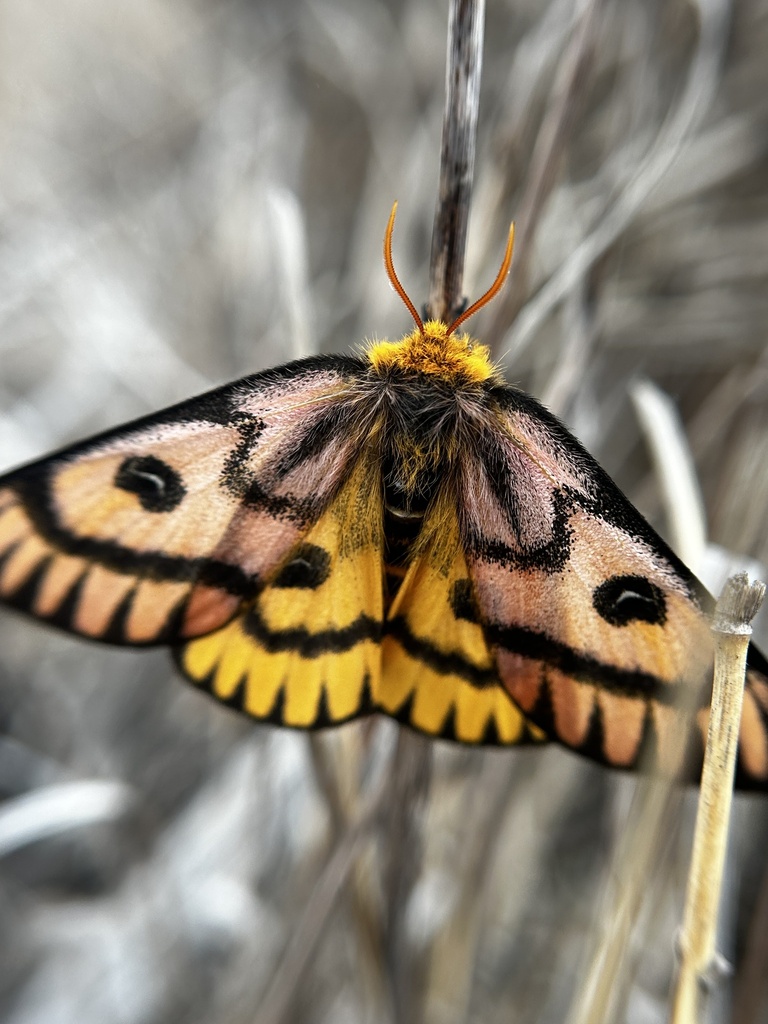
no rights reserved · CC0
Family: Saturniidae · Class: Insecta · Order: Lepidoptera
Hemileuca eglanterina (Western sheepmoth) is a California animal in the Saturniidae family.
The western sheepmoth is a medium-sized moth in the family Saturniidae, with a wingspan ranging from 50 to 75 mm (2.0 to 3.0 inches). Adult females are typically larger than males and display a brownish-gray ground color with distinctive white and black banding across the forewings and hindwings. Males are generally smaller with more pronounced feathery antennae and darker coloration. Both sexes possess a prominent eyespot on each hindwing, surrounded by concentric rings of black, white, and orange. The forewings feature a white discal spot and zigzag postmedial line. The robust, hairy body is typically gray to brown with black banding. The western sheepmoth ranges from southeastern Alberta west to Vancouver Island, British Columbia, extending south through the western United States to central Montana, Wyoming, central Colorado, northern Arizona, and southern California. In California, populations occur primarily in mountainous regions of the Sierra Nevada, Cascade Range, and northern Coast Ranges, typically at elevations between 1,200 and 3,000 meters (4,000 to 10,000 feet). This species inhabits montane shrublands, chaparral communities, and open coniferous forests where host plants are abundant. Adults are most commonly found in areas with mixed shrub communities containing mountain lilac (Ceanothus), mountain-mahogany (Cercocarpus montanus), bitter cherry (Prunus emarginata), and bitterbrush (Purshia tridentata). Other documented host plants include snowberry (Symphoricarpos), currant (Ribes), wild rose (Rosa), and willow (Salix). The species shows adaptability to various elevation zones and can tolerate both dry and moderately moist conditions. Western sheepmoths are univoltine, producing one generation per year. Adults emerge in late summer, typically from July through September, with peak flight activity occurring in August. Mating occurs shortly after emergence, with females releasing pheromones to attract males during evening hours. After mating, females deposit clusters of 100 to 200 eggs on host plant foliage. Larvae hatch in spring and feed gregariously during early instars before becoming solitary. The distinctive caterpillars are black with rows of branched spines and bright warning coloration, growing to approximately 60 mm (2.4 inches) in length. Pupation occurs in underground chambers, with the pupal stage lasting approximately 10 months. The western sheepmoth is not federally or state-listed and appears to maintain stable populations throughout most of its range. The species benefits from its diverse host plant preferences and ability to utilize various montane habitat types. Primary threats include habitat fragmentation from development in montane areas, wildfire management practices that alter shrubland communities, and potential climate change impacts on host plant distributions. Urban expansion into foothill and mountain communities poses localized threats to populations. The species' relatively broad ecological tolerance and multiple host plant associations provide some resilience against environmental pressures.
Classification
Class: Insecta · Order: Lepidoptera · Family: Saturniidae
Frequently asked questions
How is Hemileuca eglanterina classified?
Hemileuca eglanterina belongs to class Insecta, order Lepidoptera, family Saturniidae.
What family does Hemileuca eglanterina belong to?
Hemileuca eglanterina is in the Saturniidae family.
What is Hemileuca eglanterina?
The western sheepmoth is a medium-sized moth in the family Saturniidae, with a wingspan ranging from 50 to 75 mm (2.0 to 3.0 inches).
Is Hemileuca eglanterina found in California?
Yes. Hemileuca eglanterina is recorded in California in The California Species Project's catalogue.
Related species
Other California species in the same genus, family, or bioregion.
Data from The California Species Project — 14,000+ California species with verified data from CNPS, CDFW, USFWS, and more.