Hemileuca hualapai
Hualapai buckmoth
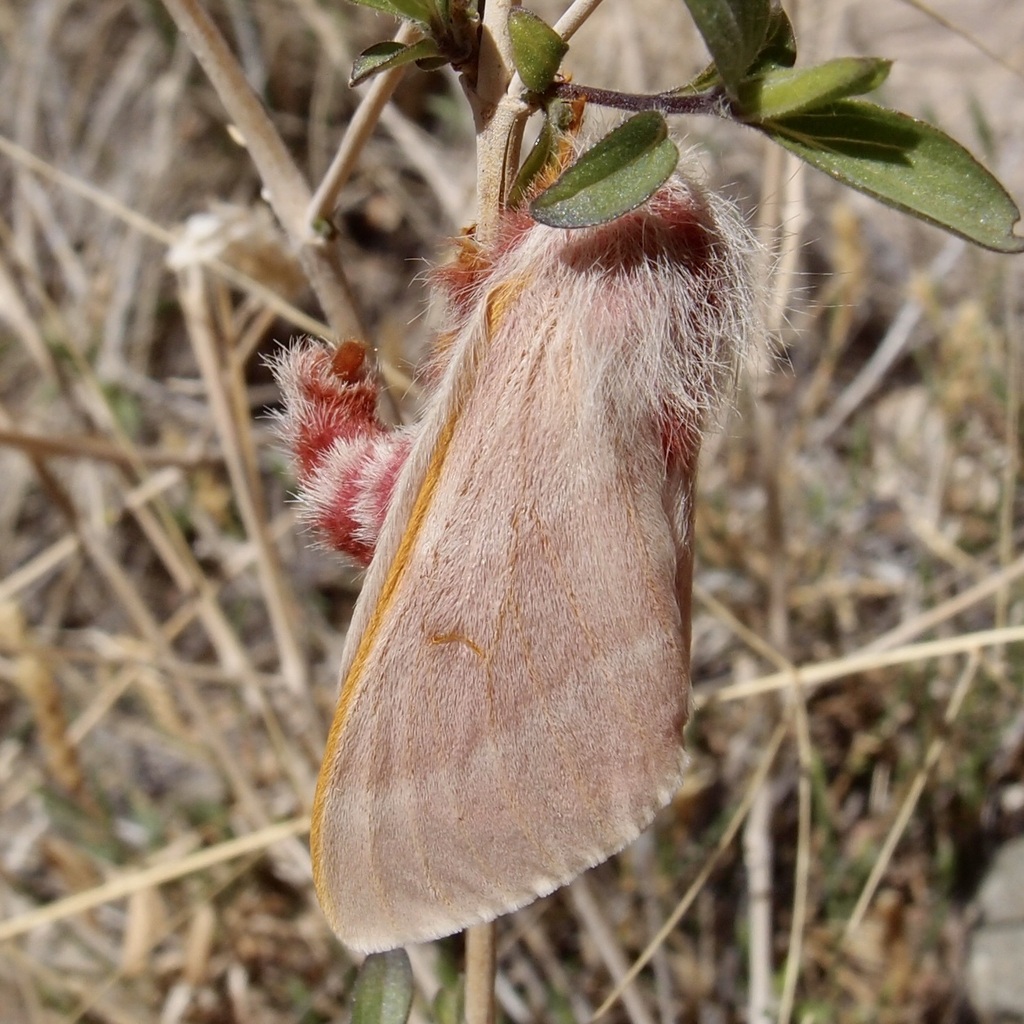
(c) Sue Carnahan, some rights reserved (CC BY) · licence
Family: Saturniidae · Class: Insecta · Order: Lepidoptera
Hemileuca hualapai (Hualapai buckmoth) is a California animal in the Saturniidae family.
The Hualapai buckmoth is a medium-sized moth in the family Saturniidae endemic to the southwestern United States and northwestern Mexico. Adults display the characteristic features of saturniid moths, with males possessing feathery, bipectinate antennae adapted for detecting female pheromones, while females have narrower antennae. The forewings typically show gray-brown coloration with banding patterns, and the hindwings display eyespots that function as a defensive mechanism against predators. The species occurs in southcentral Arizona and extends into Sonora, Mexico, representing a limited binational distribution within the Sonoran Desert region. In Arizona, documented populations are associated with desert grassland and semi-arid environments where native grass communities persist. The distribution appears closely linked to areas supporting suitable grass species and appropriate climatic conditions. The Hualapai buckmoth inhabits desert grasslands and semi-arid scrublands characterized by native grass communities. The species requires intact grassland ecosystems where precipitation patterns support grass growth during favorable seasons. These habitats typically experience both winter and summer moisture events that drive grass phenology and provide the vegetation structure necessary for larval development. The moth's habitat requirements reflect its dependence on healthy grassland communities that have not been severely degraded by disturbance. Like other members of the Saturniidae family, this species undergoes complete metamorphosis through egg, larval, pupal, and adult stages. The larvae are grass feeders, with their development cycle synchronized to grass growth patterns following seasonal precipitation events. Adult moths are nocturnal and emerge during specific periods that correspond to favorable environmental conditions. Reproduction involves chemical communication, with females releasing pheromones that attract males for mating. The Hualapai buckmoth lacks formal federal conservation listing status, though its restricted range and specialized habitat requirements indicate potential vulnerability to environmental changes. The species faces threats typical of desert grassland specialists, including habitat degradation from livestock overgrazing, urban development pressures, and altered fire regimes that can disrupt native grass communities. Invasive plant species may compete with native grasses, reducing habitat quality and food resources for larvae. Climate change presents additional challenges through shifting precipitation patterns that could affect the timing of grass growth and larval development cycles. The binational nature of the species' range requires coordinated conservation approaches between the United States and Mexico to ensure habitat protection across its distribution. Maintaining healthy desert grassland ecosystems through appropriate land management practices remains essential for the long-term persistence of this specialized moth.
Classification
Class: Insecta · Order: Lepidoptera · Family: Saturniidae
Frequently asked questions
How is Hemileuca hualapai classified?
Hemileuca hualapai belongs to class Insecta, order Lepidoptera, family Saturniidae.
What family does Hemileuca hualapai belong to?
Hemileuca hualapai is in the Saturniidae family.
What is Hemileuca hualapai?
The Hualapai buckmoth is a medium-sized moth in the family Saturniidae endemic to the southwestern United States and northwestern Mexico.
Is Hemileuca hualapai found in California?
Yes. Hemileuca hualapai is recorded in California in The California Species Project's catalogue.
Related species
Other California species in the same genus, family, or bioregion.
Data from The California Species Project — 14,000+ California species with verified data from CNPS, CDFW, USFWS, and more.