Hemipenthes castanipes
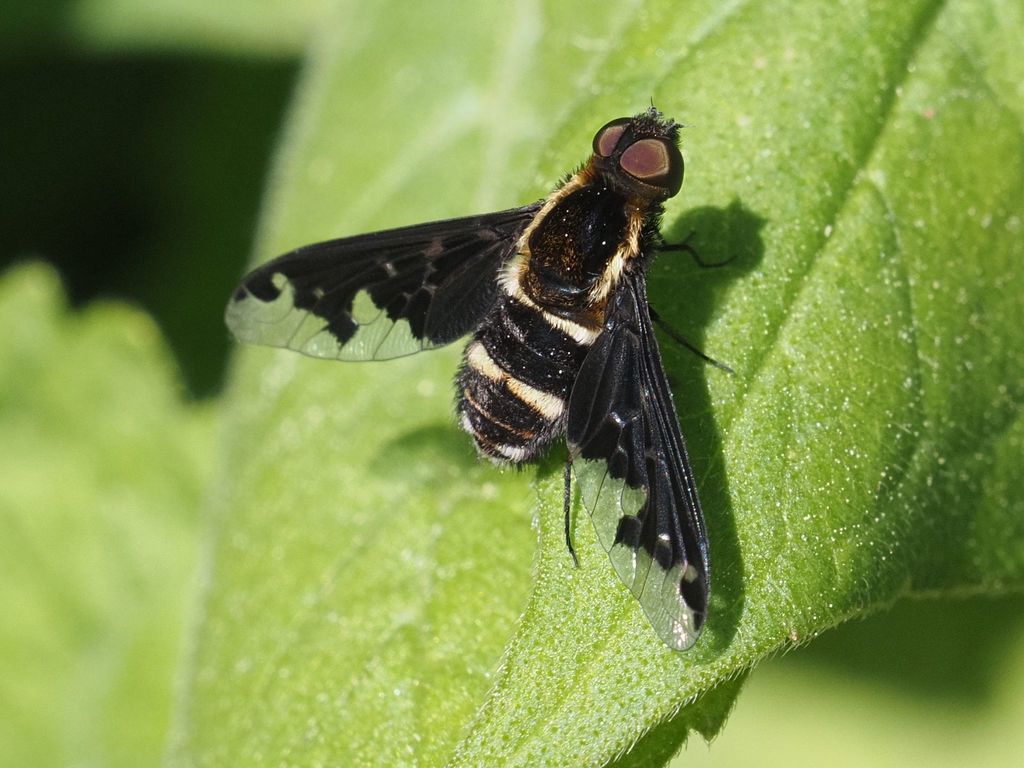
(c) Michael Knapp, some rights reserved (CC BY) · licence
Family: Bombyliidae · Class: Insecta · Order: Diptera
Hemipenthes castanipes is a California animal in the Bombyliidae family.
Hemipenthes castanipes is a bee fly in the family Bombyliidae, order Diptera. This species belongs to a diverse family of flies known for their bee-like appearance and hovering flight behavior. Adult bee flies in the genus Hemipenthes are typically characterized by their robust, hairy bodies and long proboscis used for nectar feeding, though specific morphological details for H. castanipes have not been well documented in the available literature. The geographic range and distribution of Hemipenthes castanipes remain poorly documented. The species appears in the U.S. Fish and Wildlife Service taxonomic database, indicating its occurrence within the United States, but specific state and county records are not readily available from current sources. Further field surveys and taxonomic work are needed to establish the precise distribution of this species. Habitat requirements for Hemipenthes castanipes have not been specifically documented in the scientific literature. Members of the family Bombyliidae typically inhabit diverse terrestrial environments including grasslands, shrublands, and woodland edges where flowering plants provide nectar sources. Many bee fly species are associated with sandy soils suitable for their ground-nesting habits, but the specific habitat preferences of H. castanipes require additional study. Like other members of the Bombyliidae, Hemipenthes castanipes likely exhibits a parasitoid larval stage and nectar-feeding adult stage. Adult bee flies are important pollinators, visiting flowers for nectar while inadvertently transferring pollen between blooms. The larvae of most Hemipenthes species are parasitoids of other insects, commonly targeting the larvae or pupae of beetles, moths, or other flies. Females typically deposit eggs near or on the host insects, with the developing larvae consuming the host. However, the specific host relationships and life cycle timing for H. castanipes have not been documented. Hemipenthes castanipes does not appear on federal or state endangered species lists as of December 2025. The species lacks formal conservation status designations, likely reflecting limited scientific knowledge about its distribution, population size, and ecological requirements rather than confirmed population stability. The absence of comprehensive survey data makes it difficult to assess potential threats or conservation needs for this species. Detailed ecological studies of Hemipenthes castanipes are lacking. The information presented here represents the current state of knowledge based on available taxonomic databases and general understanding of bombyliid ecology. Additional research is needed to document this species' distribution, habitat requirements, life history, and conservation status. Field biologists and entomologists are encouraged to report observations and contribute specimens to establish a more complete understanding of this species' biology and distribution patterns.
Classification
Class: Insecta · Order: Diptera · Family: Bombyliidae
Frequently asked questions
How is Hemipenthes castanipes classified?
Hemipenthes castanipes belongs to class Insecta, order Diptera, family Bombyliidae.
What family does Hemipenthes castanipes belong to?
Hemipenthes castanipes is in the Bombyliidae family.
What is Hemipenthes castanipes?
Hemipenthes castanipes is a bee fly in the family Bombyliidae, order Diptera.
Is Hemipenthes castanipes found in California?
Yes. Hemipenthes castanipes is recorded in California in The California Species Project's catalogue.
Related species
Other California species in the same genus, family, or bioregion.
Data from The California Species Project — 14,000+ California species with verified data from CNPS, CDFW, USFWS, and more.