Hemipenthes morioides
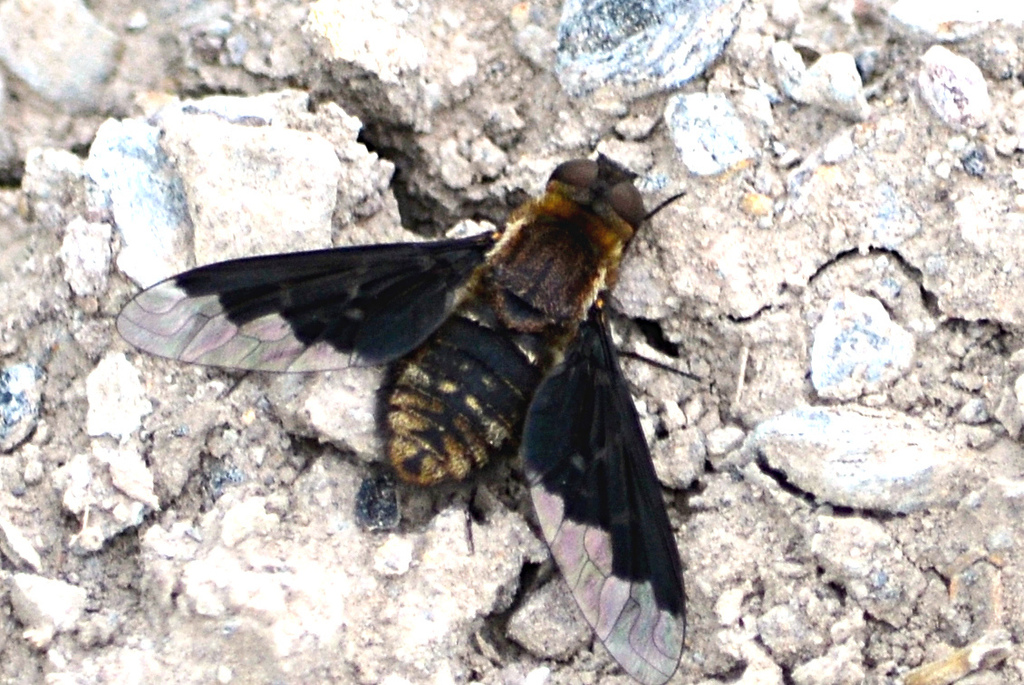
(c) Jimmy Dee, some rights reserved (CC BY-SA) · licence
Family: Bombyliidae · Class: Insecta · Order: Diptera
Hemipenthes morioides is a California animal in the Bombyliidae family.
Hemipenthes morioides is a species of bee fly in the family Bombyliidae, order Diptera. As a member of the Bombyliidae, this species exhibits the characteristic morphology of bee flies, including a robust, often hairy body that resembles bees or bumblebees in appearance. Bee flies in the genus Hemipenthes typically possess a prominent proboscis used for nectar feeding and display distinctive wing patterns and body coloration that varies among species within the genus. The current distribution of H. morioides includes California, though specific county-level occurrence data and historical range information require additional documentation. Like other members of the Bombyliidae family, this species likely has a broader western North American distribution, but verified occurrence records are needed to establish precise geographic boundaries. The species appears to maintain stable populations where documented, as indicated by its global conservation ranking. Habitat requirements for H. morioides have not been extensively documented in the scientific literature. Based on ecological patterns observed in related Hemipenthes species, this bee fly likely inhabits areas with abundant flowering plants that provide nectar sources for adults. Many bombyliid flies are associated with specific host insects during their larval stage, requiring suitable habitat that supports both adult nectar sources and larval host populations. Elevation preferences, vegetation associations, and microhabitat requirements for this species remain poorly characterized. The life cycle and ecological relationships of H. morioides follow the general pattern of parasitoid bee flies. Adult flies are likely nectar feeders, visiting various flowering plants during their active season. The larval stage is presumed to be parasitoid or parasitic, developing at the expense of other insects, possibly including beetle larvae, moth pupae, or other arthropods common to bombyliid life cycles. Specific host relationships, seasonal activity patterns, mating behaviors, and reproductive biology have not been well documented for this species. Adults are likely most active during warmer months when both nectar sources and potential hosts are abundant. According to NatureServe, Hemipenthes morioides maintains a global conservation status of G5, indicating the species is secure globally and not at risk of extinction. This ranking suggests stable populations across the species' range and no immediate conservation concerns. The species is not federally listed under the Endangered Species Act and does not appear on California state conservation lists as of December 2025. However, like many invertebrate species, comprehensive population monitoring data are lacking, and localized threats to habitat could affect regional populations without being reflected in broad conservation assessments. Detailed ecological studies of this species are lacking. The information presented here synthesizes available data from taxonomic databases and general knowledge of bombyliid ecology. Scientific documentation of specific habitat preferences, host relationships, distribution patterns, and population trends would enhance understanding of this species' conservation needs and ecological role within California's diverse dipteran fauna.
Classification
Class: Insecta · Order: Diptera · Family: Bombyliidae
Frequently asked questions
How is Hemipenthes morioides classified?
Hemipenthes morioides belongs to class Insecta, order Diptera, family Bombyliidae.
What family does Hemipenthes morioides belong to?
Hemipenthes morioides is in the Bombyliidae family.
What is Hemipenthes morioides?
Hemipenthes morioides is a species of bee fly in the family Bombyliidae, order Diptera.
Is Hemipenthes morioides found in California?
Yes. Hemipenthes morioides is recorded in California in The California Species Project's catalogue.
Related species
Other California species in the same genus, family, or bioregion.
Data from The California Species Project — 14,000+ California species with verified data from CNPS, CDFW, USFWS, and more.