Hemipenthes sinuosa
Sinuous Bee Fly
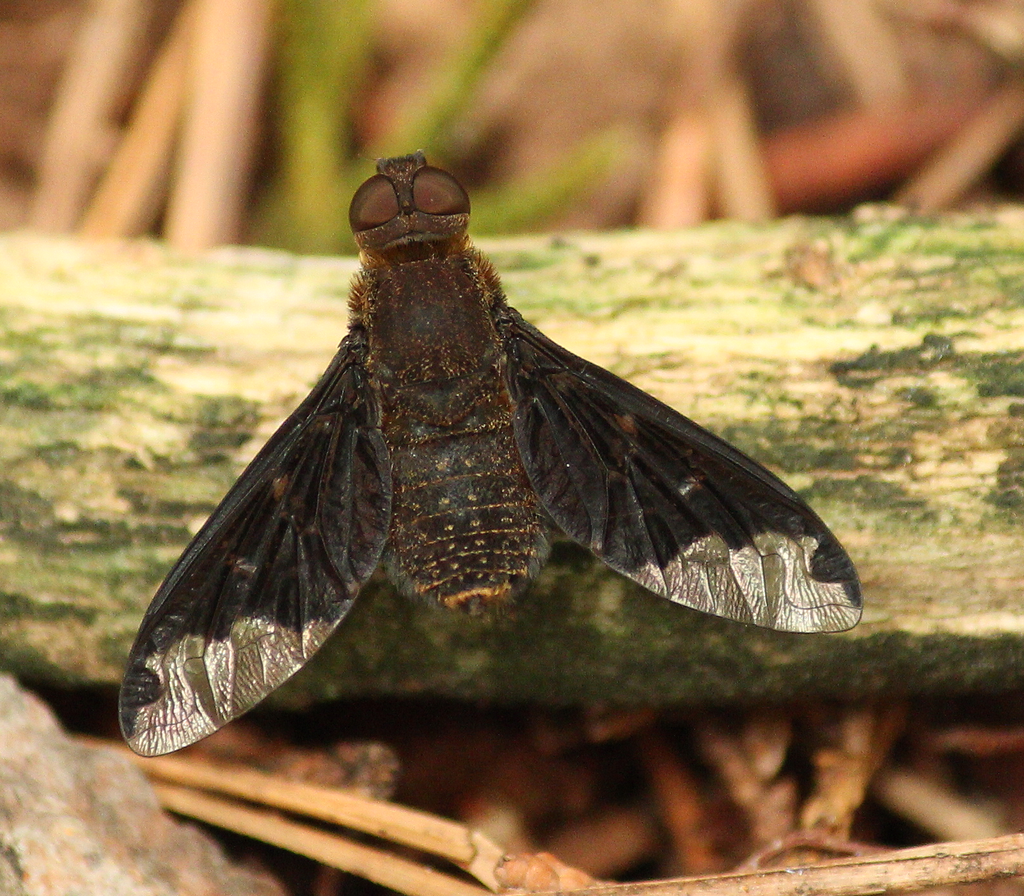
(c) mayfly1963, some rights reserved (CC BY) · licence
Family: Bombyliidae · Class: Insecta · Order: Diptera
Hemipenthes sinuosa (Sinuous Bee Fly) is a California animal in the Bombyliidae family.
The Sinuous Bee Fly is a small to medium-sized dipteran measuring 5 to 15 millimeters (0.2 to 0.6 inches) in length. The species is distinguished by its characteristic wing pattern, featuring a black area with an irregular, wavy border and a small rounded blob near the apex. The head, thorax, and abdomen are black or very dark colored, lacking obvious banding or other markings. The wing venation shows no cross vein connecting veins R2+3 and R4, a key diagnostic feature for identification (BugGuide). Hemipenthes sinuosa occurs throughout much of western North America, with documented populations across California and extending into other western states. The species appears to have a broad distribution within California, though specific county-level occurrence data remains limited in published literature. This bee fly inhabits diverse terrestrial environments, with documented occurrences in coastal areas, inland valleys, and various elevation zones. Adults have been observed in association with different vegetation communities, though specific habitat preferences require further documentation. The species appears adaptable to various microhabitats within its range. As a member of the Bombyliidae family, the Sinuous Bee Fly exhibits typical bee fly ecology. Adults are likely nectar feeders, visiting flowers for sustenance, while larvae are presumed to be parasitoids of other insects, following the general life history pattern of most bee flies. The larvae likely develop as parasites or parasitoids of ground-nesting bees, beetles, or other insects, though specific host relationships for this species have not been well documented. Flight periods and seasonal activity patterns vary geographically but generally occur during warmer months when both adults and their presumed hosts are active. Adults demonstrate the characteristic hovering flight behavior typical of bee flies, often seen hovering near flowers or potential egg-laying sites. The species name 'sinuosa' refers to the sinuous or winding border of the black wing markings, which serves as the primary field identification characteristic distinguishing it from related species in the genus Hemipenthes. Currently, Hemipenthes sinuosa holds no special conservation status at federal or state levels. The species appears to maintain stable populations across its range, with a NatureServe global conservation status of G5, indicating it is secure globally (NatureServe Explorer). No specific population trends have been documented, and the species faces no recognized immediate threats. The broad distribution and apparent ecological adaptability suggest the species is not at immediate conservation risk. Despite its widespread occurrence, detailed ecological studies of the Sinuous Bee Fly remain limited. Research gaps include specific host relationships, detailed habitat requirements, population dynamics, and responses to environmental changes. The species represents one of many North American bee flies requiring additional study to fully understand their ecological roles and conservation needs.
Classification
Class: Insecta · Order: Diptera · Family: Bombyliidae
Frequently asked questions
How is Hemipenthes sinuosa classified?
Hemipenthes sinuosa belongs to class Insecta, order Diptera, family Bombyliidae.
What family does Hemipenthes sinuosa belong to?
Hemipenthes sinuosa is in the Bombyliidae family.
What is Hemipenthes sinuosa?
The Sinuous Bee Fly is a small to medium-sized dipteran measuring 5 to 15 millimeters (0.2 to 0.6 inches) in length.
Is Hemipenthes sinuosa found in California?
Yes. Hemipenthes sinuosa is recorded in California in The California Species Project's catalogue.
Related species
Other California species in the same genus, family, or bioregion.
Data from The California Species Project — 14,000+ California species with verified data from CNPS, CDFW, USFWS, and more.