Hemiplatytes epia
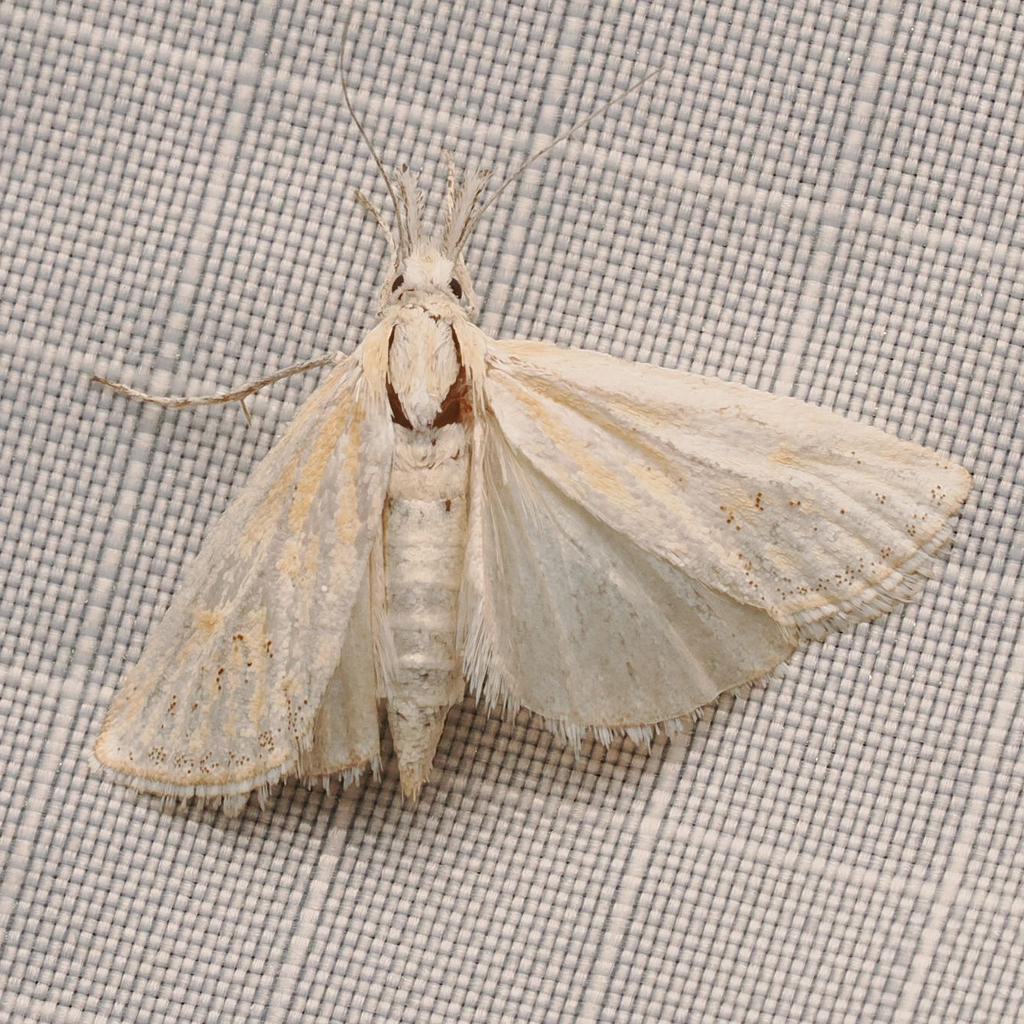
(c) Ken-ichi Ueda, some rights reserved (CC BY) · licence
Family: Crambidae · Class: Insecta · Order: Lepidoptera
Hemiplatytes epia is a California animal in the Crambidae family.
Hemiplatytes epia is a moth species in the family Crambidae, belonging to the order Lepidoptera. This species represents one of the lesser-documented members of the grass moth family, with limited information available in the scientific literature regarding its physical characteristics and life history. The physical description of Hemiplatytes epia remains inadequately documented in current taxonomic resources. As a member of Crambidae, this species likely exhibits the typical moth body plan with narrow forewings and broader hindwings, though specific measurements, coloration patterns, and distinguishing morphological features have not been comprehensively described in accessible scientific literature. The wingspan and body size characteristics require further taxonomic study to establish definitive identification criteria. The geographic range and distribution of Hemiplatytes epia within California and North America are not well-established in current databases and taxonomic resources. The species appears to have a limited distribution, though specific counties, elevational ranges, and habitat boundaries have not been thoroughly documented. This lack of distributional data suggests either a restricted range, recent taxonomic description, or insufficient survey effort for this particular species. Habitat preferences and ecological requirements for Hemiplatypes epia remain largely uncharacterized. Members of the Crambidae family typically inhabit diverse environments including grasslands, agricultural areas, and forest margins, with larvae often feeding on grasses and herbaceous plants. However, the specific vegetation associations, elevation preferences, and microhabitat requirements for this species have not been established through systematic ecological studies. The behavioral ecology and life history of Hemiplatytes epia are poorly understood. Crambidae moths generally exhibit nocturnal activity patterns and undergo complete metamorphosis with egg, larval, pupal, and adult stages. Adult flight periods, mating behaviors, larval host plant relationships, and seasonal activity patterns for this species require additional field research and taxonomic investigation. The reproductive biology, including clutch sizes, development timing, and generational patterns, has not been documented. The conservation status of Hemiplatytes epia is uncertain due to limited ecological and distributional data. The species does not appear on federal or California state endangered species lists as of December 2025, though this may reflect insufficient biological information rather than stable population status. Without established population estimates, trend data, or threat assessments, the conservation needs of this species cannot be adequately evaluated. The lack of comprehensive taxonomic and ecological documentation represents a significant knowledge gap that impedes effective conservation planning and species management decisions for Hemiplatypes epia.
Classification
Class: Insecta · Order: Lepidoptera · Family: Crambidae
Frequently asked questions
How is Hemiplatytes epia classified?
Hemiplatytes epia belongs to class Insecta, order Lepidoptera, family Crambidae.
What family does Hemiplatytes epia belong to?
Hemiplatytes epia is in the Crambidae family.
What is Hemiplatytes epia?
Hemiplatytes epia is a moth species in the family Crambidae, belonging to the order Lepidoptera.
Is Hemiplatytes epia found in California?
Yes. Hemiplatytes epia is recorded in California in The California Species Project's catalogue.
Related species
Other California species in the same genus, family, or bioregion.
Data from The California Species Project — 14,000+ California species with verified data from CNPS, CDFW, USFWS, and more.