Heraclides rumiko
Western Giant Swallowtail
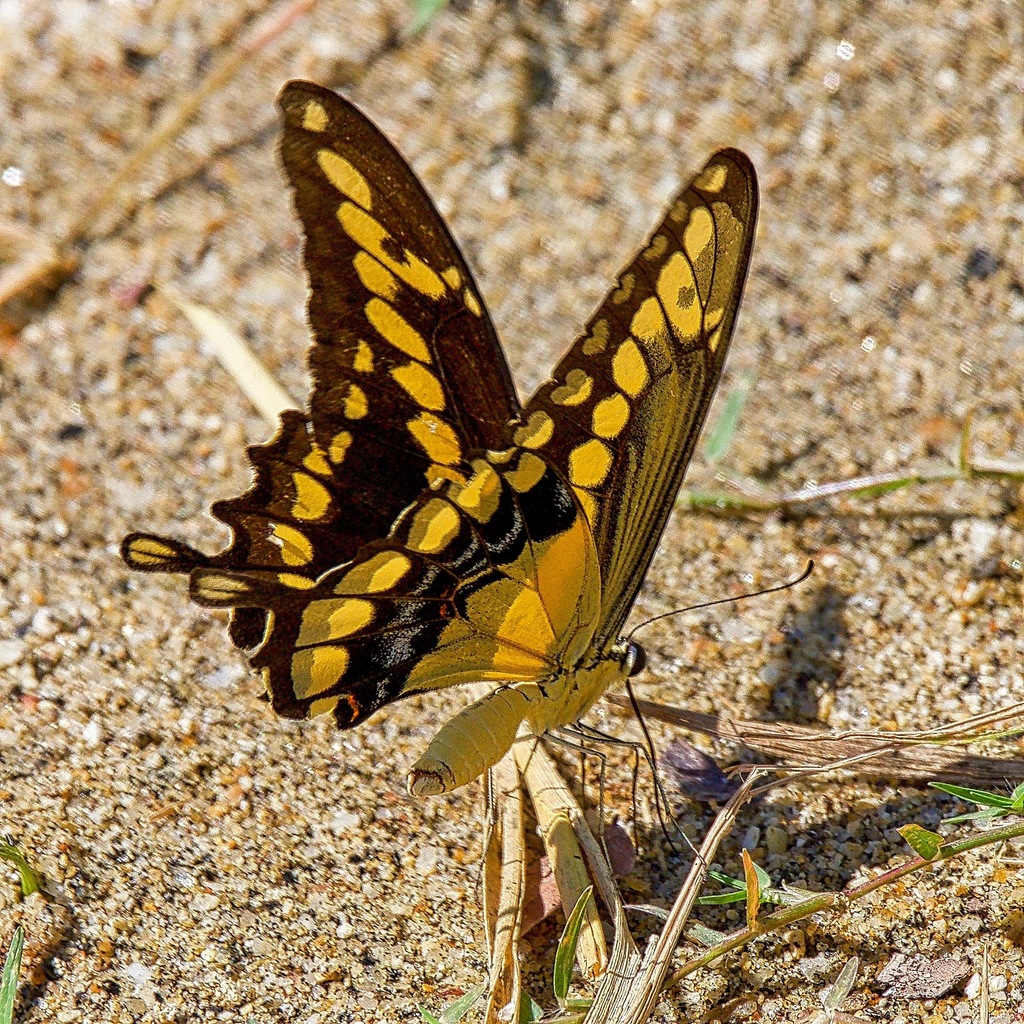
(c) Bill Levine, some rights reserved (CC BY) · licence
Family: Papilionidae · Class: Insecta · Order: Lepidoptera
Heraclides rumiko (Western Giant Swallowtail) is a California animal in the Papilionidae family.
The Western Giant Swallowtail is a large butterfly recently recognized as a distinct species through taxonomic revision. This swallowtail was described by Shiraiwa and Grishin in 2014 based on distinctive wing pattern characteristics, particularly markings on the neck region that differentiate it from the closely related Giant Swallowtail (Heraclides cresphontes) (Shiraiwa & Grishin 2014). The species exhibits the typical large size of giant swallowtails, with broad wings displaying dark brown to black coloration marked by distinctive yellow bands and spots. Heraclides rumiko occurs across the southwestern United States from California to Texas, extending south through Mexico to Panama. In California, the species has been documented in Orange County, with observations from Lake Forest in 2023, and Ventura County, with records from Ventura and Camarillo between 2020-2021. The species appears to be expanding its documented range northward along the California coast, with recent photographic records representing some of the first confirmed observations in these counties. The Western Giant Swallowtail inhabits areas where its host plants in the citrus family (Rutaceae) are present. According to taxonomic databases, confirmed host plant genera include Amyris, Casimiroa, Citrus, Ptelea, Ruta, and Zanthoxylum (Moth Photographers Group 2025). The species likely utilizes both native and cultivated members of this plant family, which may explain its presence in suburban areas of southern California where ornamental citrus trees are common. Adults are typically observed in areas with suitable nectar sources and proximity to larval host plants. Like other giant swallowtails, this species undergoes complete metamorphosis with distinct egg, larval, pupal, and adult stages. Adults are active during warmer months, with California observations recorded from May through August. The larvae, commonly called orangedog caterpillars due to their feeding habits on citrus family plants, are distinctive with their bird-dropping mimicry in early instars and later development of eyespots and defensive behaviors when disturbed. Adults feed on nectar from various flowering plants and are strong fliers capable of covering considerable distances. The Western Giant Swallowtail does not currently hold any federal or state conservation listing status. As a recently described species, comprehensive population assessments have not been conducted. The species benefits from the widespread cultivation of citrus plants throughout its range, though urbanization and habitat fragmentation may pose localized threats. Climate change could potentially affect the northern limits of its range and the phenology of both the butterfly and its host plants. The expansion of documented records in California suggests either genuine range expansion or increased detection through improved taxonomic recognition and citizen science photography platforms like iNaturalist and BugGuide, which have facilitated recent species confirmations in Orange and Ventura counties.
Classification
Class: Insecta · Order: Lepidoptera · Family: Papilionidae
Frequently asked questions
How is Heraclides rumiko classified?
Heraclides rumiko belongs to class Insecta, order Lepidoptera, family Papilionidae.
What family does Heraclides rumiko belong to?
Heraclides rumiko is in the Papilionidae family.
What is Heraclides rumiko?
The Western Giant Swallowtail is a large butterfly recently recognized as a distinct species through taxonomic revision.
Is Heraclides rumiko found in California?
Yes. Heraclides rumiko is recorded in California in The California Species Project's catalogue.
Related species
Other California species in the same genus, family, or bioregion.
Data from The California Species Project — 14,000+ California species with verified data from CNPS, CDFW, USFWS, and more.