Hermetia illucens
Black Soldier Fly
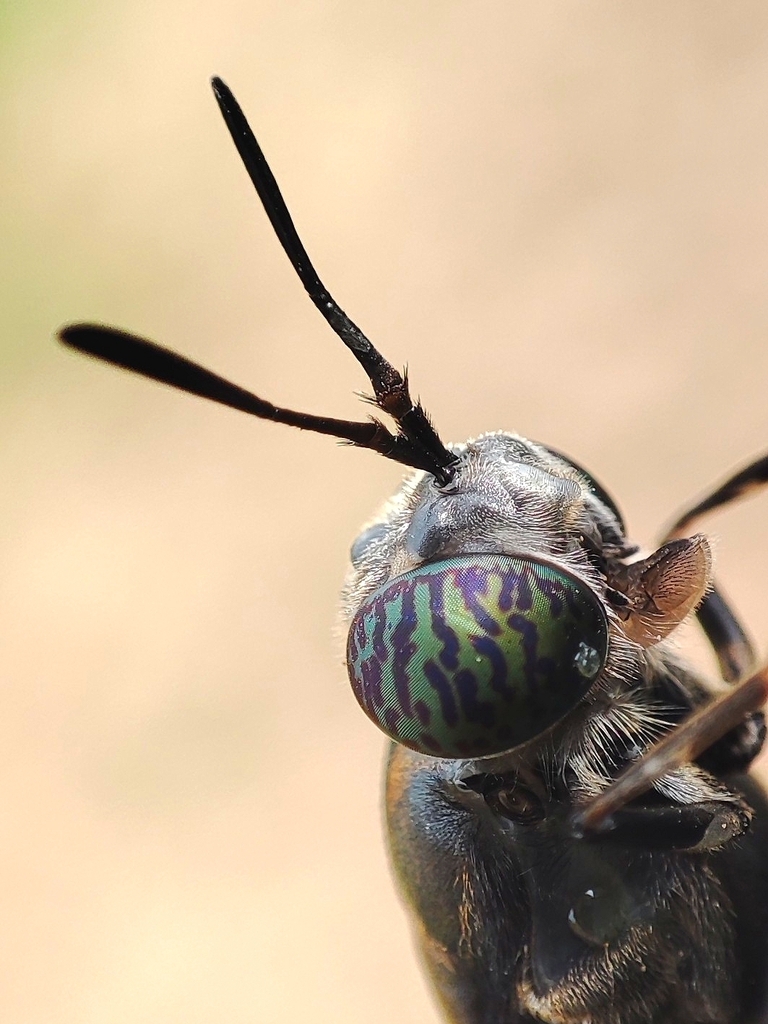
no rights reserved · CC0
Family: Stratiomyidae · Class: Insecta · Order: Diptera
Hermetia illucens (Black Soldier Fly) is a California animal in the Stratiomyidae family.
The Black Soldier Fly is a large, dark-colored fly measuring 15-20 mm (0.6-0.8 inches) in length. Adults are predominantly black with a metallic sheen, featuring translucent patches on the abdomen that give the species its distinctive appearance. The wings are clear to slightly smoky, and the antennae are relatively short and thick. Males are generally smaller and more slender than females, with more pronounced translucent abdominal segments. Black Soldier Flies are widely distributed across the United States, including California, where they occur throughout much of the state. According to BugGuide observations, California records span from April through November, with peak activity during summer months (BugGuide 2025). The species has been documented across diverse elevational ranges from sea level to mountainous regions. Originally native to the Americas, this species has now established populations on multiple continents due to human transport and its adaptability to various climates. This species inhabits diverse environments including urban areas, agricultural lands, compost facilities, and natural decomposition sites. Adults are commonly found around decaying organic matter, manure, and food waste where they seek oviposition sites. The larvae develop in rich organic substrates including animal manure, food scraps, and other decomposing organic materials. They thrive in warm, moist conditions and can tolerate a wide pH range, making them highly adaptable to various decomposition environments. Adult Black Soldier Flies are short-lived, typically surviving 5-8 days, during which they focus primarily on mating and reproduction rather than feeding. Females deposit egg masses containing 500-900 eggs near suitable larval development sites. The larvae, known as grubs, are the primary feeding stage and are voracious decomposers of organic waste. Larval development occurs through six instars over 2-4 weeks, depending on temperature and food availability. The prepupal stage can last several days to weeks before pupation. Adults emerge and mate, completing the cycle in approximately 6-8 weeks under optimal conditions. The species exhibits strong seasonal activity patterns, with multiple generations possible in warmer climates. The Black Soldier Fly holds no federal or state conservation listing status, as it is a widespread and abundant species. Rather than being of conservation concern, this species has gained significant attention for its beneficial ecological and economic roles. The larvae are increasingly utilized in commercial waste management and sustainable protein production for animal feed and human consumption. Research has demonstrated their effectiveness in processing organic waste while producing valuable biomass (Webster et al. 2016). Their ability to convert organic waste into protein and reduce waste volume by up to 50% has made them valuable in circular economy applications. The species faces no significant threats and continues to expand its range globally, often aided by human activities and climate change.
Classification
Class: Insecta · Order: Diptera · Family: Stratiomyidae
Frequently asked questions
How is Hermetia illucens classified?
Hermetia illucens belongs to class Insecta, order Diptera, family Stratiomyidae.
What family does Hermetia illucens belong to?
Hermetia illucens is in the Stratiomyidae family.
What is Hermetia illucens?
The Black Soldier Fly is a large, dark-colored fly measuring 15-20 mm (0.6-0.8 inches) in length.
Is Hermetia illucens found in California?
Yes. Hermetia illucens is recorded in California in The California Species Project's catalogue.
Related species
Other California species in the same genus, family, or bioregion.
Data from The California Species Project — 14,000+ California species with verified data from CNPS, CDFW, USFWS, and more.