Hermissenda crassicornis
Horned Nudibranch
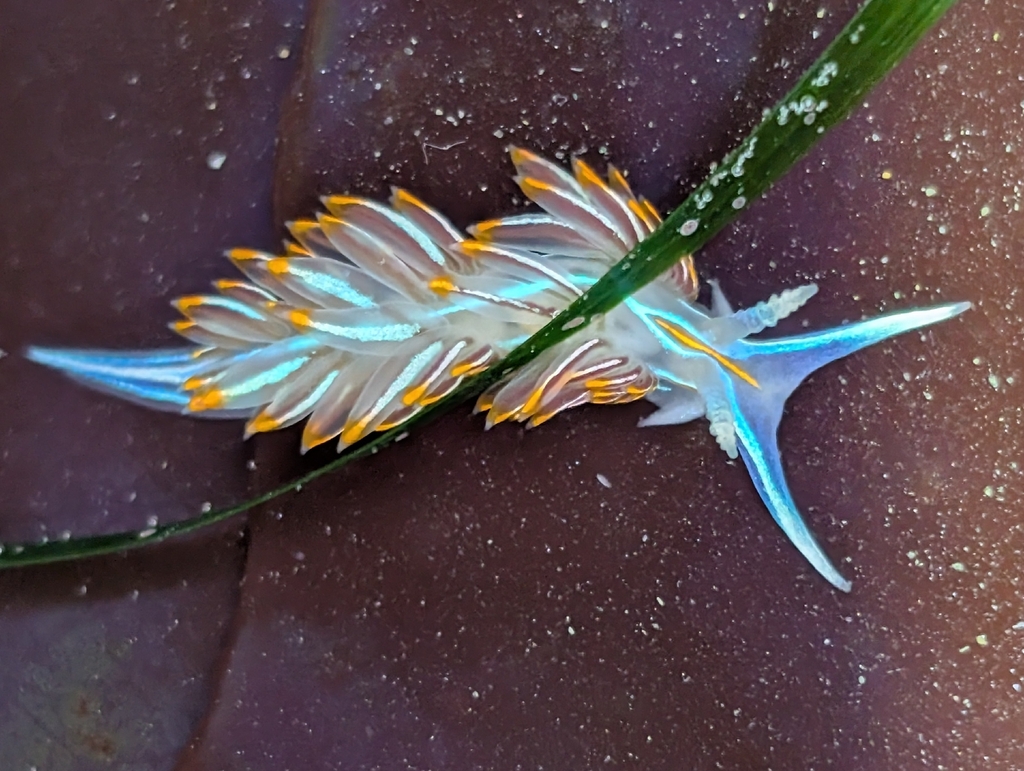
(c) Ken-ichi Ueda, some rights reserved (CC BY) · licence
Family: Facelinidae · Class: Gastropoda · Order: Nudibranchia
Hermissenda crassicornis (Horned Nudibranch) is a California animal in the Facelinidae family.
The Horned Nudibranch (Hermissenda crassicornis) is a marine gastropod mollusk belonging to the family Facelinidae. This nudibranch species measures approximately 25 to 50 mm (1.0 to 2.0 inches) in length when fully extended. The body is translucent white to pale pink, with distinctive orange to red cerata (finger-like projections) arranged in clusters along the dorsal surface. The cerata contain extensions of the digestive system and are tipped with white or yellow cnidosacs, which store stinging cells obtained from cnidarian prey. The head bears two pairs of tentacles: the anterior oral tentacles and the posterior rhinophores, which are used for chemoreception. Hermissenda crassicornis occurs along the Pacific Coast from Alaska to Baja California, Mexico. In California, the species is found in marine waters from the intertidal zone to depths of approximately 37 meters (120 feet). The species inhabits rocky coastlines, tide pools, kelp forests, and protected bays. It is commonly observed in areas with hard substrate where its cnidarian prey species are abundant, including kelp holdfasts, pier pilings, and rocky reef systems. This nudibranch species occupies diverse marine habitats including the rocky intertidal zone, subtidal rocky reefs, and kelp forest ecosystems. It tolerates a wide range of salinity conditions and water temperatures typical of California's temperate marine environment. The species shows preference for areas with moderate to strong water movement, which facilitates feeding and prevents sediment accumulation on its delicate body structures. Hermissenda crassicornis is a carnivorous predator specializing in feeding on hydroids, small anemones, and other cnidarians. The species uses its radula (feeding organ) to rasp tissue from prey organisms and incorporates undischarged nematocysts (stinging cells) from its cnidarian prey into specialized storage sacs in its cerata. These kleptocnidae provide defensive protection against predators. Reproduction involves simultaneous hermaphroditism, with individuals capable of both donating and receiving sperm during mating encounters. Eggs are deposited in characteristic spiral ribbons attached to hard surfaces, typically containing several hundred individual embryos that develop directly into juvenile nudibranchs without a planktonic larval stage. Currently, Hermissenda crassicornis does not hold federal or state conservation listing status in California. The species appears to maintain stable populations throughout its range, with regular observations reported from marine protected areas including those in Orange County and other coastal regions. However, like many marine invertebrates, the species faces potential threats from ocean acidification, warming sea temperatures, and coastal development that may affect prey availability and habitat quality. The species' presence in established marine protected areas, such as the Laguna Beach State Marine Reserve, may provide some protection for local populations against anthropogenic impacts.
Classification
Class: Gastropoda · Order: Nudibranchia · Family: Facelinidae
Frequently asked questions
How is Hermissenda crassicornis classified?
Hermissenda crassicornis belongs to class Gastropoda, order Nudibranchia, family Facelinidae.
What family does Hermissenda crassicornis belong to?
Hermissenda crassicornis is in the Facelinidae family.
What is Hermissenda crassicornis?
The Horned Nudibranch (Hermissenda crassicornis) is a marine gastropod mollusk belonging to the family Facelinidae.
Is Hermissenda crassicornis found in California?
Yes. Hermissenda crassicornis is recorded in California in The California Species Project's catalogue.
Related species
Other California species in the same genus, family, or bioregion.
Data from The California Species Project — 14,000+ California species with verified data from CNPS, CDFW, USFWS, and more.