Hermissenda opalescens
Opalescent Nudibranch
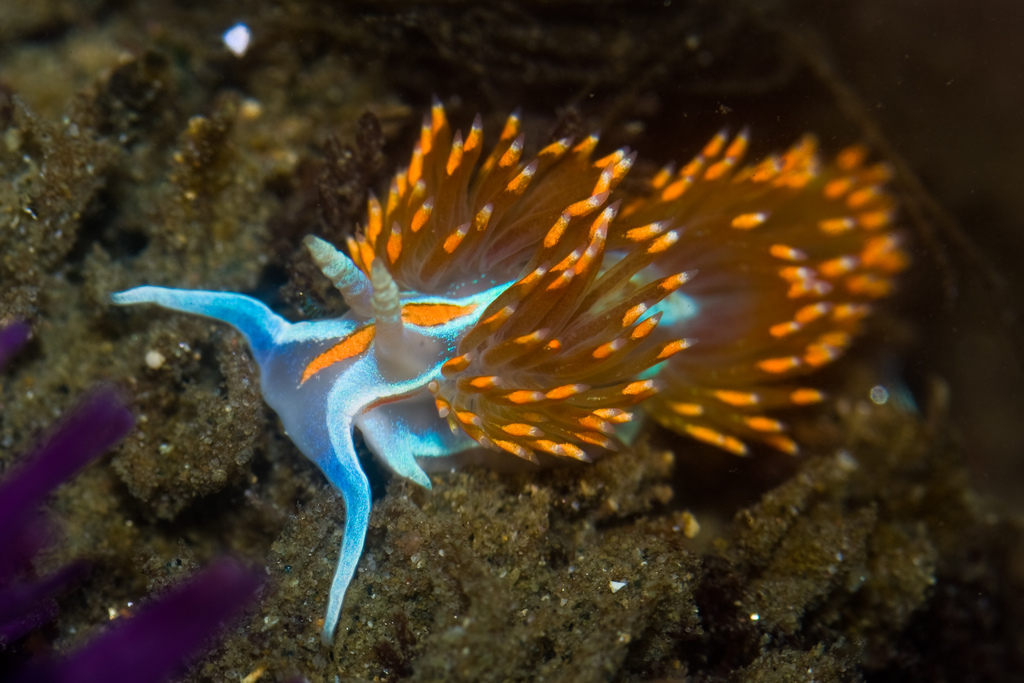
(c) Ken-ichi Ueda, some rights reserved (CC BY) · licence
Family: Facelinidae · Class: Gastropoda · Order: Nudibranchia
Hermissenda opalescens (Opalescent Nudibranch) is a California animal in the Facelinidae family.
Hermissenda opalescens is a small marine gastropod mollusk belonging to the nudibranch family Facelinidae. This sea slug typically measures 15-50 mm (0.6-2.0 inches) in length, with a translucent to whitish body bearing distinctive cerata (finger-like projections) along its dorsal surface. The cerata are characterized by orange to reddish-brown digestive gland cores and bright white or pale yellow tips. The species displays a characteristic blue to purple line running along each side of its body, giving rise to its common name. The head bears two rhinophores (sensory tentacles) and two oral tentacles, all of which can be retracted when threatened. Hermissenda opalescens occurs along the Pacific Coast from British Columbia to Baja California, Mexico. In California, the species is documented in marine protected areas including Duxbury Reef State Marine Conservation Area in Marin County and Kashtayit State Marine Conservation Area along the central coast. The species has been observed at various California locations from intertidal zones to subtidal depths, indicating a broad coastal distribution within the state. This nudibranch inhabits rocky intertidal and shallow subtidal environments, typically found on or near its prey organisms. The species occurs from the low intertidal zone to depths of approximately 37 meters (120 feet), preferring areas with adequate water circulation and rocky substrate that supports diverse hydrozoan communities. Hermissenda opalescens is commonly encountered in tidepools, on pier pilings, and among kelp holdfasts where its prey species are abundant. Hermissenda opalescens is a specialized predator that feeds primarily on hydrozoans, particularly small colonial species such as Obelia and Campanularia. The species uses its radula (feeding organ) to scrape prey from surfaces and can incorporate the stinging cells (nematocysts) from its hydrozoan prey into its own cerata for defense. Reproduction involves the deposition of spiral egg ribbons containing hundreds of eggs, typically laid on hard surfaces during spring and summer months. The species is hermaphroditic, with individuals capable of both male and female reproductive functions. Larvae undergo a planktonic veliger stage before settling and metamorphosing into juvenile nudibranchs. Currently, Hermissenda opalescens has no federal or state conservation listing status. The species appears to maintain stable populations throughout its range, as evidenced by regular observations in California's marine protected areas. However, like other intertidal organisms, populations may be vulnerable to habitat degradation, pollution, and climate change effects such as ocean acidification and sea level rise. The species benefits from protection within California's network of marine protected areas, where it serves as both predator and prey in complex rocky intertidal food webs. Long-term monitoring within these protected areas provides valuable data on population trends and ecosystem health.
Classification
Class: Gastropoda · Order: Nudibranchia · Family: Facelinidae
Frequently asked questions
How is Hermissenda opalescens classified?
Hermissenda opalescens belongs to class Gastropoda, order Nudibranchia, family Facelinidae.
What family does Hermissenda opalescens belong to?
Hermissenda opalescens is in the Facelinidae family.
What is Hermissenda opalescens?
Hermissenda opalescens is a small marine gastropod mollusk belonging to the nudibranch family Facelinidae.
Is Hermissenda opalescens found in California?
Yes. Hermissenda opalescens is recorded in California in The California Species Project's catalogue.
Related species
Other California species in the same genus, family, or bioregion.
Data from The California Species Project — 14,000+ California species with verified data from CNPS, CDFW, USFWS, and more.