Herpeteros angelus
Soledad Desertsnail
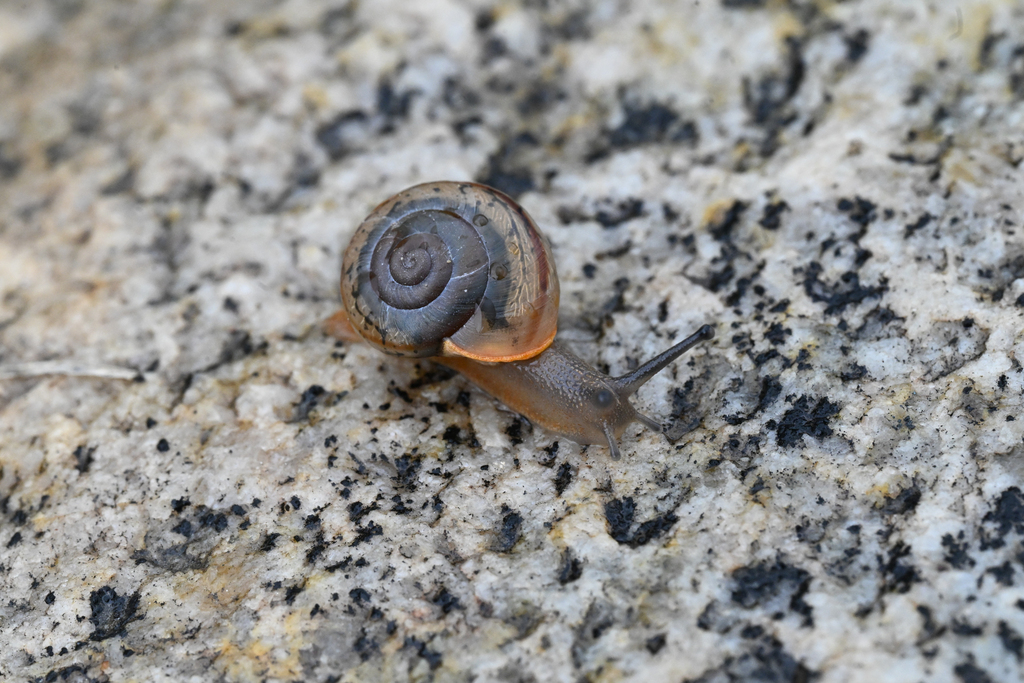
(c) Trevor Van Loon, some rights reserved (CC BY) · licence
Family: Helminthoglyptidae · Class: Gastropoda · Order: Stylommatophora
Conservation status: G1 S1
Herpeteros angelus (Soledad Desertsnail) is a California animal in the Helminthoglyptidae family.
The Soledad desertsnail (Herpeteros angelus) is a terrestrial gastropod mollusk endemic to California. This species is a member of the family Helminthoglyptidae, which comprises dry-land snails adapted to arid and semi-arid environments. Physical characteristics of this species have not been extensively documented in the scientific literature, though like other members of its genus, it likely possesses a spiral shell typical of terrestrial snails. The species' range appears to be extremely limited, as indicated by its Global and State conservation rank of G1 S1, signifying it is critically imperiled both globally and within California. The common name suggests an association with the Soledad area in Monterey County, though precise distributional data for this species remains poorly documented in available scientific literature. Habitat requirements for Herpeteros angelus have not been well characterized in published studies. Based on its classification as a desertsnail and the geographic region suggested by its common name, the species likely inhabits dry, well-drained soils in areas with limited moisture availability. The Soledad region of Monterey County features a Mediterranean climate with hot, dry summers and mild, wet winters, situated within the Salinas Valley and adjacent to the Gabilan Range. Ecological and behavioral information for this species is extremely limited in current scientific documentation. Like other terrestrial gastropods, H. angelus presumably feeds on decaying organic matter, fungi, and possibly living plant material. Reproductive behavior, seasonal activity patterns, and specific dietary preferences have not been documented in available literature. The species likely exhibits typical snail behaviors including seasonal dormancy during dry periods and increased activity during periods of higher moisture availability. The conservation status of Herpeteros angelus is of significant concern, with its G1 S1 ranking indicating the species faces an extremely high risk of extinction. This ranking suggests fewer than 1,000 individuals may exist globally, with populations highly vulnerable to environmental changes, habitat loss, or other anthropogenic factors. The species does not appear to have federal or state listing status under endangered species legislation as of December 2025, though its critical conservation rank suggests it may warrant consideration for such protection. Specific threats to the species have not been documented, though habitat modification, urban development, and climate change likely pose risks to remaining populations. Scientific documentation for this species remains extremely limited. The information presented here synthesizes available data from conservation databases and taxonomic sources. Detailed ecological studies, population surveys, and habitat assessments are needed to better understand this critically imperiled species. We welcome contributions of verified scientific data, photographs, or field observations to enhance this species account.
Classification
Class: Gastropoda · Order: Stylommatophora · Family: Helminthoglyptidae
Conservation status
G1 S1
Frequently asked questions
How is Herpeteros angelus classified?
Herpeteros angelus belongs to class Gastropoda, order Stylommatophora, family Helminthoglyptidae.
What family does Herpeteros angelus belong to?
Herpeteros angelus is in the Helminthoglyptidae family.
Is Herpeteros angelus protected or of conservation concern?
Herpeteros angelus carries the following status: G1 S1.
What is Herpeteros angelus?
The Soledad desertsnail (Herpeteros angelus) is a terrestrial gastropod mollusk endemic to California.
Is Herpeteros angelus found in California?
Yes. Herpeteros angelus is recorded in California in The California Species Project's catalogue.
Related species
Other California species in the same genus, family, or bioregion.
Data from The California Species Project — 14,000+ California species with verified data from CNPS, CDFW, USFWS, and more.