Hesperapis kayella
Western bees
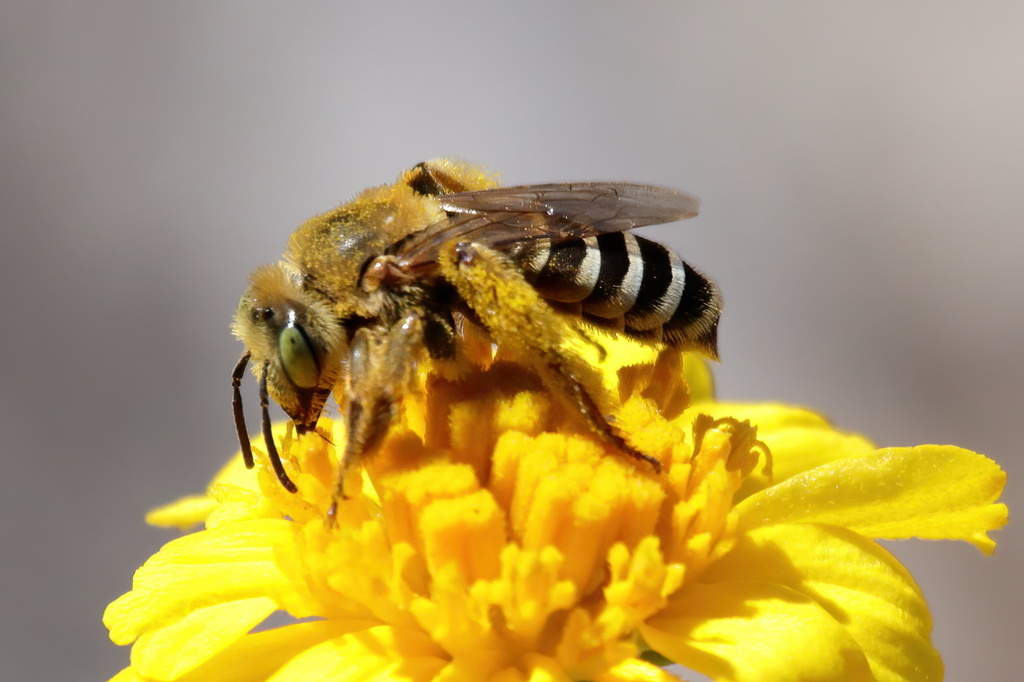
(c) Kim, some rights reserved (CC BY) · licence
Family: Melittidae · Class: Insecta · Order: Hymenoptera
Hesperapis kayella (Western bees) is a California animal in the Melittidae family.
Hesperapis kayella is a solitary bee species in the family Melittidae, subfamily Dasypodainae. This species represents one of the specialized ground-nesting bees adapted to arid western environments. Like other members of the genus Hesperapis, H. kayella exhibits the characteristic modified branched hairs (plumose setae) used for pollen collection, though detailed morphological descriptions of this species remain limited in the scientific literature. Hesperapis kayella is endemic to the Columbia Basin region of the western United States. The species is known from only four documented locations across Idaho and Nevada, representing an extremely restricted geographic distribution. This narrow range places the species entirely within the Great Basin ecoregion, where it occurs in isolated populations separated by considerable distances. The species inhabits disturbed sandy substrates typical of Great Basin desert environments. Females construct ground nests in sandy soils, excavating burrows where they provision brood cells with pollen and nectar collected from their specialized host plants. The habitat requirements include both suitable nesting substrate and the presence of flowering Tiquilia species within foraging range. Tiquilia, commonly known as crinklemat, consists of small desert shrubs adapted to alkaline soils and arid conditions typical of the Great Basin. Hesperapis kayella is a specialist forager (oligolectic) on plants in the genus Tiquilia. This narrow host plant specialization means the species depends entirely on crinklemat species for pollen and nectar resources needed for reproduction. The foraging relationship likely involves synchronized timing between the bee's flight period and Tiquilia flowering, though specific phenological data has not been well documented. Like other Hesperapis species, females are presumed to be solitary nesters, with each female constructing and provisioning her own nest burrows independently. As a rare endemic species restricted to only four known localities, Hesperapis kayella faces significant conservation challenges. The Xerces Society has designated the species as Vulnerable with a Data Deficient classification on their Red List, reflecting both the species' rarity and the limited scientific knowledge about its biology and population status. The species occurs in disturbed habitats, suggesting vulnerability to continued habitat degradation from development, grazing, off-road vehicle use, and other anthropogenic impacts. Conservation efforts for H. kayella should focus on protecting both the flowering Tiquilia host plants and maintaining suitable sandy nesting substrates at known localities. The species' extreme rarity, with documentation from only four locations across two states, makes each population critical for species persistence. Climate change poses additional threats through potential shifts in precipitation patterns and temperature regimes that could affect both the bee and its specialized host plants. Given the limited scientific documentation, further research is needed to understand population sizes, life history characteristics, and specific habitat requirements necessary for effective conservation management.
Classification
Class: Insecta · Order: Hymenoptera · Family: Melittidae
Frequently asked questions
How is Hesperapis kayella classified?
Hesperapis kayella belongs to class Insecta, order Hymenoptera, family Melittidae.
What family does Hesperapis kayella belong to?
Hesperapis kayella is in the Melittidae family.
What is Hesperapis kayella?
Hesperapis kayella is a solitary bee species in the family Melittidae, subfamily Dasypodainae.
Is Hesperapis kayella found in California?
Yes. Hesperapis kayella is recorded in California in The California Species Project's catalogue.
Related species
Other California species in the same genus, family, or bioregion.
Data from The California Species Project — 14,000+ California species with verified data from CNPS, CDFW, USFWS, and more.