Hesperarion plumbeus
Leaden Slug
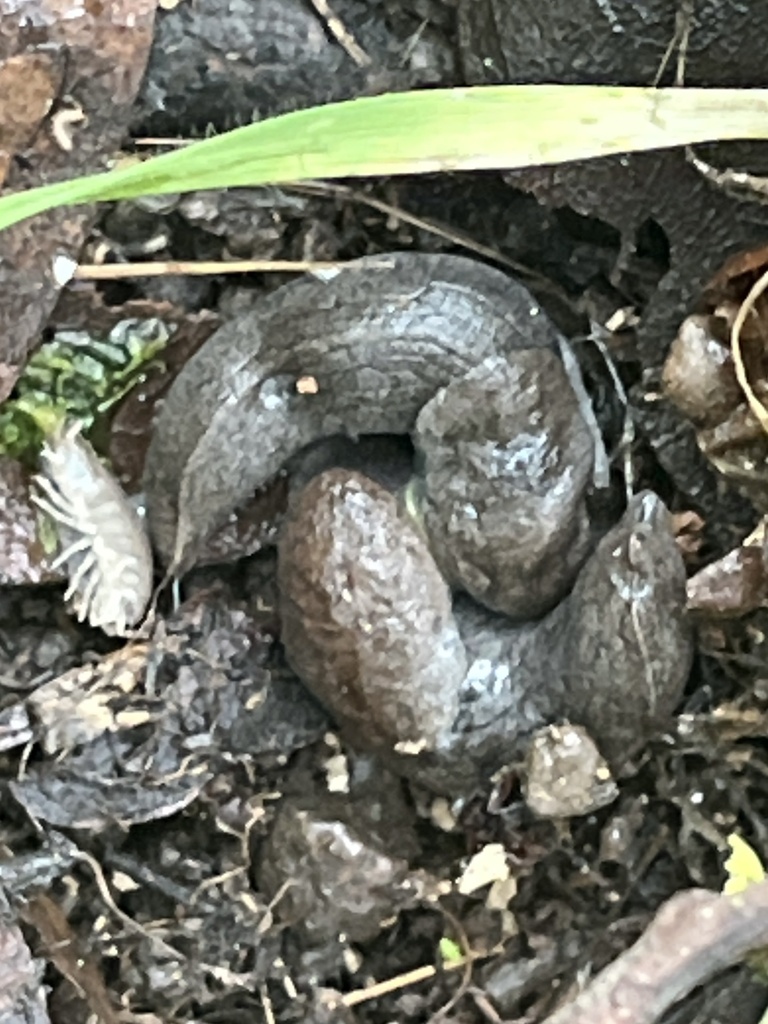
(c) joqatana, some rights reserved (CC BY) · licence
Family: Arionidae · Class: Gastropoda · Order: Stylommatophora
Conservation status: G2 S1S2
Hesperarion plumbeus (Leaden Slug) is a California animal in the Arionidae family.
The leaden slug (Hesperarion plumbeus) is a terrestrial gastropod mollusk endemic to a highly restricted area of northern California. This species was described as new to science from Shasta County, where it differs from other Hesperarion species in morphological characteristics (Roth & Sadeghian 2003). Physical descriptions of live specimens indicate the species exhibits the typical elongated, soft-bodied form characteristic of land slugs, though detailed morphometric data remain limited in published literature. The leaden slug has an extremely limited range, known only from the south fork of Castle Creek and from Root Creek in Shasta County, California (NatureServe 2023). This represents one of the most restricted distributions of any North American terrestrial mollusk, with the species' entire known range encompassing only two creek systems in the northern Sacramento Valley region. The restricted occurrence suggests the species may be a recent evolutionary derivative or a relict population with highly specific habitat requirements. Habitat requirements appear closely tied to riparian environments along creek systems. Known specimens were collected from riparian areas along creeks, indicating dependence on moisture-rich microhabitats typical of streamside vegetation zones (CDFW species account). The species likely requires the consistent moisture, moderate temperatures, and organic substrates characteristic of northern California creek corridors. Elevation ranges and specific vegetation associations have not been well documented, though the Castle Creek and Root Creek watersheds occur within mixed coniferous forest ecosystems of the Cascade Range foothills. Life history and behavioral ecology remain poorly documented. Like other members of the family Arionidae, the leaden slug is presumably hermaphroditic and likely feeds on decaying organic matter, fungi, and possibly living plant material. Reproductive timing, egg-laying behavior, seasonal activity patterns, and specific dietary preferences have not been studied. The species' ecological role within riparian food webs and interactions with other invertebrates remain unknown. The leaden slug's conservation status reflects significant concern for this endemic species. With a global rank of G2 (imperiled) and a California state rank of S1S2 (critically imperiled to imperiled), the species faces substantial risk of extinction (NatureServe 2023). The extremely limited range makes populations vulnerable to localized disturbances including stream modifications, water diversions, logging activities, and climate-related changes in precipitation patterns. Riparian habitat degradation from livestock grazing, invasive plant species, or altered hydrology could eliminate suitable conditions across the species' entire range. No specific conservation management plans or population monitoring programs have been documented. The species' taxonomic distinctiveness, combined with its restricted distribution, makes it a priority for both additional biological research and habitat protection measures within the Castle Creek and Root Creek watersheds of Shasta County.
Classification
Class: Gastropoda · Order: Stylommatophora · Family: Arionidae
Conservation status
G2 S1S2
Frequently asked questions
How is Hesperarion plumbeus classified?
Hesperarion plumbeus belongs to class Gastropoda, order Stylommatophora, family Arionidae.
What family does Hesperarion plumbeus belong to?
Hesperarion plumbeus is in the Arionidae family.
Is Hesperarion plumbeus protected or of conservation concern?
Hesperarion plumbeus carries the following status: G2 S1S2.
What is Hesperarion plumbeus?
The leaden slug (Hesperarion plumbeus) is a terrestrial gastropod mollusk endemic to a highly restricted area of northern California.
Is Hesperarion plumbeus found in California?
Yes. Hesperarion plumbeus is recorded in California in The California Species Project's catalogue.
Related species
Other California species in the same genus, family, or bioregion.
Data from The California Species Project — 14,000+ California species with verified data from CNPS, CDFW, USFWS, and more.