Hesperia colorado
Western Branded Skipper
no rights reserved · CC0
Family: Hesperiidae · Class: Insecta · Order: Lepidoptera
Hesperia colorado (Western Branded Skipper) is a California animal in the Hesperiidae family.
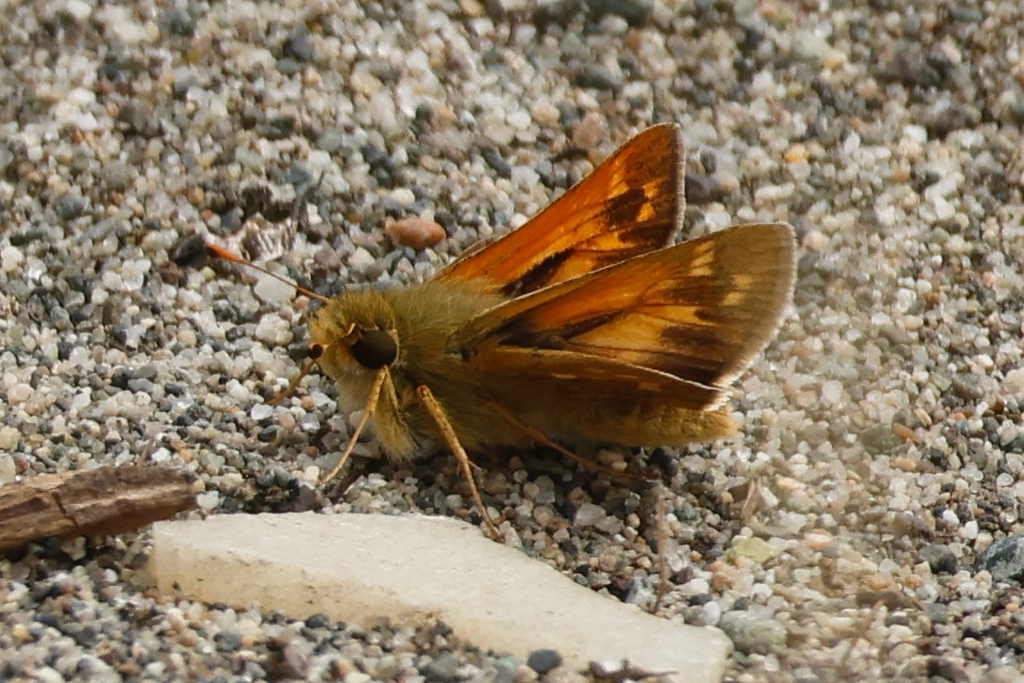
The Western Branded Skipper is a small butterfly with a wingspan ranging from 25 to 35 mm (1.0 to 1.4 inches). Males display orange-brown forewings with distinctive dark brown borders and scattered dark spots, while the hindwings are lighter orange-brown with pale spotting. Females are typically darker with more subdued coloration and heavier dark markings. The species exhibits the characteristic rapid, darting flight pattern typical of skipper butterflies, with thick bodies and relatively small wings compared to other butterfly families. The antennae are club-shaped with curved tips, distinguishing them from other butterfly groups. The Western Branded Skipper ranges from Washington and Wyoming south to Baja California Norte, southeastern Arizona, and western Nebraska. In California, the species occurs primarily in the northern and central portions of the state, extending south through the Central Valley and into southern California mountains. Populations are documented from sea level to elevations of approximately 2,500 meters (8,200 feet) in montane environments. This species inhabits open grasslands, prairies, meadows, and woodland clearings where native bunch grasses are present. The butterfly shows strong association with areas containing its host grasses, including fescue (Festuca), brome (Bromus), bluegrass (Poa), needlegrass (Stipa), and beardgrass (Andropogon), as well as various sedges. Suitable habitat typically features a mixture of grasses and forbs with adequate nectar sources for adults. The species tolerates some habitat disturbance and can utilize agricultural areas and roadsides where appropriate grasses persist. Adult Western Branded Skippers are active from late spring through early fall, with peak flight periods varying by elevation and latitude. Males establish territories in open areas and perch on low vegetation or bare ground, engaging in rapid pursuit flights when other butterflies enter their territory. Mating occurs following courtship flights, and females deposit eggs singly on or near host grass leaves. Larvae feed on grass blades and overwinter in the larval stage, pupating in spring before adult emergence. The species typically produces one to two generations per year depending on local climate conditions. The Western Branded Skipper is not federally or state-listed and appears to maintain stable populations across much of its range. However, like many grassland-dependent species, it faces ongoing habitat loss from agricultural conversion, urban development, and invasive plant species that alter native grassland communities. Fire suppression has led to woody encroachment in some grassland habitats, reducing suitable open areas. Climate change may affect the species through altered precipitation patterns and temperature regimes that impact host plant communities. Conservation efforts focus on maintaining and restoring native grassland habitats and managing grazing and fire regimes to preserve suitable conditions for both the butterfly and its host plants.
Classification
Class: Insecta · Order: Lepidoptera · Family: Hesperiidae
Frequently asked questions
How is Hesperia colorado classified?
Hesperia colorado belongs to class Insecta, order Lepidoptera, family Hesperiidae.
What family does Hesperia colorado belong to?
Hesperia colorado is in the Hesperiidae family.
What is Hesperia colorado?
The Western Branded Skipper is a small butterfly with a wingspan ranging from 25 to 35 mm (1.0 to 1.4 inches).
Is Hesperia colorado found in California?
Yes. Hesperia colorado is recorded in California in The California Species Project's catalogue.
Related species
Other California species in the same genus, family, or bioregion.
Data from The California Species Project — 14,000+ California species with verified data from CNPS, CDFW, USFWS, and more.