Hesperia lindseyi
Lindsey's Skipper
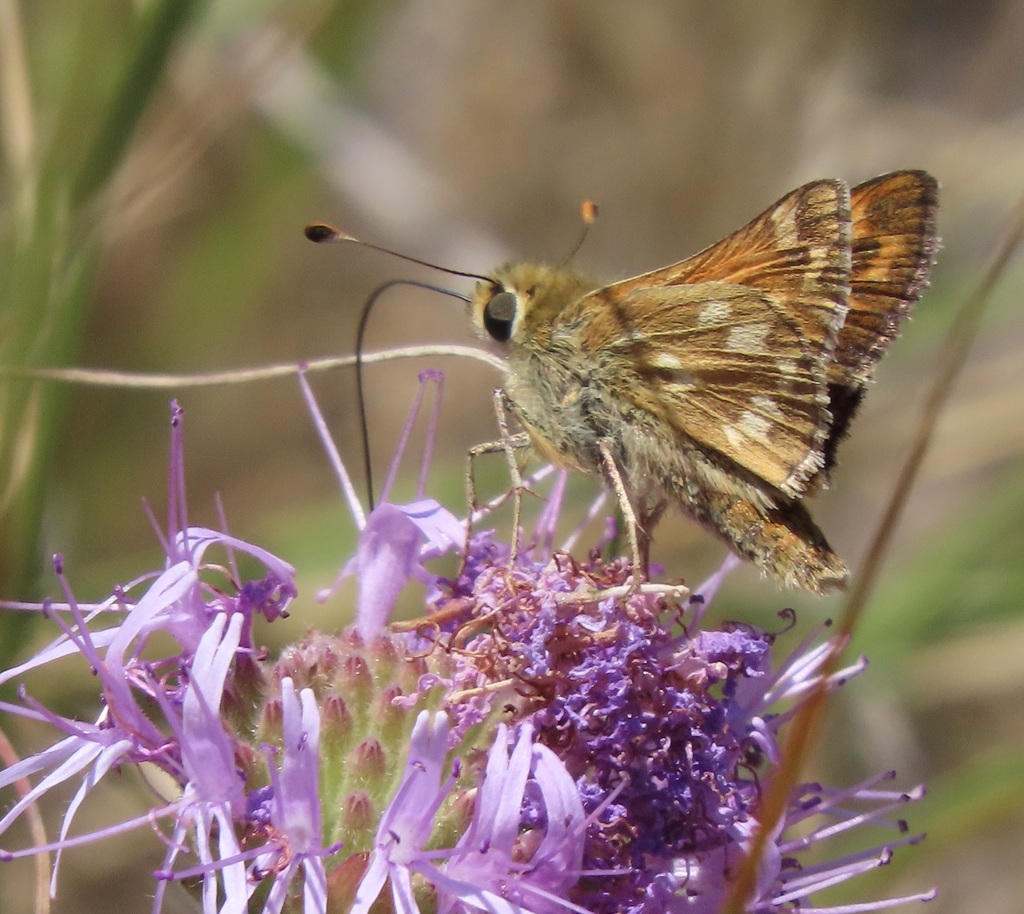
(c) John Hibbard, some rights reserved (CC BY) · licence
Family: Hesperiidae · Class: Insecta · Order: Lepidoptera
Hesperia lindseyi (Lindsey's Skipper) is a California animal in the Hesperiidae family.
Lindsey's Skipper (Hesperia lindseyi) is a small butterfly in the family Hesperiidae, characterized by the robust body and rapid, darting flight pattern typical of skippers. Adults have a wingspan of approximately 25 to 32 mm (1.0 to 1.3 inches). Males display orange-brown dorsal wing surfaces with darker borders and distinctive stigma (scent patches) on the forewings. Females are generally darker with more subdued coloration and white spotting on the forewings. The ventral hindwings are pale yellow to cream-colored with white spots, providing distinguishing characteristics from related Hesperia species. Lindsey's Skipper ranges along the Pacific Slope from Oregon south to Riverside County, California. In California, the species occurs primarily in mountainous regions of the Sierra Nevada, Coast Ranges, and Transverse Ranges. Documented populations exist in counties including Riverside, San Bernardino, Los Angeles, Ventura, Santa Barbara, Kern, Tulare, Fresno, and extending northward through the Central Coast and northern California mountains. The species inhabits montane grasslands, meadows, and open areas within coniferous forests, typically at elevations ranging from 1,200 to 2,400 meters (3,900 to 7,900 feet). Lindsey's Skipper shows strong association with native bunchgrass communities where its host plants occur. Suitable habitat includes mountain meadows, forest clearings, and grassland openings adjacent to mixed conifer or pine forests. The species requires areas with sufficient nectar sources and appropriate microclimate conditions for larval development. Adults are active from late May through August, with peak flight periods varying by elevation and local climate conditions. Males exhibit territorial behavior, perching on elevated surfaces and engaging in rapid pursuit flights when other males or potential mates approach. Females deposit eggs singly on or near host plant leaves. The larval host plants include Idaho fescue (Festuca idahoensis), California oat grass (Danthonia californica), and rattail fescue (Vulpia megalura). Larvae construct silk shelters within grass clumps and feed on grass blades during development. The species likely overwinters as larvae, completing development the following spring before pupating. Lindsey's Skipper is not federally listed but faces conservation challenges from habitat loss and fragmentation. Primary threats include development pressure in montane areas, altered fire regimes that affect grassland composition, livestock grazing impacts on native bunchgrass communities, and invasive plant species that displace native host plants. Climate change poses additional risks through altered precipitation patterns and temperature regimes that may shift suitable habitat ranges upward in elevation. The species' dependence on specific native grass species makes it vulnerable to ecosystem changes that favor non-native vegetation. Conservation efforts focus on protecting and restoring native grassland habitats within the species' range and maintaining appropriate disturbance regimes that support bunchgrass communities.
Classification
Class: Insecta · Order: Lepidoptera · Family: Hesperiidae
Frequently asked questions
How is Hesperia lindseyi classified?
Hesperia lindseyi belongs to class Insecta, order Lepidoptera, family Hesperiidae.
What family does Hesperia lindseyi belong to?
Hesperia lindseyi is in the Hesperiidae family.
What is Hesperia lindseyi?
Lindsey's Skipper (Hesperia lindseyi) is a small butterfly in the family Hesperiidae, characterized by the robust body and rapid, darting flight pattern typical of skippers.
Is Hesperia lindseyi found in California?
Yes. Hesperia lindseyi is recorded in California in The California Species Project's catalogue.
Related species
Other California species in the same genus, family, or bioregion.
Data from The California Species Project — 14,000+ California species with verified data from CNPS, CDFW, USFWS, and more.