Hesperia miriamae
Sierra Skipper
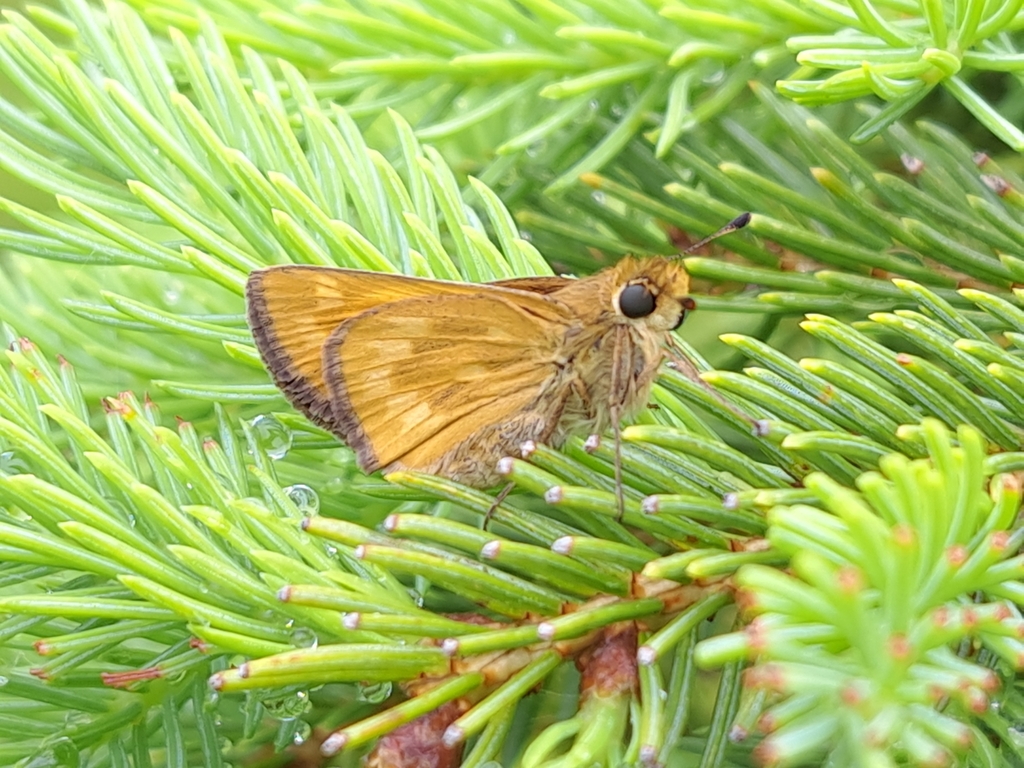
(c) Will Linnard, some rights reserved (CC BY) · licence
Family: Hesperiidae · Class: Insecta · Order: Lepidoptera
Hesperia miriamae (Sierra Skipper) is a California animal in the Hesperiidae family.
The Sierra Skipper is a small butterfly endemic to high-elevation areas of the Sierra Nevada and White Mountains. Adults display yellow-orange upperside coloration with a diffuse dark border on the forewings and large pale spots near the wing tips. Live individuals exhibit a distinctive blue sheen on both dorsal and ventral wing surfaces (BugGuide.Net). The species belongs to the grass skipper family Hesperiidae, characterized by their rapid, darting flight pattern and hooked antennae. The Sierra Skipper occurs in the Sierra Nevada from Tuolumne County south to Inyo County, California, and extends into the White Mountains of eastern California and western Nevada. This distribution represents one of the more restricted ranges among California's skipper butterflies, limited to high-elevation montane environments. The species appears to be associated with alpine and subalpine zones where suitable host plants occur. Habitat requirements center on alpine grasslands and meadows where the presumed host plant, alpine fescue (Festuca brachyphylla), grows. Alpine fescue typically occurs at elevations above 2,400 meters (8,000 feet) in rocky, well-drained soils characteristic of high-elevation Sierra Nevada and White Mountain environments. These habitats experience short growing seasons, with snow cover persisting well into summer months. The butterfly likely occupies meadows, slopes, and other openings within or adjacent to subalpine coniferous forests. Specific behavioral and ecological information for this species remains limited in published literature. Like other grass skippers, adults likely feed on nectar from available wildflowers in their high-elevation habitat, including members of the sunflower, phlox, and other families that bloom during the brief alpine growing season. Larvae presumably feed on the host grass, developing within the protection of silk shelters constructed among grass blades. The species' life cycle timing would necessarily be compressed to accommodate the short frost-free period typical of alpine environments, likely with adults active from mid-summer through early fall when conditions permit flight activity. The Sierra Skipper does not appear on federal or state threatened or endangered species lists, though its restricted high-elevation distribution makes it potentially vulnerable to climate change impacts. Alpine habitats are particularly sensitive to warming temperatures, which can shift vegetation zones upward and reduce available habitat area. The species' dependence on specific grass hosts and high-elevation conditions suggests that habitat availability could become increasingly fragmented as temperatures rise. Additionally, the limited distribution across a relatively small geographic area makes populations susceptible to localized disturbances such as fire, drought, or recreational impacts in popular Sierra Nevada destinations. Scientific documentation for this species remains limited compared to more widespread butterflies. The information presented here is based on available sources including taxonomic databases and field guides. If you have additional verified information about this species' biology, distribution, or ecology, please contact us to help improve this species account.
Classification
Class: Insecta · Order: Lepidoptera · Family: Hesperiidae
Frequently asked questions
How is Hesperia miriamae classified?
Hesperia miriamae belongs to class Insecta, order Lepidoptera, family Hesperiidae.
What family does Hesperia miriamae belong to?
Hesperia miriamae is in the Hesperiidae family.
What is Hesperia miriamae?
The Sierra Skipper is a small butterfly endemic to high-elevation areas of the Sierra Nevada and White Mountains.
Is Hesperia miriamae found in California?
Yes. Hesperia miriamae is recorded in California in The California Species Project's catalogue.
Related species
Other California species in the same genus, family, or bioregion.
Data from The California Species Project — 14,000+ California species with verified data from CNPS, CDFW, USFWS, and more.