Hesperia nevada
Nevada Skipper
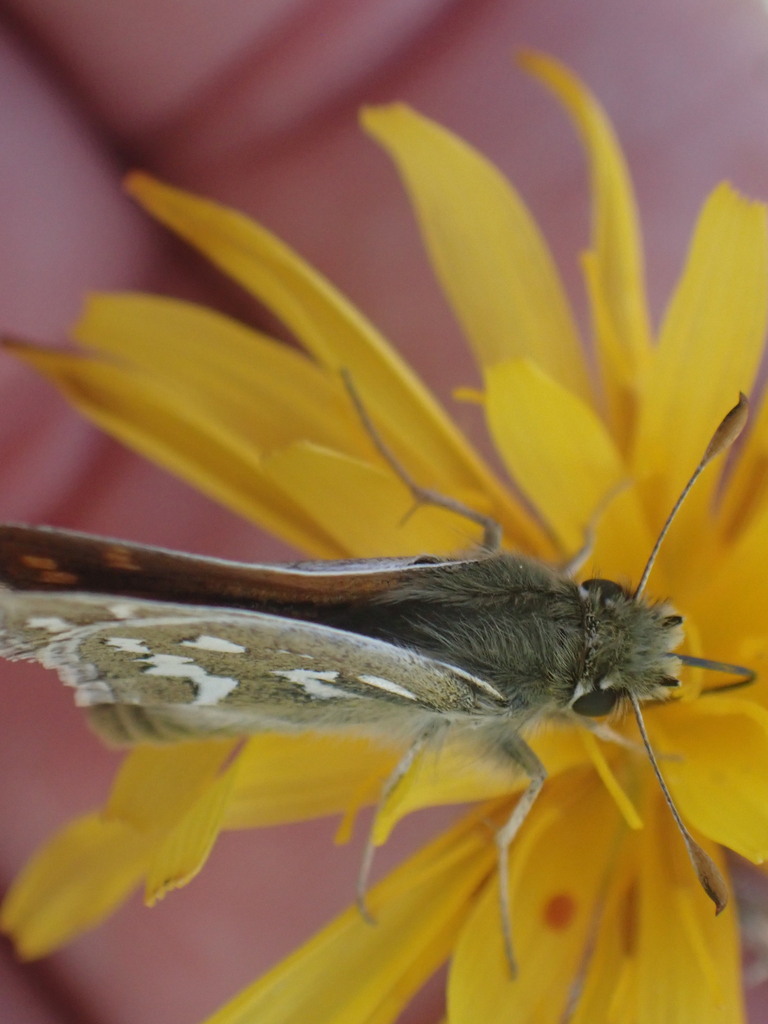
no rights reserved · CC0
Family: Hesperiidae · Class: Insecta · Order: Lepidoptera
Hesperia nevada (Nevada Skipper) is a California animal in the Hesperiidae family.
The Nevada skipper is a small butterfly in the family Hesperiidae, measuring approximately 25-30 mm (1.0-1.2 inches) in wingspan. Males display orange-brown forewings with distinctive dark borders and a prominent dark stigma (scent patch) near the center of each forewing. Females are typically darker with more subdued coloration, showing brown forewings with scattered light spots. Both sexes have grayish-brown hindwings with pale spotting, and the undersides are lighter with more pronounced white or cream-colored markings. The antennae are relatively short with hooked clubs, characteristic of skipper butterflies. The Nevada skipper occurs across a broad range extending from southern British Columbia east across the prairie provinces to southern Manitoba, and south through the western mountains to California, Nevada, Arizona, and New Mexico. In California, populations are documented in the Sierra Nevada and scattered montane locations. The species' distribution reflects its association with grassland habitats containing suitable host plants. This species inhabits open grasslands, mountain meadows, and prairie environments, typically at elevations ranging from 1,200 to 3,000 meters (4,000 to 10,000 feet). Nevada skippers show strong fidelity to areas supporting their primary host plants. Adults are most commonly observed in native bunchgrass communities and adjacent open areas where nectar sources are available. The Nevada skipper is univoltine, producing one generation per year. Adults typically emerge in mid to late summer, with flight periods extending from July through September depending on elevation and local climate conditions. Females deposit eggs singly on or near the host plants, primarily western needlegrass (Stipa occidentalis) and possibly squirrel-tail grass (Sitanion hystrix). Larvae construct silk shelters within rolled grass blades and feed on the host plant leaves. The species overwinters as partially grown caterpillars, completing development the following spring before pupating in late spring or early summer. Adults exhibit typical skipper flight behavior, characterized by rapid, darting movements interspersed with brief periods of basking on vegetation or bare ground. Males establish territories in suitable habitat and engage in patrolling behavior to locate potential mates. Both sexes nectar on various wildflowers, including members of the sunflower family (Asteraceae) and mint family (Lamiaceae). The Nevada skipper is not federally or state listed as threatened or endangered. However, like many grassland-dependent species, populations may face pressure from habitat conversion, livestock grazing practices that degrade native grass communities, and invasive plant species that displace native host plants. Climate change may affect the species through altered precipitation patterns and temperature regimes that influence both host plant availability and butterfly phenology. Conservation of intact native grassland ecosystems remains important for maintaining viable populations of this species throughout its range.
Classification
Class: Insecta · Order: Lepidoptera · Family: Hesperiidae
Frequently asked questions
How is Hesperia nevada classified?
Hesperia nevada belongs to class Insecta, order Lepidoptera, family Hesperiidae.
What family does Hesperia nevada belong to?
Hesperia nevada is in the Hesperiidae family.
What is Hesperia nevada?
The Nevada skipper is a small butterfly in the family Hesperiidae, measuring approximately 25-30 mm (1.0-1.2 inches) in wingspan.
Is Hesperia nevada found in California?
Yes. Hesperia nevada is recorded in California in The California Species Project's catalogue.
Related species
Other California species in the same genus, family, or bioregion.
Data from The California Species Project — 14,000+ California species with verified data from CNPS, CDFW, USFWS, and more.