Hesperia uncas
Uncas Skipper
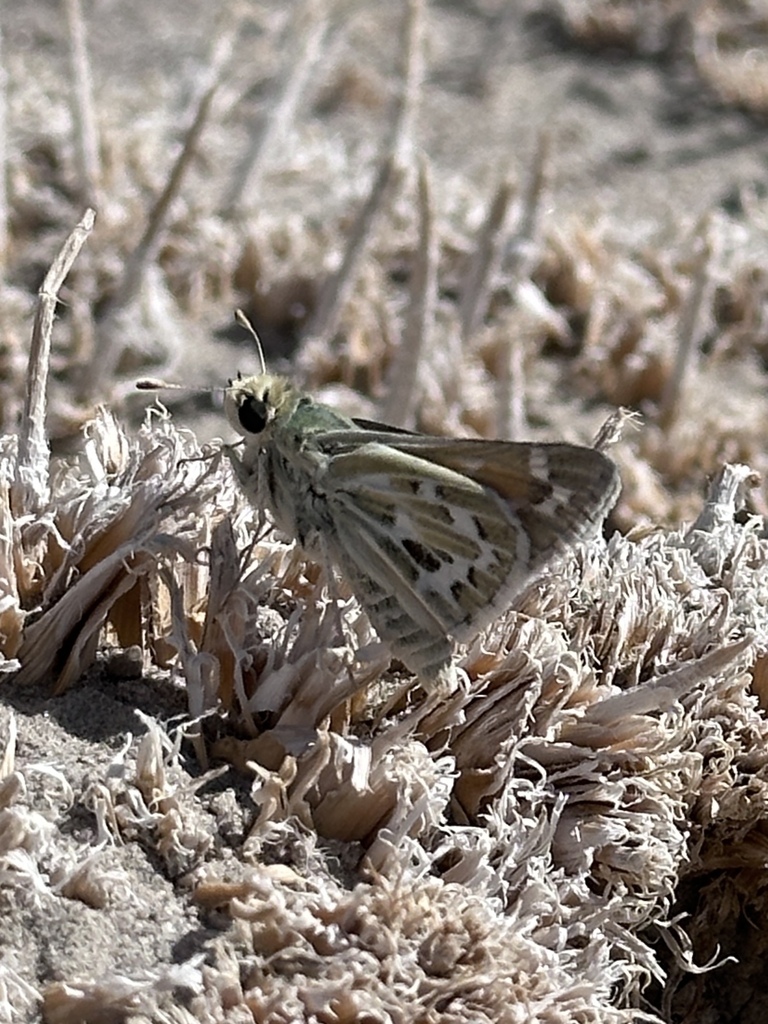
(c) Matt Berger, some rights reserved (CC BY) · licence
Family: Hesperiidae · Class: Insecta · Order: Lepidoptera
Hesperia uncas (Uncas Skipper) is a California animal in the Hesperiidae family.
The Uncas skipper is a small butterfly in the family Hesperiidae, characterized by tawny-orange dorsal wing surfaces with distinct dark borders and markings. Males typically measure 28-32 mm (1.1-1.3 inches) in wingspan, while females are slightly larger at 30-34 mm. The forewings display prominent dark stigma patches in males, used for scent dispersal during courtship. The ventral wing surfaces are pale yellow-brown with indistinct white spotting, providing effective camouflage when at rest. The antennae are short with pronounced clubs, typical of skipper butterflies. The Uncas skipper occupies an extensive range across western North America, extending from central Alberta east to southern Manitoba, then south through the Great Plains to east-central California, southeast Arizona, and west and north Texas. The distribution continues south into Mexico, with occasional strays reported in southwest Iowa and eastern Minnesota. In California, populations are primarily found in the eastern Sierra Nevada and desert mountain ranges, typically at elevations between 1,200 and 2,400 meters (4,000-8,000 feet). This species inhabits shortgrass prairie, desert grasslands, and mountain meadows dominated by native bunch grasses. Uncas skippers show strong fidelity to areas with blue grama grass (Bouteloua gracilis) and needlegrass (Stipa species), which serve as their primary host plants. Adults prefer open, sun-exposed slopes with sparse to moderate grass cover, avoiding heavily grazed or disturbed areas. The species requires a mosaic of bare ground for basking and dense grass clumps for larval development. Adult Uncas skippers exhibit a single flight period annually, typically emerging from late June through August, with peak activity in July. Males establish territories on hilltops and ridges, engaging in rapid, erratic flight patterns while patrolling for females. Mating occurs after brief courtship flights, with females subsequently depositing single eggs on or near host plant stems. Larvae feed exclusively on grass blades, creating silk shelters at the base of tufts. The species overwinters as partially grown larvae, completing development the following spring before pupating in late May or June. Females nectar on various wildflowers including rabbitbrush (Ericameria species), penstemon, and asters, while males frequently visit mud puddles and animal dung for mineral uptake. The flight is characteristically fast and low to the ground, with frequent stops for basking on bare soil or rocks. Currently, the Uncas skipper lacks formal conservation listing at federal or state levels, though populations face pressure from habitat conversion, livestock overgrazing, and invasive plant species. Cheatgrass (Bromus tectorum) invasion particularly threatens native grassland ecosystems essential for this species. Climate change may alter precipitation patterns affecting host plant availability, while urban development continues to fragment suitable habitat across the species' range.
Classification
Class: Insecta · Order: Lepidoptera · Family: Hesperiidae
Frequently asked questions
How is Hesperia uncas classified?
Hesperia uncas belongs to class Insecta, order Lepidoptera, family Hesperiidae.
What family does Hesperia uncas belong to?
Hesperia uncas is in the Hesperiidae family.
What is Hesperia uncas?
The Uncas skipper is a small butterfly in the family Hesperiidae, characterized by tawny-orange dorsal wing surfaces with distinct dark borders and markings.
Is Hesperia uncas found in California?
Yes. Hesperia uncas is recorded in California in The California Species Project's catalogue.
Related species
Other California species in the same genus, family, or bioregion.
Data from The California Species Project — 14,000+ California species with verified data from CNPS, CDFW, USFWS, and more.