Hesperoleucus symmetricus serpentinus
Red Hills Roach
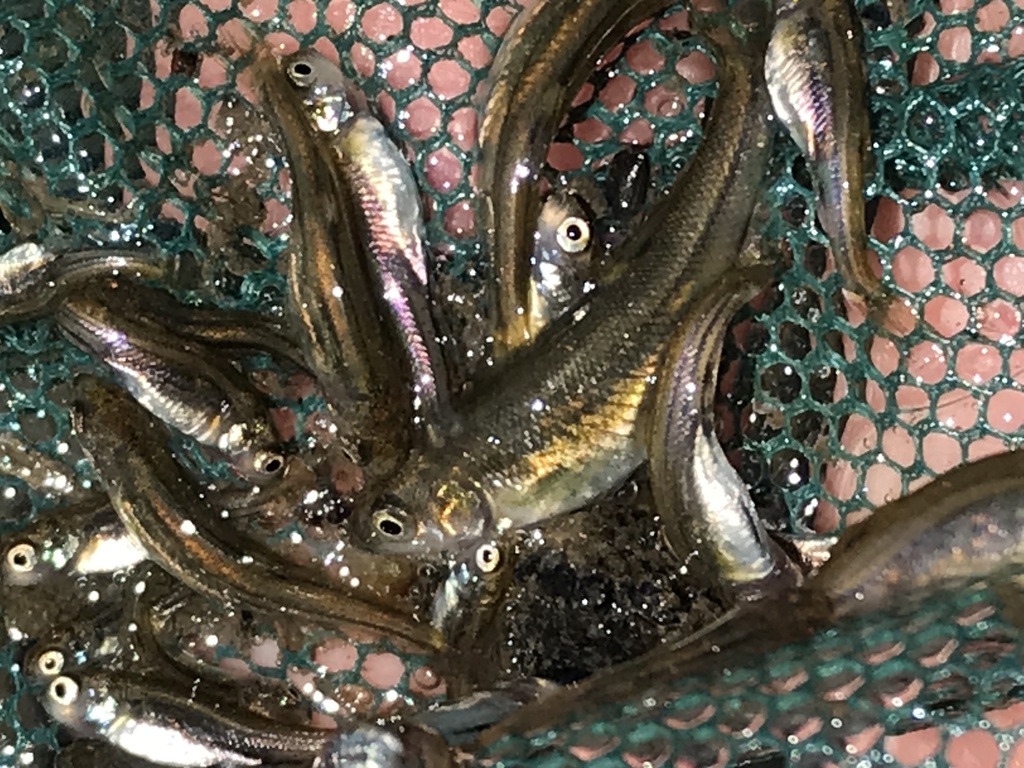
(c) Ryan Donnelly, some rights reserved (CC BY) · licence
Family: Leuciscidae · Class: Actinopterygii · Order: Cypriniformes
Conservation status: GNRT1 S1
Hesperoleucus symmetricus serpentinus (Red Hills Roach) is a California animal in the Leuciscidae family.
The Red Hills Roach is a small subspecies of the California roach, a stout-bodied minnow in the family Cyprinidae (formerly Leuciscidae). Adults typically measure approximately 100 mm (4 inches) in total length, displaying the characteristic robust body form of the species complex. This subspecies exhibits the typical roach morphology with a deep, laterally compressed body and relatively large scales. The Red Hills Roach is endemic to serpentine areas of the Red Hills region in Tuolumne County, California. This narrow endemic has an extremely restricted distribution, occurring only in a few stream systems within this unique geological formation. The subspecies represents one of several geographically isolated populations of Hesperoleucus symmetricus that have diverged in response to local environmental conditions. This subspecies inhabits perennial streams and associated aquatic habitats within serpentine terrain of the Red Hills. The serpentine geology creates distinctive soil chemistry and vegetation communities that characterize this region. Stream habitats typically feature rocky substrates derived from the underlying serpentine bedrock, with water chemistry influenced by the mineral composition of the surrounding geology. These aquatic systems support specialized plant and animal communities adapted to the unique conditions created by serpentine soils. Like other California roach populations, the Red Hills Roach is presumed to be an opportunistic omnivore, feeding on algae, aquatic invertebrates, and organic detritus. The species likely spawns during spring months when water temperatures rise and flows are adequate. California roach typically deposit adhesive eggs in shallow areas over gravel or rocky substrates. The subspecies has likely evolved specific adaptations to the chemical conditions present in serpentine-influenced waters, though detailed ecological studies of this population are limited. The Red Hills Roach faces significant conservation challenges due to its extremely restricted range and small population size. According to NatureServe Explorer, this narrow endemic has few occurrences and is threatened by habitat degradation caused by grazing, mining, and off-road vehicle use. The subspecies is ranked as G5T1 globally and S1 in California, indicating it is critically imperiled with typically fewer than five occurrences or very few remaining individuals. The serpentine habitats of the Red Hills region are particularly vulnerable to disturbance, as the specialized plant and animal communities depend on the unique soil and water chemistry. Mining activities have historically impacted serpentine areas, while ongoing threats include livestock grazing that can degrade streamside vegetation and alter water quality through increased sedimentation and nutrient loading. Off-road vehicle use can directly damage stream channels and contribute to erosion. Climate change poses additional risks through potential alterations to precipitation patterns and stream flows in this already water-limited region. Conservation of this subspecies requires protection of both the aquatic habitats and the surrounding serpentine ecosystem that maintains the distinctive environmental conditions essential for its survival.
Classification
Class: Actinopterygii · Order: Cypriniformes · Family: Leuciscidae
Conservation status
GNRT1 S1
Frequently asked questions
How is Hesperoleucus symmetricus serpentinus classified?
Hesperoleucus symmetricus serpentinus belongs to class Actinopterygii, order Cypriniformes, family Leuciscidae.
What family does Hesperoleucus symmetricus serpentinus belong to?
Hesperoleucus symmetricus serpentinus is in the Leuciscidae family.
Is Hesperoleucus symmetricus serpentinus protected or of conservation concern?
Hesperoleucus symmetricus serpentinus carries the following status: GNRT1 S1.
What is Hesperoleucus symmetricus serpentinus?
The Red Hills Roach is a small subspecies of the California roach, a stout-bodied minnow in the family Cyprinidae (formerly Leuciscidae).
Is Hesperoleucus symmetricus serpentinus found in California?
Yes. Hesperoleucus symmetricus serpentinus is recorded in California in The California Species Project's catalogue.
Related species
Other California species in the same genus, family, or bioregion.
Data from The California Species Project — 14,000+ California species with verified data from CNPS, CDFW, USFWS, and more.