Hesperoleucus symmetricus symmetricus
Central California Roach
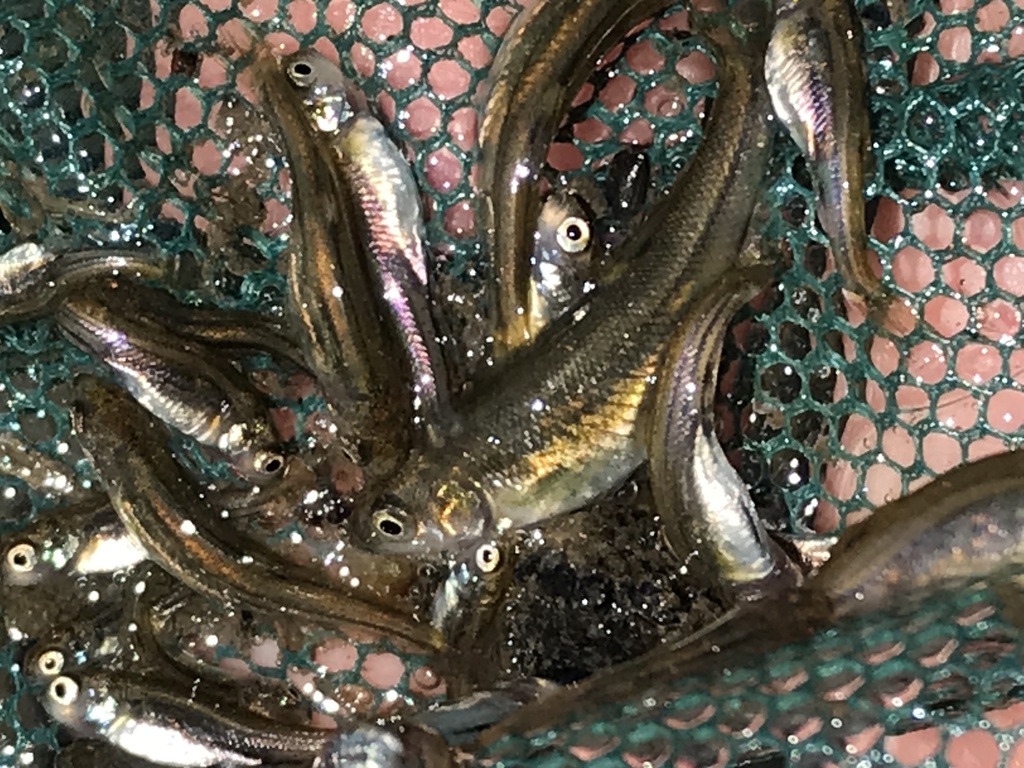
(c) Ryan Donnelly, some rights reserved (CC BY) · licence
Family: Leuciscidae · Class: Actinopterygii · Order: Cypriniformes
Conservation status: GNRT3 S3
Hesperoleucus symmetricus symmetricus (Central California Roach) is a California animal in the Leuciscidae family.
The Central California roach (Hesperoleucus symmetricus symmetricus) is a small freshwater cyprinid fish endemic to California's coastal and interior watersheds. Adults typically measure 50 to 150 mm (2 to 6 inches) in total length, with a streamlined, laterally compressed body. The species displays olive-green to brownish coloration on the dorsal surface, with silvery sides and a white ventral surface. A distinctive dark lateral stripe extends from the snout through the eye to the caudal fin base. The mouth is terminal and slightly oblique, adapted for feeding on both benthic and pelagic prey items. Historically, the California roach occupied coastal watersheds from the Russian River system in Sonoma County south to the Santa Clara River system in Los Angeles County, as well as interior drainages of the Central Valley. The Central California roach subspecies is distributed primarily in the San Francisco Bay area watersheds and coastal streams from Marin County south to Santa Cruz County. Current populations are fragmented compared to historical distribution, with significant range reductions documented in urbanized watersheds. This subspecies inhabits a variety of freshwater environments including streams, creeks, ponds, and lakes. It demonstrates high tolerance for diverse habitat conditions, occupying both cool, well-oxygenated mountain streams and warmer valley waters. California roach prefer areas with cover such as undercut banks, root masses, and aquatic vegetation. They occur from near sea level to elevations exceeding 1,500 meters (4,900 feet) in suitable habitat. The species shows adaptation to seasonal flow variations, utilizing pools during dry periods and dispersing into riffles and runs during high flow conditions. California roach are opportunistic omnivores, feeding on aquatic invertebrates including chironomid larvae, mayfly nymphs, and caddisfly larvae, supplemented with algae, plant material, and detritus. Their feeding behavior shifts seasonally and with habitat availability, moving between benthic foraging and surface feeding on terrestrial insects. Reproduction occurs from April through July, with peak spawning activity in May and June when water temperatures reach 15 to 20°C (59 to 68°F). Males establish territories in shallow areas with gravel or rocky substrates, where females deposit adhesive eggs in crevices. Sexual maturity is reached at one to two years of age. The Central California roach carries a state conservation rank of S3, indicating it is vulnerable to extirpation from California. Primary threats include habitat degradation from urbanization, water diversions, pollution, and sedimentation. Introduced species, particularly centrarchids and other non-native fishes, compete for resources and alter community structure. Climate change poses additional challenges through altered precipitation patterns and increased water temperatures. Stream channelization and dam construction have fragmented populations and reduced available habitat. The subspecies' restricted range makes it particularly vulnerable to localized threats, emphasizing the importance of watershed-level conservation efforts to maintain viable populations.
Classification
Class: Actinopterygii · Order: Cypriniformes · Family: Leuciscidae
Conservation status
GNRT3 S3
Frequently asked questions
How is Hesperoleucus symmetricus symmetricus classified?
Hesperoleucus symmetricus symmetricus belongs to class Actinopterygii, order Cypriniformes, family Leuciscidae.
What family does Hesperoleucus symmetricus symmetricus belong to?
Hesperoleucus symmetricus symmetricus is in the Leuciscidae family.
Is Hesperoleucus symmetricus symmetricus protected or of conservation concern?
Hesperoleucus symmetricus symmetricus carries the following status: GNRT3 S3.
What is Hesperoleucus symmetricus symmetricus?
The Central California roach (Hesperoleucus symmetricus symmetricus) is a small freshwater cyprinid fish endemic to California's coastal and interior watersheds.
Is Hesperoleucus symmetricus symmetricus found in California?
Yes. Hesperoleucus symmetricus symmetricus is recorded in California in The California Species Project's catalogue.
Related species
Other California species in the same genus, family, or bioregion.
Data from The California Species Project — 14,000+ California species with verified data from CNPS, CDFW, USFWS, and more.