Hesperoleucus venustus navarroensis
Northern Coastal Roach
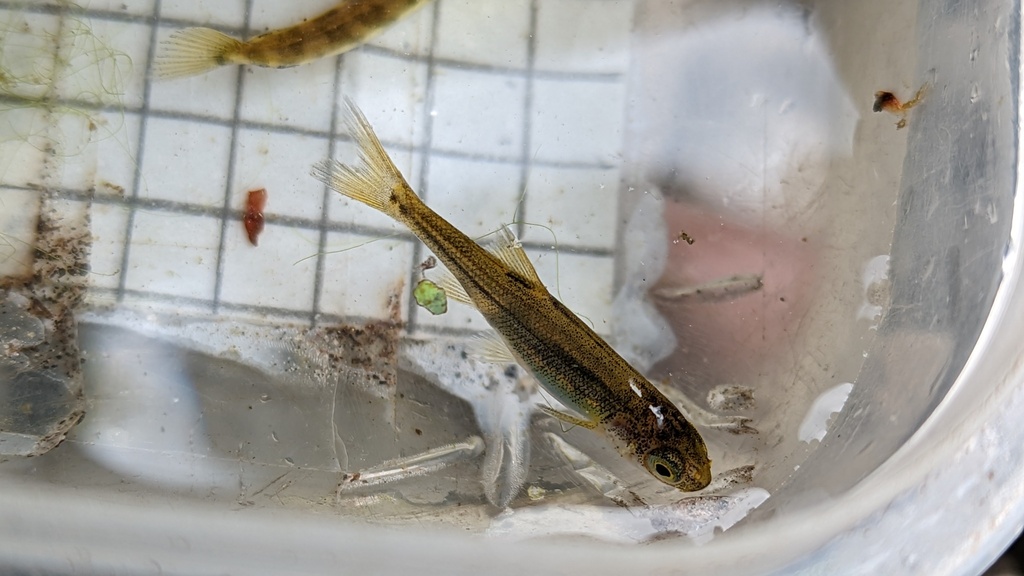
(c) Trevor Van Loon, some rights reserved (CC BY) · licence
Family: Leuciscidae · Class: Actinopterygii · Order: Cypriniformes
Conservation status: GNRT3 S3
Hesperoleucus venustus navarroensis (Northern Coastal Roach) is a California animal in the Leuciscidae family.
The Northern Coastal Roach (Hesperoleucus venustus navarroensis) is a subspecies of California roach endemic to coastal watersheds of northern California. This small freshwater fish typically measures 50 to 100 millimeters (2 to 4 inches) in total length, with a streamlined body adapted for life in flowing waters. The species exhibits the characteristic olive-brown to bronze coloration on the dorsal surface, with silvery sides and a pale ventral surface. Adults develop distinct breeding tubercles during spawning season, particularly prominent on males. The Northern Coastal Roach has an extremely restricted distribution, occurring only in the Navarro River watershed in Mendocino County, California. This subspecies is geographically isolated from other California roach populations, confined to the coastal drainage system that flows westward to the Pacific Ocean. The range represents one of the smallest distributions among California's native freshwater fishes, encompassing approximately 100 kilometers of stream habitat within the Navarro River basin. This subspecies inhabits clear, cool streams and rivers with rocky or gravel substrates, typically at elevations ranging from sea level to 300 meters (1,000 feet). The Northern Coastal Roach prefers pools and slow-moving runs with overhanging vegetation that provides cover and terrestrial insect input. Water temperatures in occupied habitats generally remain below 20°C (68°F) during summer months. The species shows strong association with areas containing large woody debris and undercut banks that create complex habitat structure. Northern Coastal Roach are omnivorous, feeding primarily on aquatic and terrestrial insects, algae, and small crustaceans. Their diet varies seasonally, with increased consumption of terrestrial insects during summer months when riparian vegetation drops prey items into the water. Spawning occurs from April through June, with females depositing adhesive eggs on gravel substrates in shallow riffles. The species exhibits high site fidelity, with individuals typically remaining within short stream reaches throughout their 2 to 3-year lifespan. The Northern Coastal Roach is ranked as G5T3 S3 by NatureServe, indicating the subspecies is vulnerable both globally and within California. The highly restricted range makes this population particularly susceptible to habitat degradation and environmental changes. Primary threats include water diversions for agricultural and municipal use, sedimentation from logging and road construction, and habitat fragmentation by dams and culverts. Climate change poses additional risks through altered precipitation patterns and increased water temperatures in the Navarro River watershed. The subspecies lacks federal or state listing protection despite its vulnerable status, making habitat conservation efforts particularly important for long-term persistence. Land use practices within the watershed directly affect water quality and habitat conditions for this endemic fish.
Classification
Class: Actinopterygii · Order: Cypriniformes · Family: Leuciscidae
Conservation status
GNRT3 S3
Frequently asked questions
How is Hesperoleucus venustus navarroensis classified?
Hesperoleucus venustus navarroensis belongs to class Actinopterygii, order Cypriniformes, family Leuciscidae.
What family does Hesperoleucus venustus navarroensis belong to?
Hesperoleucus venustus navarroensis is in the Leuciscidae family.
Is Hesperoleucus venustus navarroensis protected or of conservation concern?
Hesperoleucus venustus navarroensis carries the following status: GNRT3 S3.
What is Hesperoleucus venustus navarroensis?
The Northern Coastal Roach (Hesperoleucus venustus navarroensis) is a subspecies of California roach endemic to coastal watersheds of northern California.
Is Hesperoleucus venustus navarroensis found in California?
Yes. Hesperoleucus venustus navarroensis is recorded in California in The California Species Project's catalogue.
Related species
Other California species in the same genus, family, or bioregion.
Data from The California Species Project — 14,000+ California species with verified data from CNPS, CDFW, USFWS, and more.