Hesperoleucus venustus subditus
Southern Coastal Roach
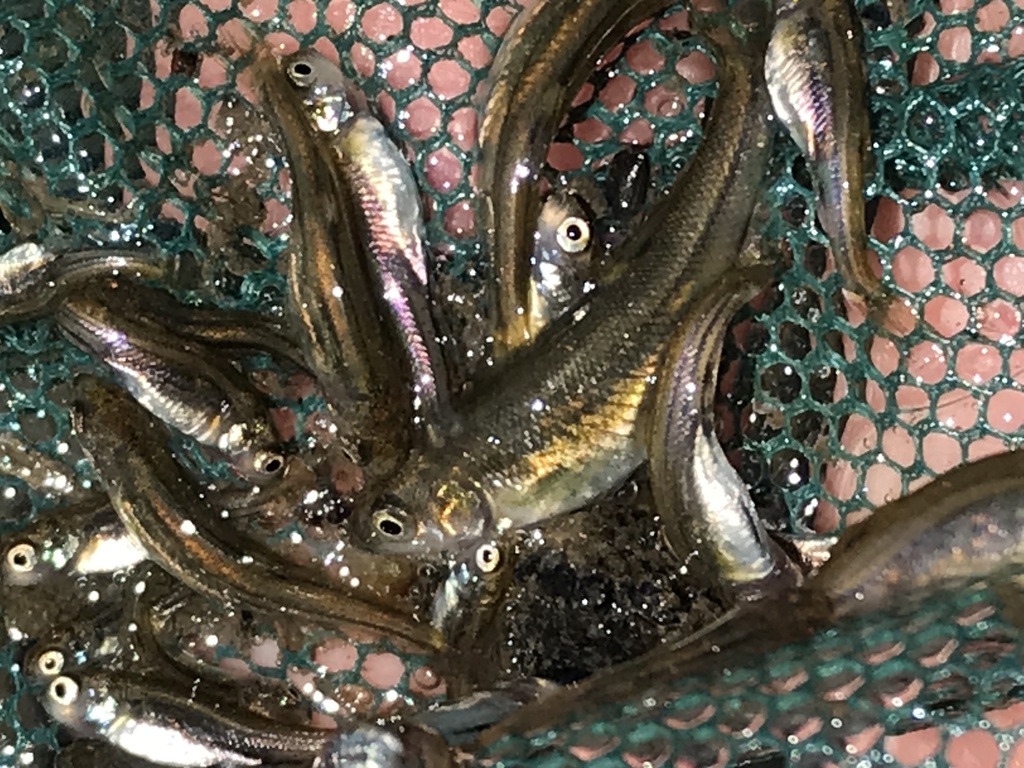
(c) Ryan Donnelly, some rights reserved (CC BY) · licence
Family: Leuciscidae · Class: Actinopterygii · Order: Cypriniformes
Conservation status: GNRT2 S2
Hesperoleucus venustus subditus (Southern Coastal Roach) is a California animal in the Leuciscidae family.
The Southern Coastal Roach (Hesperoleucus venustus subditus) is a small native freshwater fish endemic to coastal drainages of central and northern California. This subspecies represents one of two recognized subspecies within the Coastal Roach species complex, distinguished through genetic analyses that support its taxonomic distinctiveness (Aguilar and Jones 2009, Baumsteiger et al. 2017). Adults typically measure 60 to 100 mm (2.4 to 3.9 inches) in total length, with a compressed, elongated body characteristic of the minnow family Leuciscidae. The species displays a silvery coloration with darker dorsal surfaces and lighter ventral areas. The Southern Coastal Roach is endemic to coastal watersheds from Monterey County north to Marin County, California. Genetic research has identified two distinct population segments within this subspecies: the Tomales Roach, found in Tomales Bay tributaries in Marin County, and the Monterey Roach, occurring in coastal streams of Monterey County (Baumsteiger and Moyle 2019). This fragmented distribution reflects the species' isolation in discrete coastal drainage systems. This subspecies inhabits clear, cool streams and their associated pools within coastal watersheds. Preferred habitats include areas with moderate to swift current over gravel and rocky substrates, typically in reaches with riparian canopy cover that maintains cooler water temperatures. The species occurs in both permanent and seasonally intermittent streams, often concentrating in deeper pools during dry periods. Stream connectivity and habitat quality are critical factors influencing population persistence. Southern Coastal Roach are omnivorous, feeding on aquatic invertebrates, algae, plant material, and organic detritus. Their diet varies seasonally based on food availability, with insects and larvae comprising a significant portion during warmer months. Spawning typically occurs in spring and early summer when water temperatures rise and flows moderate. Adults move to shallow riffle areas with gravel substrates for reproduction, where females deposit adhesive eggs that develop over several weeks. With a conservation ranking of S2 (imperiled) in California and a global rank of GNR T2, the Southern Coastal Roach faces significant conservation challenges. This species is included on the California Department of Fish and Wildlife's Special Animals List. The subspecies' restricted range and fragmented populations make it particularly vulnerable to habitat degradation and climate change impacts. Primary threats include water diversions, habitat fragmentation from development, sedimentation from land use practices, and altered flow regimes. Drought conditions can severely impact stream connectivity and available habitat. The species' dependence on coastal watersheds also makes it susceptible to urbanization pressures in the rapidly developing coastal regions of California. Population monitoring and habitat protection efforts are essential for maintaining viable populations of this endemic subspecies, particularly given its fragmented distribution and the ongoing environmental pressures within its limited range.
Classification
Class: Actinopterygii · Order: Cypriniformes · Family: Leuciscidae
Conservation status
GNRT2 S2
Frequently asked questions
How is Hesperoleucus venustus subditus classified?
Hesperoleucus venustus subditus belongs to class Actinopterygii, order Cypriniformes, family Leuciscidae.
What family does Hesperoleucus venustus subditus belong to?
Hesperoleucus venustus subditus is in the Leuciscidae family.
Is Hesperoleucus venustus subditus protected or of conservation concern?
Hesperoleucus venustus subditus carries the following status: GNRT2 S2.
What is Hesperoleucus venustus subditus?
The Southern Coastal Roach (Hesperoleucus venustus subditus) is a small native freshwater fish endemic to coastal drainages of central and northern California.
Is Hesperoleucus venustus subditus found in California?
Yes. Hesperoleucus venustus subditus is recorded in California in The California Species Project's catalogue.
Related species
Other California species in the same genus, family, or bioregion.
Data from The California Species Project — 14,000+ California species with verified data from CNPS, CDFW, USFWS, and more.