Hesperopsis alpheus
Saltbush Sootywing
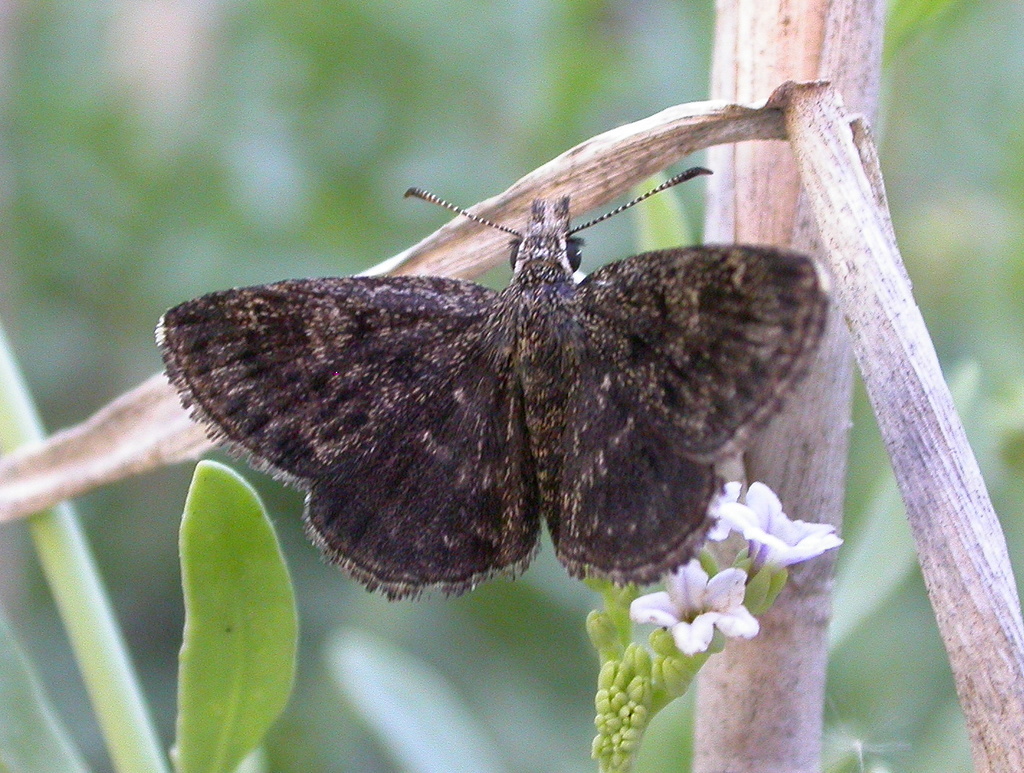
(c) Nick Block, some rights reserved (CC BY) · licence
Family: Hesperiidae · Class: Insecta · Order: Lepidoptera
Hesperopsis alpheus (Saltbush Sootywing) is a California animal in the Hesperiidae family.
The Saltbush Sootywing is a small skipper butterfly with distinctively dark wings and modest proportions typical of the Hesperiidae family. Adults have a wingspan ranging from 22 to 30 mm (0.9 to 1.2 inches). The forewings are dark brown to blackish-brown with small white or pale yellow translucent spots arranged in bands across the wing surface. The hindwings are similarly dark with reduced spotting. Males possess a distinctive dark stigma or scent patch on the forewings. The body is robust and densely covered with dark scales, giving the species its characteristic sooty appearance. The antennae are short with clubbed tips, and the head features large compound eyes adapted for detecting movement and navigation. The Saltbush Sootywing ranges across the western United States from Nevada east to Colorado, extending south through southern California, Arizona, New Mexico, and into the lower Rio Grande Valley of Texas. The species also occurs in Chihuahua, Mexico. Within California, populations are documented in desert regions of the Mojave and Sonoran deserts, including areas of Riverside, San Bernardino, Imperial, and Inyo counties. The distribution closely follows the range of its host plants in arid intermountain basins and desert valleys. This species inhabits desert scrublands, alkali flats, and disturbed areas where saltbush species thrive. Preferred elevations range from below sea level in desert basins to approximately 1,500 meters (4,900 feet) in higher desert valleys. The butterfly requires open, sandy or gravelly soils with scattered shrub cover and is often found in areas with moderate to high soil salinity. Habitat includes desert washes, roadside margins, and agricultural edges where host plants persist. Saltbush Sootywings are specialists dependent on plants in the goosefoot family, specifically shadscale (Atriplex canescens) and quail brush (Atriplex lentiformis). Larvae feed exclusively on these saltbush species, consuming leaves and developing through five instars over several weeks. Adults are active during daylight hours and exhibit rapid, erratic flight patterns close to the ground. Males establish territories near host plants and engage in perching behavior to locate mates. The species produces multiple broods annually, with flight periods extending from March through October in favorable years. Adults nectar on various desert wildflowers including desert willow, brittlebush, and chuparosa when available. The Saltbush Sootywing lacks federal or state listing status and is not currently designated as a species of conservation concern. However, populations face pressure from habitat conversion, urbanization, and agricultural development throughout the southwestern United States. Desert scrubland conversion for solar energy projects and residential development poses increasing threats to suitable habitat. The species' dependence on specific host plants makes it vulnerable to changes in plant community composition caused by invasive species, altered fire regimes, or grazing pressure. Climate change may affect the distribution of host plants and alter precipitation patterns critical for larval development in arid environments.
Classification
Class: Insecta · Order: Lepidoptera · Family: Hesperiidae
Frequently asked questions
How is Hesperopsis alpheus classified?
Hesperopsis alpheus belongs to class Insecta, order Lepidoptera, family Hesperiidae.
What family does Hesperopsis alpheus belong to?
Hesperopsis alpheus is in the Hesperiidae family.
What is Hesperopsis alpheus?
The Saltbush Sootywing is a small skipper butterfly with distinctively dark wings and modest proportions typical of the Hesperiidae family.
Is Hesperopsis alpheus found in California?
Yes. Hesperopsis alpheus is recorded in California in The California Species Project's catalogue.
Related species
Other California species in the same genus, family, or bioregion.
Data from The California Species Project — 14,000+ California species with verified data from CNPS, CDFW, USFWS, and more.