Hesperopsis gracielae
Macneill's Sootywing
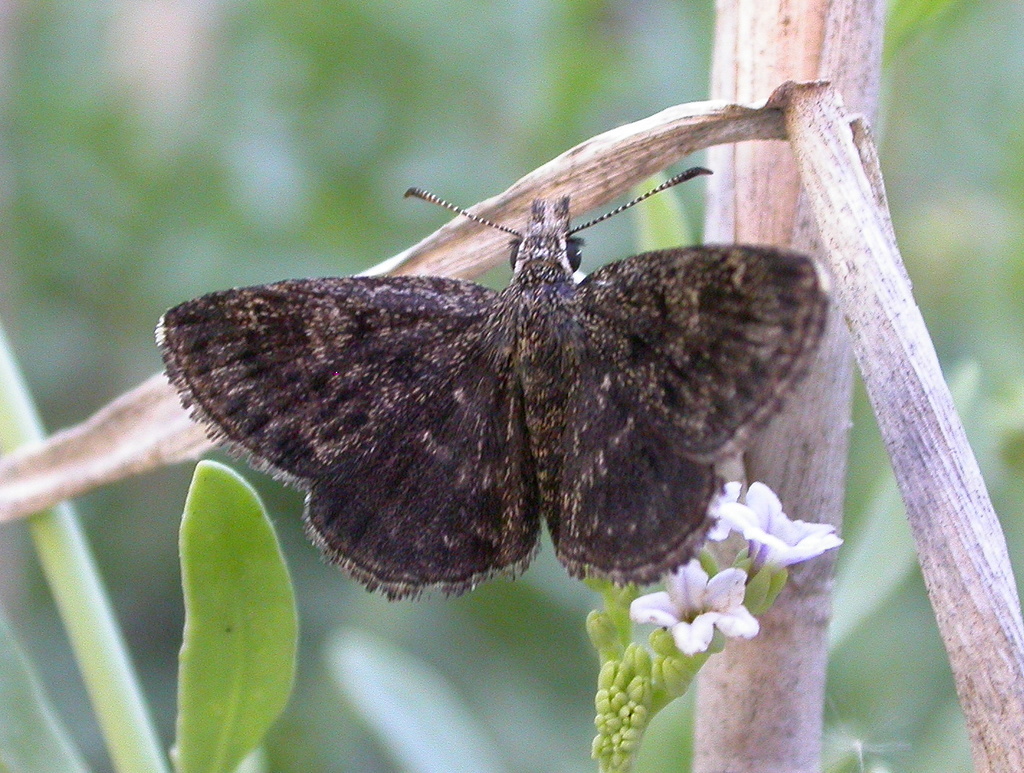
(c) Nick Block, some rights reserved (CC BY) · licence
Family: Hesperiidae · Class: Insecta · Order: Lepidoptera
Conservation status: G2? S1S2
Hesperopsis gracielae (Macneill's Sootywing) is a California animal in the Hesperiidae family.
Macneill's Sootywing (Hesperopsis gracielae) is a small skipper butterfly endemic to the southwestern United States desert regions. Adults measure approximately 25-30 mm (1.0-1.2 inches) in wingspan. The species displays the characteristic sooty-brown coloration typical of sootywing skippers, with dark brown to blackish forewings marked by small white spots arranged in irregular patterns. The hindwings are similarly dark with less distinct markings. Males possess specialized scent patches (stigma) on their forewings used in courtship behaviors. The antennae are relatively short with distinctive hooked clubs, and the body is robust and hairy, typical of hesperiid skippers. Macneill's Sootywing occurs along the Colorado River corridor from southern Utah through southern Nevada and southern Arizona, with an isolated population in California's Coachella Valley. This disjunct distribution reflects the species' association with specific desert wash and riparian edge habitats. The California population represents the westernmost extent of the species' range and is geographically isolated from the main Colorado River populations. The species inhabits desert washes, canyon bottoms, and alkaline flats where host plants thrive. These areas typically occur at elevations ranging from below sea level in the Coachella Valley to approximately 1,200 meters (4,000 feet) in higher desert locations. The butterfly requires areas with sparse to moderate shrub cover dominated by chenopod vegetation, often in sandy or gravelly substrates with intermittent water availability. Macneill's Sootywing larvae feed exclusively on plants in the goosefoot family (Chenopodiaceae), including shadscale (Atriplex canescens), quail brush (Atriplex lentiformis), and silverscale saltbush (Atriplex argentea var. expansa). Adults are active during daylight hours and exhibit rapid, erratic flight patterns typical of skipper butterflies. Males establish territories near host plant patches and engage in perching behavior to intercept potential mates. The species likely produces multiple broods per year, with peak activity occurring during spring and fall months when temperatures are moderate and host plants are actively growing. Females deposit eggs singly on host plant foliage, and larvae construct silk shelters by folding leaves together. Macneill's Sootywing holds a global conservation rank of G2?, indicating it is imperiled globally with 6-20 extant populations or few remaining individuals. In California, the species ranks S1S2, reflecting its critically imperiled to imperiled status within the state. Primary threats include habitat loss from urban development, particularly in the rapidly expanding Coachella Valley, agricultural conversion, water diversions affecting riparian corridors, and invasive plant species that displace native chenopod host plants. Climate change poses additional concerns through altered precipitation patterns and increased drought frequency in already arid habitats. The species' limited distribution and specialized habitat requirements make it particularly vulnerable to environmental changes and human disturbance.
Classification
Class: Insecta · Order: Lepidoptera · Family: Hesperiidae
Conservation status
G2? S1S2
Frequently asked questions
How is Hesperopsis gracielae classified?
Hesperopsis gracielae belongs to class Insecta, order Lepidoptera, family Hesperiidae.
What family does Hesperopsis gracielae belong to?
Hesperopsis gracielae is in the Hesperiidae family.
Is Hesperopsis gracielae protected or of conservation concern?
Hesperopsis gracielae carries the following status: G2? S1S2.
What is Hesperopsis gracielae?
Macneill's Sootywing (Hesperopsis gracielae) is a small skipper butterfly endemic to the southwestern United States desert regions.
Is Hesperopsis gracielae found in California?
Yes. Hesperopsis gracielae is recorded in California in The California Species Project's catalogue.
Related species
Other California species in the same genus, family, or bioregion.
Data from The California Species Project — 14,000+ California species with verified data from CNPS, CDFW, USFWS, and more.