Hesperopsis libya
Mohave Sootywing
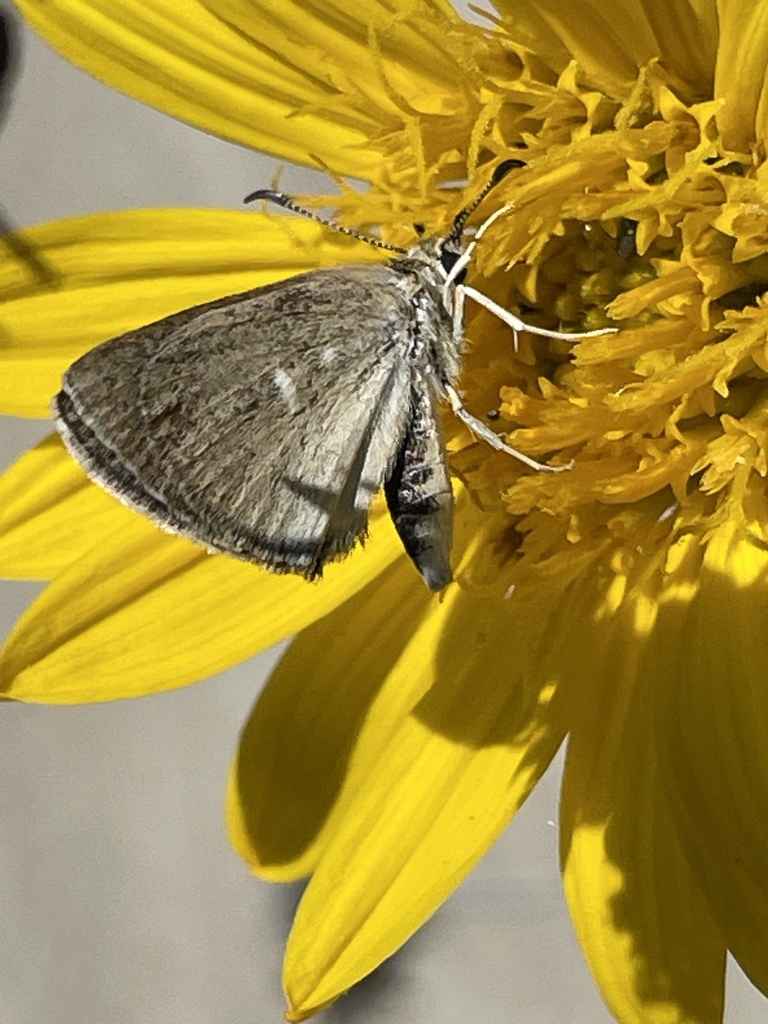
(c) Bobby McCabe, some rights reserved (CC BY) · licence
Family: Hesperiidae · Class: Insecta · Order: Lepidoptera
Hesperopsis libya (Mohave Sootywing) is a California animal in the Hesperiidae family.
The Mohave sootywing is a small, dark butterfly in the skipper family (Hesperiidae) that inhabits arid regions of western North America. Adults measure approximately 22-28 mm (0.9-1.1 inches) in wingspan. The wings are primarily dark brown to blackish-brown with a sooty appearance that gives the species its common name. Males typically display small, pale whitish or yellowish spots on the forewings, while females may show more extensive pale markings. The wing undersides are slightly paler than the upper surfaces, with subdued grayish-brown coloration. Like other skippers, the antennae end in distinctive clubs with recurved tips. The Mohave sootywing ranges from eastern Oregon east to Montana, extending south through the Great Basin and Mojave Desert regions to southern California, Arizona, Baja California, and northwestern mainland Mexico. In California, the species occurs primarily in desert and semi-desert areas of the southeastern counties, including portions of Inyo, Kern, Los Angeles, Riverside, San Bernardino, and Imperial counties. The distribution is closely tied to the presence of suitable host plants in appropriate habitat. This species inhabits arid shrublands, desert flats, and bajadas at elevations typically ranging from near sea level to approximately 1,500 meters (4,900 feet). The butterfly is found in areas dominated by desert scrub vegetation, particularly where shadscale (Atriplex canescens) grows in association with other members of the goosefoot family (Chenopodiaceae). Preferred habitats include well-drained soils with scattered shrub cover and open areas for adult flight and feeding. Mohave sootywing larvae feed exclusively on shadscale, a drought-tolerant shrub common in alkaline soils throughout much of the species' range. Adult butterflies typically fly from March through October, with peak activity occurring during spring and early fall when temperatures are moderate and nectar sources are available. Males establish territories and engage in perching behavior, often selecting elevated positions on shrubs or rocks to watch for females and potential rivals. Adults feed on nectar from various desert wildflowers, including species in the sunflower and pea families. The species likely produces multiple broods per year in favorable conditions, though reproductive timing may vary with local climate patterns and resource availability. The Mohave sootywing is not currently listed under federal or California endangered species legislation. However, like many desert-adapted species, it faces potential threats from habitat loss due to urban development, renewable energy projects, and off-road vehicle use in desert areas. Climate change may affect the distribution and abundance of both the butterfly and its host plant, particularly at the margins of the species' range. The butterfly's dependence on a single host plant species makes it vulnerable to factors that impact shadscale populations, including prolonged drought, overgrazing, and habitat fragmentation. Conservation of intact desert shrubland ecosystems is important for maintaining viable populations of this specialized desert butterfly.
Classification
Class: Insecta · Order: Lepidoptera · Family: Hesperiidae
Frequently asked questions
How is Hesperopsis libya classified?
Hesperopsis libya belongs to class Insecta, order Lepidoptera, family Hesperiidae.
What family does Hesperopsis libya belong to?
Hesperopsis libya is in the Hesperiidae family.
What is Hesperopsis libya?
The Mohave sootywing is a small, dark butterfly in the skipper family (Hesperiidae) that inhabits arid regions of western North America.
Is Hesperopsis libya found in California?
Yes. Hesperopsis libya is recorded in California in The California Species Project's catalogue.
Related species
Other California species in the same genus, family, or bioregion.
Data from The California Species Project — 14,000+ California species with verified data from CNPS, CDFW, USFWS, and more.