Hesperotettix viridis
Snakeweed Grasshopper
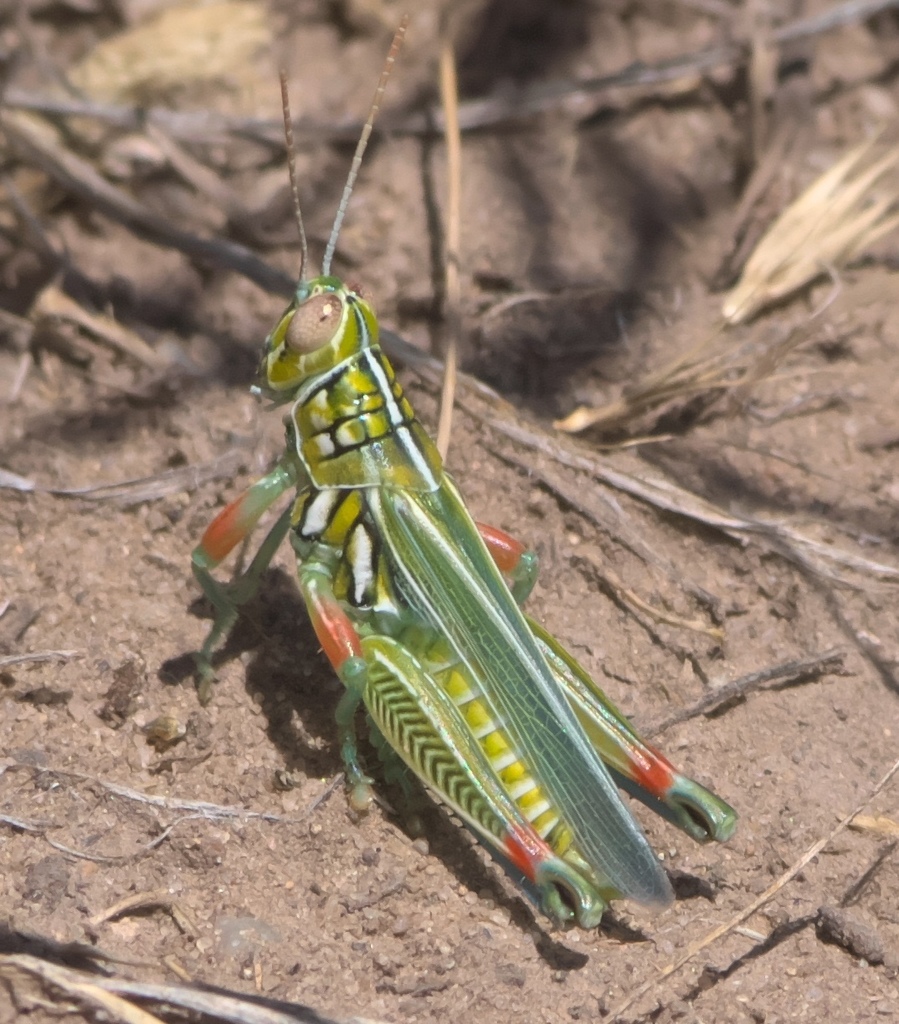
(c) Robert Webster, some rights reserved (CC BY-SA) · licence
Family: Acrididae · Class: Insecta · Order: Orthoptera
Hesperotettix viridis (Snakeweed Grasshopper) is a California animal in the Acrididae family.
The Snakeweed Grasshopper (Hesperotettix viridis) is a medium-sized acridid grasshopper belonging to the subfamily Melanoplinae. This species exhibits considerable morphological variation across its range, with multiple recognized subspecies including H. v. viridis, H. v. nevadensis (Short-winged Snakeweed Grasshopper), and H. v. pratensis (Purple-striped Snakeweed Grasshopper) (BugGuide). The common name derives from its association with snakeweed plants (Gutierrezia species), which serve as important host plants. As a member of the spur-throated grasshopper group, H. viridis displays the characteristic features of this subfamily, including a prosternal spine between the front legs. Wing development varies among subspecies, with some forms exhibiting reduced wing length, as seen in H. v. nevadensis. Body coloration ranges from green to brown, often with striped patterns, particularly notable in the purple-striped subspecies H. v. pratensis. The species occurs across western North America, with documented populations extending from the Great Basin through various mountain and desert regions. Distribution varies by subspecies, with different forms adapted to specific regional conditions and elevation ranges. The species' presence in multiple biogeographic regions suggests considerable ecological adaptability. Hesperotettix viridis inhabits arid and semi-arid environments characterized by shrubland and grassland communities. The species shows strong association with snakeweed (Gutierrezia sarothrae and G. microcephala) and related composite shrubs, which provide both food resources and microhabitat structure. These grasshoppers typically occur in areas with scattered shrub cover intermixed with open spaces, allowing for both feeding opportunities and escape cover. Elevation preferences vary among subspecies, with some forms adapted to higher elevation sites and others to lower desert valleys. Like other acridid grasshoppers, H. viridis is primarily herbivorous, feeding on various plant species within its habitat. The species exhibits particular affinity for members of the sunflower family (Asteraceae), especially snakeweed species, though it likely utilizes other available vegetation as supplementary food sources. Reproductive behavior follows typical grasshopper patterns, with males producing species-specific acoustic signals to attract females during mating season. Females deposit eggs in soil, typically in areas with appropriate vegetation cover and soil conditions. Currently, Hesperotettix viridis does not appear on federal or state endangered species lists, suggesting stable population status across most of its range. However, like many grassland and shrubland species, it may face localized pressures from habitat modification, livestock grazing impacts, and invasive plant species that alter native plant communities. The species' association with snakeweed plants, which are often considered rangeland weeds, may provide some protection from habitat loss, though changes in land management practices could still affect population dynamics. Climate change impacts on arid ecosystems may influence future distribution patterns and habitat suitability for this desert-adapted species.
Classification
Class: Insecta · Order: Orthoptera · Family: Acrididae
Frequently asked questions
How is Hesperotettix viridis classified?
Hesperotettix viridis belongs to class Insecta, order Orthoptera, family Acrididae.
What family does Hesperotettix viridis belong to?
Hesperotettix viridis is in the Acrididae family.
What is Hesperotettix viridis?
The Snakeweed Grasshopper (Hesperotettix viridis) is a medium-sized acridid grasshopper belonging to the subfamily Melanoplinae.
Is Hesperotettix viridis found in California?
Yes. Hesperotettix viridis is recorded in California in The California Species Project's catalogue.
Related species
Other California species in the same genus, family, or bioregion.
Data from The California Species Project — 14,000+ California species with verified data from CNPS, CDFW, USFWS, and more.