Hesperumia sulphuraria
Sulphur Moth
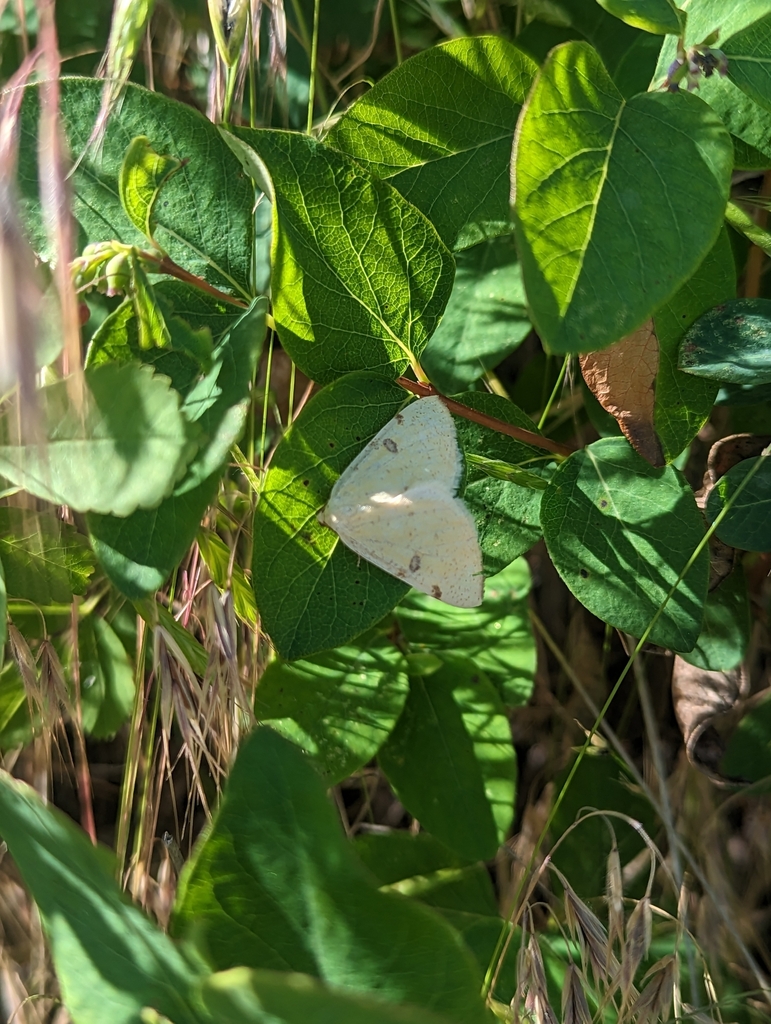
(c) My-Lan Le, some rights reserved (CC BY) · licence
Family: Geometridae · Class: Insecta · Order: Lepidoptera
Hesperumia sulphuraria (Sulphur Moth) is a California animal in the Geometridae family.
The Sulphur Moth (Hesperumia sulphuraria) is a geometrid moth in the family Geometridae, characterized by its distinctive yellowish coloration that gives the species its common name. Adults typically display pale yellow to sulphur-colored forewings with subtle darker markings, though coloration can vary among individuals. The wingspan ranges from approximately 20 to 30 mm, with females generally larger than males. The hindwings are typically paler than the forewings, and the body is slender with relatively long, thread-like antennae characteristic of the Geometridae family. This species is endemic to California, with a limited distribution primarily documented in the coastal ranges and Sierra Nevada foothills. Historical records indicate populations in several counties, though current distribution may be more restricted than previously documented. The species appears to have a patchy distribution pattern, likely reflecting specific habitat requirements and host plant availability. Hesperumia sulphuraria inhabits areas with mixed woodland and chaparral vegetation, typically at elevations ranging from near sea level to approximately 1,500 meters. The species shows a preference for areas with diverse shrub communities and open woodland edges. Habitat requirements appear closely tied to the presence of specific host plants, though detailed ecological studies of microhabitat preferences are limited. Adult flight periods typically occur during late spring and early summer months, with peak activity often observed from May through July. Like other Geometridae moths, adults are primarily nocturnal and are attracted to artificial lights. Larvae are geometrid caterpillars, commonly known as inchworms or loopers, which move in a characteristic arching motion. The caterpillars feed on various shrub and tree species, though specific host plant relationships require further documentation. Pupation likely occurs in soil or leaf litter, following the typical Geometridae life cycle pattern. The conservation status of Hesperumia sulphuraria remains poorly defined due to limited recent survey data and taxonomic uncertainty within the genus. The species lacks federal or state listing status, but this may reflect insufficient data rather than stable populations. Many geometrid moths face threats from habitat loss due to urban development, wildfire management practices, and climate change effects on host plant communities. The fragmented nature of suitable habitat in California's developed landscapes may pose particular challenges for population connectivity. Additionally, the use of broad-spectrum pesticides in agricultural and urban areas adjacent to natural habitats may impact moth populations. Comprehensive surveys and taxonomic studies are needed to better understand the current distribution, population status, and ecological requirements of this species. Climate change may affect the species through alterations in host plant phenology and distribution, as well as changes in precipitation patterns that influence larval development timing. Conservation efforts would benefit from habitat protection in known occurrence areas and research into specific host plant relationships to guide management decisions.
Classification
Class: Insecta · Order: Lepidoptera · Family: Geometridae
Frequently asked questions
How is Hesperumia sulphuraria classified?
Hesperumia sulphuraria belongs to class Insecta, order Lepidoptera, family Geometridae.
What family does Hesperumia sulphuraria belong to?
Hesperumia sulphuraria is in the Geometridae family.
What is Hesperumia sulphuraria?
The Sulphur Moth (Hesperumia sulphuraria) is a geometrid moth in the family Geometridae, characterized by its distinctive yellowish coloration that gives the species its common name.
Is Hesperumia sulphuraria found in California?
Yes. Hesperumia sulphuraria is recorded in California in The California Species Project's catalogue.
Related species
Other California species in the same genus, family, or bioregion.
Data from The California Species Project — 14,000+ California species with verified data from CNPS, CDFW, USFWS, and more.