Heteranassa mima
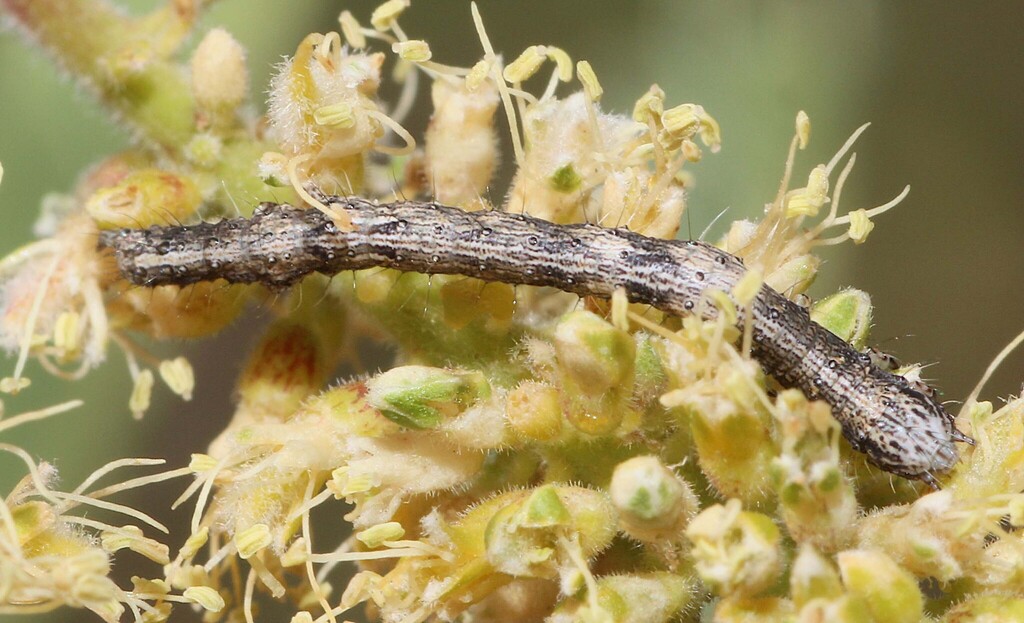
(c) Lon Brehmer, some rights reserved (CC BY) · licence
Family: Erebidae · Class: Insecta · Order: Lepidoptera
Heteranassa mima is a California animal in the Erebidae family.
Heteranassa mima is a moth species in the family Erebidae, subfamily Erebinae. This nocturnal lepidopteran belongs to a genus of moths primarily distributed in western North America. Adult moths typically measure 25-35 mm in wingspan, displaying the characteristic wing patterns and coloration of the Erebidae family. The forewings are generally brownish-gray with subtle darker markings and pale lines, while the hindwings are lighter in coloration. The thorax and abdomen are covered in scales that match the overall earth-tone coloration pattern. The range of Heteranassa mima includes portions of western North America, though specific distributional records for California require verification through museum collections and field surveys. The genus Heteranassa contains several closely related species that can be challenging to distinguish without examination of genital structures. Many erebid moths have restricted ranges or occur in specialized habitats, making accurate range mapping dependent on targeted survey efforts. Habitat preferences for H. mima are not well-documented in published literature, but erebid moths in this genus typically inhabit arid and semi-arid environments of the western United States. These may include chaparral, oak woodlands, desert scrub, and grassland communities at various elevations. The species likely requires specific host plants for larval development, though these associations remain poorly known for many erebid species. Adult moths are nocturnal and attracted to artificial lights during their flight period. Like other erebid moths, H. mima likely has a single generation per year, with adults emerging during specific months that correspond to optimal environmental conditions and host plant phenology. Larvae probably feed on herbaceous plants or low shrubs, pupating in soil or leaf litter. Males may use pheromones to locate females for mating, a common strategy among nocturnal moths. The conservation status of Heteranassa mima has not been formally assessed. Many moth species face threats from habitat loss, pesticide use, light pollution, and climate change. Urban development and agricultural conversion of native habitats can eliminate host plants and disrupt breeding cycles. The species' conservation needs cannot be properly evaluated without baseline population data and habitat requirements. Moth diversity is generally declining across North America, with many species experiencing population reductions before they are adequately studied. Conservation efforts for lepidopterans typically focus on habitat preservation and reduction of artificial lighting that disrupts nocturnal behavior patterns. Systematic surveys and taxonomic research are needed to understand the distribution, ecology, and conservation status of H. mima and related erebid moths in California.
Classification
Class: Insecta · Order: Lepidoptera · Family: Erebidae
Frequently asked questions
How is Heteranassa mima classified?
Heteranassa mima belongs to class Insecta, order Lepidoptera, family Erebidae.
What family does Heteranassa mima belong to?
Heteranassa mima is in the Erebidae family.
What is Heteranassa mima?
Heteranassa mima is a moth species in the family Erebidae, subfamily Erebinae.
Is Heteranassa mima found in California?
Yes. Heteranassa mima is recorded in California in The California Species Project's catalogue.
Related species
Other California species in the same genus, family, or bioregion.
Data from The California Species Project — 14,000+ California species with verified data from CNPS, CDFW, USFWS, and more.